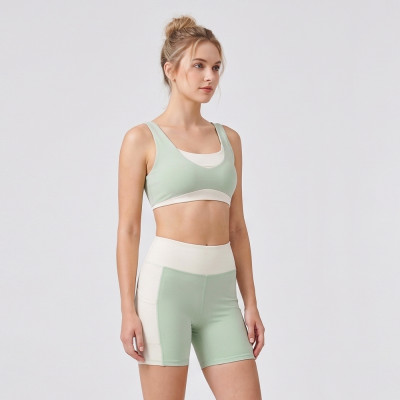
How to Calculate Landed Cost for Activewear From China
If you are importing activewear into the United States, stop asking "what is the duty rate?" and start asking "what is my landed cost built from?" There is no single number. Your final cost is a stack: the base tariff on the HTS code, any additional trade action layered on top, and the entry fees that almost everyone forgets. Get the HTS code wrong and every number downstream is wrong.
Quick Answer
US import cost on activewear has three layers: (1) the MFN base duty set by the garment's 10-digit HTS code, (2) any additional trade action such as Section 301 duties for Chinese-origin goods, and (3) entry fees including the Merchandise Processing Fee and, for ocean freight, the Harbor Maintenance Fee. The customs (entry) value on which duty is charged is confirmed by your broker under the transaction-value rules—it is not simply "FOB + freight + insurance." Treat any published rate as a reference and confirm classification, valuation and current figures with a licensed customs broker before you price an order.
I have watched brands build a beautiful cost sheet, negotiate a great FOB price, and then get blindsided by a landed cost that was 20% higher than expected. Almost always, the gap is duty and fees. The factory price was never the problem. This guide walks through how to calculate the number properly, where the 2026 rules make it trickier than it used to be, and how to build a worksheet you can update in ten minutes.
Why "What Will I Pay?" Is the Wrong First Question
Ask a freight forwarder "what duty do I pay on leggings?" and you will get a shrug. That question has no answer until three things are fixed: the HTS classification, the country of origin, and the date of entry. Duty is not a property of the garment alone. It is a property of the garment as classified, shipped from a specific origin, on a specific date.
That is why the smartest brands flip the order. They settle the classification first, then the origin, then they calculate. If you want the bigger picture on how factory price, MOQ and lead time interact before you even get to customs, our guide to activewear manufacturing costs, MOQs and lead times is the right starting point.
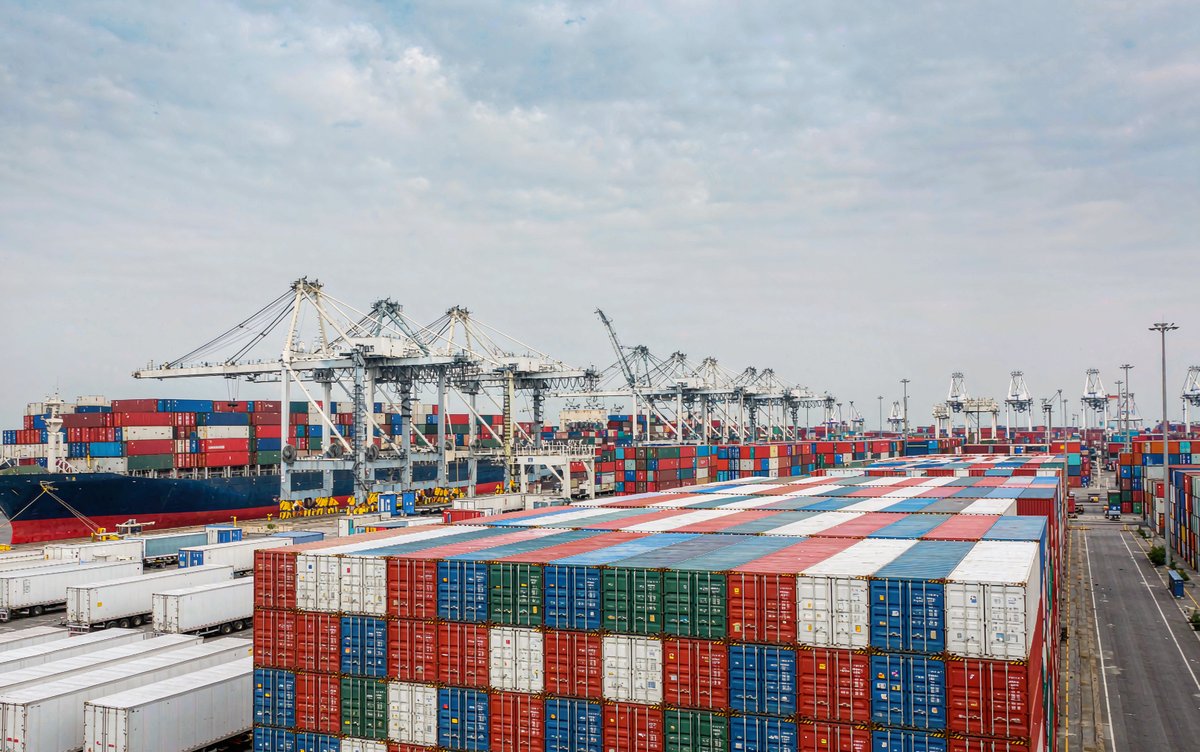
Duty is calculated at the border, but the number is decided much earlier — at the classification stage. (AI-generated image)
The Three Layers of US Import Cost
Here is the structure I use when I build a landed cost. Think of it as three layers stacked on top of each other, not one magic percentage.
| Layer | What It Is | What Drives It |
|---|---|---|
| 1. Base duty | The MFN (General) rate in the USITC Harmonized Tariff Schedule, charged on customs value | The 10-digit HTS code and origin |
| 2. Additional trade action | Extra duties layered on top of the base rate for certain origins — for example Section 301 for Chinese-origin goods | Country of origin and the current trade action in force |
| 3. Entry fees | Merchandise Processing Fee (MPF) on formal entry; Harbor Maintenance Fee (HMF) on ocean shipments | Shipping mode and declared value, not the HTS code |
Two things here catch people out. First, the base duty for most knitwear already sits above 10%, so some of the recent "top up to 10%" trade actions add nothing at all. Second, MPF and HMF are charged whether the duty rate is 0% or 30%. Brands that only count the tariff line consistently under-budget. Rates and fee levels move, so treat every figure as a dated input rather than a permanent constant.
How the HTS Code Actually Gets Determined
This is the part that decides everything, and it is more logical than it looks. You are not picking a code that sounds close. You are working through the schedule with your broker. The outline below is a way to prepare information, not a classification opinion.
1. Knit or woven?
Knitted and crocheted garments generally sit in Chapter 61 and woven garments in Chapter 62, but that split is only a starting point and has real exceptions: supportive garments such as bras and bralettes are addressed under heading 6212 regardless of the simplistic knit-versus-woven shortcut. Do not assign a chapter from construction alone. Most activewear is knit, but the specific garment and its construction still have to be checked against the current schedule.
2. What is the garment, specifically?
Within the chapter, the heading is defined by garment type. A T-shirt, a sweatshirt, a pair of trousers and a swimming costume are different headings. "Activewear" is not a category the tariff schedule recognizes. The precise wearing-apparel description is.
3. What is the fiber?
Cotton, man-made fibers and wool split into different subheadings, often with noticeably different rates. A cotton knit T-shirt and a polyester knit T-shirt are classified apart. This is where a fabric change mid-development can quietly change your duty.
4. Men's or women's?
Finally, gender and the specific cut determine the 10-digit line. That last digit matters, because it is the rate you actually pay.
Here is the part I would flag to any founder: ask your supplier for the fabric composition and construction in writing before you finalize a classification, and let the importer or a licensed broker confirm the code. A vague "performance fabric" answer is not enough. If the factory later swaps 82% nylon / 18% elastane for 90% polyester / 10% elastane, your classification question may change with it. We do not assign HTS codes or rates for specific products on this site.

Commercial invoice, packing list and a clear fabric spec are the documents that make classification defensible. (AI-generated image)
The Three Numbers You Must Not Merge
Here is the correction I want to make explicit, because a version of this formula circulates widely and it is not a general US valuation rule:
Not a general rule: FOB value + freight + insurance = US customs value.
The customs (transaction) value used for duty is determined under the applicable valuation rules. Qualifying international freight, insurance and related costs may be excluded from transaction value where the conditions and evidence support it, and other statutory adjustments may apply. Your broker confirms the entry value from the actual transaction and documents—not from a simplified addition. Keep these three figures separate in your model:
| Figure | Who confirms it | What it is used for |
|---|---|---|
| Factory order value | Buyer and factory | Commercial cost of the goods |
| Customs / entry value | Licensed customs broker | Basis for duty and certain fees |
| Total cost to the warehouse | Your cost model | Purchasing and pricing decisions |
They may be different numbers, and none of them can stand in for another. A worked example can still help, as long as the arithmetic is clearly illustrative and the valuation line stays with the broker.
| Step | Illustrative figure | Note |
|---|---|---|
| FOB value, 1,000 knit leggings | USD 8,000 | Example only |
| Ocean freight + insurance | USD 900 | Varies by route and season; not automatically added to customs value |
| Customs / entry value | Broker-confirmed | Do not assume 8,900; depends on transaction terms and evidence |
| Base duty | rate × broker-confirmed value | Use the current HTS General rate |
| Additional trade action | applicable rate × broker-confirmed value | Only for affected origins |
| MPF | 0.3464% of value, with min/max per entry | Applies to formal entry; verify current levels |
| HMF (ocean only) | 0.125% of value | Not charged on air freight; verify current levels |
Notice that I deliberately left the duty lines as formulas instead of hard numbers. That is not laziness. Rates move, and a blog post with a frozen percentage is a liability six months later. Use the formula, plug in the rate you verify today, and record the date and source beside it.
This is also why landed cost belongs in the same conversation as supplier pricing. A cheaper FOB quote from one country can lose its advantage once origin-based duties are added — which is exactly the tension we unpack in our China vs Vietnam vs Bangladesh sourcing comparison.
What Changed in 2026, and Why It Matters to You
If you learned how US apparel importing worked in 2024, some of what you know may now be out of date. The policy points below reflect sources checked in November 2026 and are a directional summary, not verified legal advice. Re-check each item with current official sources before you rely on it, and treat every rate or fee as a dated input in your cost model.
- De minimis. Reporting indicated the USD 800 duty-free exemption was suspended for all countries from 29 August 2025 and made indefinite for non-postal shipments in June 2026. Confirm the current position before building any low-value parcel strategy.
- IEEPA tariffs. Following a February 2026 Supreme Court decision, reporting indicated CBP stopped collecting those duties in late February 2026. If a quote you received still lists them, verify it.
- New trade actions. A Section 122 surcharge was reported to have run from February to July 2026 and then expired; a July 2026 Section 301 action was reported to top certain goods up to a combined 10% where the base rate was lower. For most knitwear, whose base rate already exceeds 10%, this added nothing. Confirm what is actually in force at your entry date.
- Entry fees. Reporting indicated the MPF rate and its per-entry minimum and maximum changed on 1 October 2026. Verify current levels at entry.
My honest read: the direction is toward more frequent changes, not fewer. The practical response is not to memorize today's rates. It is to build a cost model you can update in ten minutes when the rules move, and to keep a dated record of which rate you used for each order.
Data note: the policy points above reflect sources checked in November 2026 and have not been re-verified line by line for this update. Tariff rates, trade actions and fee levels change; verify current figures with USITC HTS and CBP, or with your licensed broker, before pricing an order. Do not treat a figure in this article as a quote.
The Documents That Keep Clearance Simple
Incomplete documentation can cause customs delays. A complete file does not make duty cheaper, but it reduces the chance that your shipment sits at the port while someone asks a question you could have answered in advance.
- Commercial invoice — value, currency, terms, buyer and seller, and an accurate description of the goods.
- Packing list — cartons, quantities, net and gross weight, matching the invoice.
- Bill of lading or airway bill — the transport document.
- Fabric composition and construction spec — supports the HTS classification you declared.
- Certificates and origin documents — where a trade program or preference applies.
One practical detail founders miss: the product description on the invoice should match the language of your HTS classification. "Yoga pants" is a marketing term. "Women's knitted trousers, 82% nylon 18% elastane" is a customs description. Those extra words cost nothing and prevent a lot of back-and-forth. See our shipping-document checklist before dispatch.
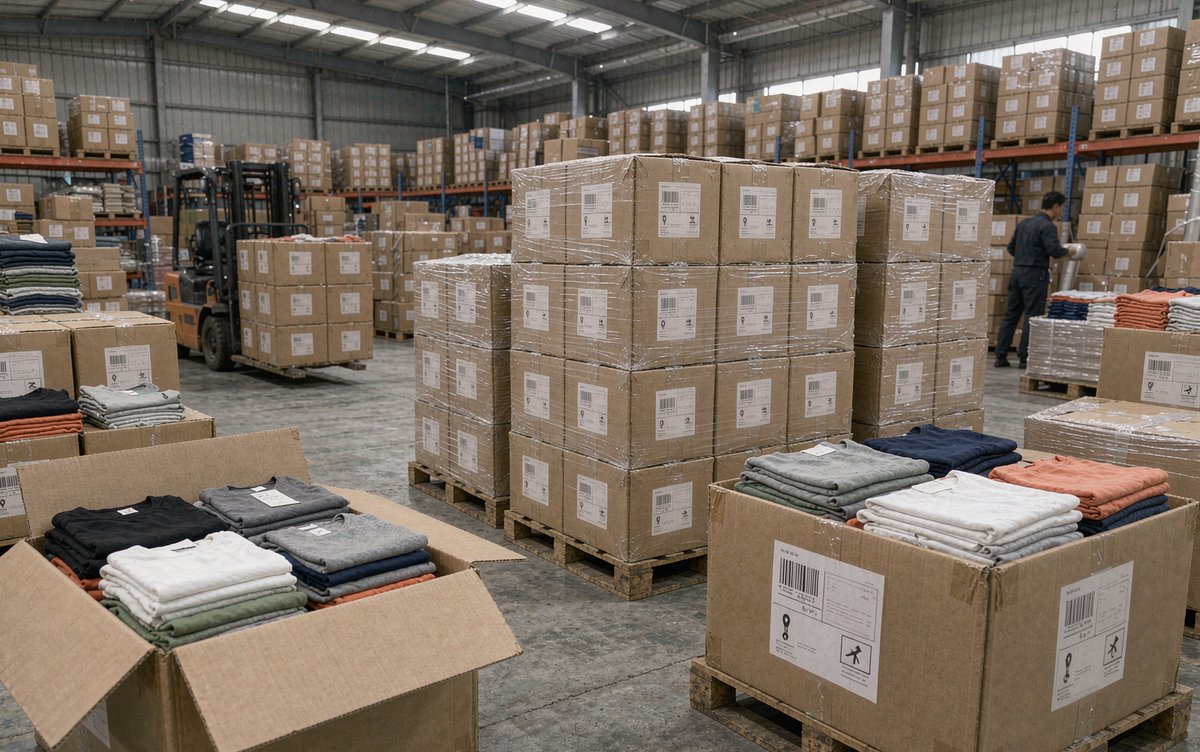
Accurate packing data and a matching invoice do more for smooth clearance than any expedite fee. (AI-generated image)
Broker Information Pack: What to Send Before Asking for a Rate
Do not send "women's yoga leggings, nylon blend" and expect a fixed rate back. Give the broker enough to identify the actual product, then let them confirm classification, valuation and applicable duties. This is a suggested information pack, not a claim that every item affects every classification.
| Category | Suggested information |
|---|---|
| Product identity | Style number, accurate product name, intended use, front/back and key-construction photos, and a physical sample where needed |
| Fabric and structure | Knit or woven, composition and weight share of each relevant part, coatings or special structures |
| Garment design | Intended wearer, leg length, waistband, pockets, openings and other identifying details |
| Origin | Actual manufacturing arrangement and origin-supporting documents, not just the shipping country |
| Transaction | Buyer and seller, quantity, unit price, currency, trade terms and named place |
| Other payments | Sample, pattern, mold, design or buyer-supplied-material charges and arrangements |
| Transport and documents | Invoice, packing list, freight and insurance breakdown, transport mode and expected import date |
Disclose pattern and development arrangements rather than assuming a separately paid charge is automatically non-dutiable. Customs authorities have treated pattern charges as dutiable assists in specific garment cases; whether that applies to your order depends on the facts and should be confirmed by the broker. The inputs for freight estimates — destination, trade terms, goods-ready date, cartons, weight and dimensions — are covered in our freight-cost information guide, and the terms themselves in shipping method vs Incoterm.
A Cost Worksheet You Can Actually Update
This is a planning structure, not a tax quote or a classification opinion. Duty and fees come from the broker, freight from the forwarder, warehouse charges from the warehouse, and product, value and packing data from the factory. You fill in your own selling costs and prices.
Three results, not one blended "product cost"
| View | Use it for | What it includes here |
|---|---|---|
| Cost to warehouse | Comparing sourcing and shipping options | Goods cost plus not-yet-included freight, import, delivery and receiving charges |
| First-order investment allocation | Checking whether the first buy covers development spend | Cost to warehouse plus sample, development and other one-time charges carried this order |
| Sales contribution | Checking whether the price covers selling-related costs | Add discounts, fulfillment, payment or platform fees, returns and similar items |
Write the included scope next to each result. Do not merge development, landed and marketing costs into one number and call it "product cost." Formal inventory valuation and financial gross margin are accounting questions — confirm those with your accountant.
Input rows — and the double-count check
| Module | Cost line | Double-count check |
|---|---|---|
| Goods | Conforming product cost; separately charged packing or branding work | Already in the unit price? |
| Development | Samples, revisions, patterns, sample courier | Credited? Has the credit actually been applied? |
| Quality | Third-party inspection, reinspection, specific tests | Already covered by another quote? |
| Export and transport | Pickup, export service, international freight, insurance | Matches the trade terms and quoted scope? |
| US import | Duty, applicable import fees, broker service, bond-related charges | Confirm each line with the broker |
| Destination delivery | Port or terminal, drayage, final-mile transport | Already in the forwarder's quote? |
| Warehouse receiving | Appointments, unloading, receiving, relabeling or other quoted operations | Check against the warehouse rate card |
| Exceptions | Incurred inspection, demurrage, relabeling and similar events | Keep separate from normal cost and risk budget |
Not every shipment incurs every line. Give each row five supporting fields: amount and currency; exchange rate and its date; quote / actual / to-confirm status; source document and its validity; and whether it is already included in another row. Incoterms allocate costs and risk, but do not re-add every line just because a term says EXW, FOB or DDP — check the actual quotation and named place. What belongs in a factory quote is covered in comparing activewear manufacturing quotes and what is included in our quote.
Per-unit cost and sample-fee treatment
For one style in one batch, a simple management calculation is: cost to warehouse divided by the agreed quantity basis. State the denominator explicitly. Record ordered units, units actually shipped, units received and saleable units separately. Use planned saleable quantity at budget stage and update it to actual receipts and quality results at review, showing the variance rather than hiding it. This is a management approach, not a substitute for accounting policy.
Show sample and development fees two ways: fully charged to the first order to see whether the first buy carries the development spend, and shown separately against planned volume to see repeat-order economics and recovery of that spend. Do not make the first order look cheap by spreading development across unconfirmed future sales. If a sample-fee credit exists, count it only once the conditions are met and keep the rest as to-confirm.
Where one shipment holds several SKUs, assign direct costs to their product and split shared costs on an explainable basis: dedicated development and testing to the product; freight by actual chargeable weight, volume or the quoted breakdown; warehouse operations by the warehouse's own charge lines; duty by the broker's declared detail. Do not split everything evenly by unit count, which can hide real differences in shipping and handling cost.
Margin: two formulas, two denominators
Start from actual net sales revenue rather than assuming everything sells at full price. Keep these as management estimates, clearly separated from financial gross margin:
Product margin at warehouse basis = (net sales revenue − corresponding cost to warehouse) ÷ net sales revenue
Sales contribution = net sales revenue − cost to warehouse − selected variable selling costs
List the variable-selling scope you deducted — fulfillment, payment or platform fees, returns, acquisition cost — and do not deduct the same item twice. Margin and markup use different denominators, so write the formula beside the field instead of showing an undefined "Margin" figure. We do not suggest that reaching any particular percentage makes an order safe: that depends on channel costs, returns, promotions and your own targets.
Keep to-confirm costs visible
Never let an empty tax or fee cell be read as zero. Mark it "to confirm," show the source and date when it is filled, and make the worksheet display an incomplete result until the required inputs are present. Record the original budget alongside the actual figures at review instead of overwriting it, so a variance stays visible. The point of this tool is not an authoritative tax rate: it is that every figure has a source, every number has a date, every allocation has a basis, and missing costs stay on screen.
Five Mistakes I See Repeatedly
- Pricing from FOB alone. The factory quote is not your cost. Duty, fees and freight are part of the same number.
- Copying a competitor's HTS code. Their fabric, construction or origin may differ from yours. Classification is garment-specific.
- Using last year's rate. In 2026 especially, a rate from a previous order may no longer apply.
- Forgetting entry fees. MPF and HMF are small individually but real, and they apply regardless of the duty rate.
- Letting a fabric substitution slide. A silent fiber change can change your classification. Stay involved in the approvals — our piece on comparing activewear manufacturing quotes shows where those details usually hide.
Frequently Asked Questions
How much import duty does a US brand pay on activewear?
There is no single rate. Duty depends on the 10-digit HTS code, country of origin and date of entry, and is charged on the broker-confirmed customs value. Rates and trade actions move; check the current USITC HTS and confirm with your broker before you price an order.
How is the HTS code for leggings or sports bras determined?
Classification follows the tariff schedule and is confirmed by the importer or a licensed broker. Construction, garment type, fiber, gender and cut all matter, and supportive garments have their own headings. The outline in this article helps you prepare information; it is not a code assignment. Get the fabric composition in writing from your supplier first.
Does the de minimis exemption still apply to small apparel shipments?
Reporting indicated the USD 800 de minimis exemption was suspended for all countries from August 2025 and made indefinite for non-postal shipments in June 2026. Confirm the current position with CBP or your broker before relying on any low-value shipment treatment.
Are MPF and HMF the same as import duty?
No. They are entry fees, separate from the tariff. MPF applies to formal entry and HMF applies to ocean shipments. Both are charged on the value of the goods regardless of the duty rate, so include them in landed cost and verify current levels at entry.
Is FOB plus freight and insurance the US customs value?
Not as a general rule. Customs value is determined under the transaction-value rules by the broker from the actual transaction and supporting documents. Qualifying international freight, insurance and related costs may be excluded where conditions and evidence support it, and other adjustments may apply. Keep the factory value, the broker-confirmed customs value and your cost-to-warehouse figure separate.
Can my supplier tell me the correct HTS code?
A supplier can provide the fabric composition and construction details you need, but classification is the importer's responsibility. Use the supplier's data, then confirm the code against the current HTS or with a licensed broker.
Build the Cost Model Before You Place the Order
The brands that handle imports well are not the ones with the cheapest factory. They are the ones who know exactly what sits between the factory price and the price on their website. Build the layered model, confirm the customs value with your broker, and keep the math updateable with dated inputs and visible to-confirm items. Do that, and a policy change becomes a five-minute revision instead of a margin surprise.
If you are still comparing suppliers, the next step is our guide to comparing activewear manufacturing quotes, which covers the cost lines that belong in every factory comparison.
Cost-planning tool only: this article is not a customs valuation, tariff classification, tax or legal opinion. Duty rates, trade actions, fee levels and policy timelines change; confirm current figures and your specific classification with a licensed customs broker, and accounting treatment with your accountant. Last reviewed: November 2026.