China vs Vietnam vs Bangladesh for Custom Activewear Manufacturing: A Full Sourcing Comparison
China, Vietnam, and Bangladesh can all produce sportswear, but they do not solve the same sourcing problem. A factory that is ideal for 100,000 basic training T-shirts may be a poor choice for a 300-piece collection of compression leggings, molded-cup sports bras, and bonded running shorts.
The real question is not simply, “Which country is cheapest?” It is: which country can deliver the required product, at the required volume, with an acceptable level of development risk and total landed cost?
China is usually the strongest option for complex product development, low-to-medium custom orders, fast sampling, and access to performance fabrics and trims.
Vietnam is often a good fit for established styles, predictable order volumes, and brands that can lock materials and production capacity well in advance.
Bangladesh remains highly competitive for large, stable, price-sensitive programs, especially when the product is relatively standardized.
There is no single best country for every sportswear brand. Product complexity, order volume, destination market, fabric origin, and replenishment strategy matter more than a country name on a quotation.
1. How We Compared China, Vietnam, and Bangladesh
This guide focuses specifically on custom activewear manufacturing, rather than treating every garment as if it has the same production requirements.
The comparison applies mainly to products such as:
- High-stretch yoga leggings and shorts
- Sports bras with removable or molded cups
- Compression tops and training sets
- Running shorts with liners, bonded hems, or laser-cut panels
- Tennis, golf, and pickleball apparel
- Seamless or engineered-knit activewear
- Private-label and full custom cut-and-sew collections
Each country is evaluated across six practical sourcing factors:
- Cost: sewing cost, material commitments, development expense, and likely landed cost.
- Quality: technical construction, fit control, fabric performance, and consistency.
- Speed: fabric sourcing, lab dips, sampling, approvals, bulk production, and replenishment.
- Flexibility: MOQ, color count, style count, revisions, and repeat-order capability.
- Sustainability: certified materials, traceability, social compliance, and process control.
- Communication: technical English, project ownership, documentation, and response speed.
2. The Global Activewear Manufacturing Landscape
Asia remains the center of the global textiles and clothing supply chain. According to the World Trade Organization, Asia represented 70.6% of world textile and clothing exports in 2022.[1]
However, export scale does not reveal how a country creates those exports. That distinction matters when a brand needs custom nylon-spandex fabric, several Pantone colors, molded bra cups, silicone logos, custom zippers, branded packaging, and repeated fit corrections.
The WTO estimated that 89.1% of the value in China's textile and clothing exports was created domestically in 2022. It linked this figure to China's supply chains covering multiple production stages, from fibers and yarn to fabric, dyeing, finishing, and completed garments.[1]
Vietnam presents a different structure. The same WTO analysis estimated that 64.2% of the value in Vietnam's textile and clothing exports came from foreign inputs. Many Vietnamese suppliers operate near the cut-make-trim end of the value chain and rely on imported raw materials.[1]
Bangladesh has built enormous ready-made garment capacity and remains one of the world's most important apparel exporters. Its strongest position has traditionally been in scaled production, while its technical activewear capabilities vary considerably from one factory to another.
This is why national export rankings should not be used as a substitute for product-level due diligence.
3. China vs Vietnam vs Bangladesh at a Glance
| Factor | China | Vietnam | Bangladesh |
|---|---|---|---|
| Best suited to | Technical products, fast development, multiple styles and colors | Established designs with predictable mid-to-large volumes | Large, stable and cost-sensitive programs |
| Sewing cost | Usually higher than Bangladesh; varies widely by region and construction | Generally competitive, especially for stable export programs | Usually the lowest of the three for standardized products |
| Supply-chain depth | Very strong across fabrics, dyeing, trims, packaging and machinery | Strong garment sector, but many technical inputs are imported | Strong garment scale; imported technical materials may still be required |
| Product development | Usually the fastest for complex custom activewear | Effective when material and specifications are already confirmed | Better for stable, repeatable styles than frequent development changes |
| MOQ flexibility | Often strongest for small-to-medium custom programs | Usually better at planned mid-to-large orders | Typically favors larger quantities and fewer variations |
| Technical activewear | Strong for bonded, seamless, compression, molded-cup and fashion-led styles | Strong at qualified factories, particularly for stable performance products | Capability is improving, but must be verified factory by factory |
| Replenishment | Usually faster when fabrics and trims are locally available | May be affected by imported-material lead times | Works best when materials and production slots are planned in advance |
| Main sourcing risk | Choosing a trading company or low-skill factory based only on quotation price | Underestimating material import time and factory capacity commitments | Assuming low labor cost automatically equals low total cost for complex products |
4. China: Strongest Supply-Chain Depth and Development Flexibility
China is not always the cheapest place to sew a garment. Its advantage appears when a product requires coordination across several suppliers and production processes.
Consider a high-support sports bra. A single style may require:
- A custom nylon-spandex outer fabric
- A power-mesh lining with a different stretch modulus
- Molded cups or removable padding
- Brushed elastic in a custom width
- Heat-transfer care labels
- Silicone, reflective, or high-density logos
- Hook-and-eye hardware or adjustable straps
- Custom polybags, barcodes, hangtags, and carton markings
In an integrated supply cluster, these materials can often be developed, replaced, or corrected without moving the entire project across multiple national borders. This is especially valuable during the sample stage, when brands are still changing fit, support, colors, and trim details.
Where China Usually Performs Well
- Performance fabric sourcing: broad access to nylon-elastane, polyester-elastane, rib, brushed, interlock, jacquard, mesh, and recycled options.
- Color development: faster coordination of lab dips, Pantone matching, and repeat dye lots when working with nearby mills.
- Technical construction: greater availability of flatlock, seamless knitting, bonding, laser cutting, ultrasonic welding, and specialized activewear machinery.
- Multi-style collections: easier coordination when a launch contains bras, leggings, skirts, jackets, hoodies, and accessories.
- Low-to-medium volume customization: factories with stock-fabric libraries can avoid the full mill MOQ required for custom-dyed material.
- Fast product changes: replacement trims and revised materials are often available within the same industrial region.
Where China May Cost More
Sewing labor, compliance, energy, and factory overhead have increased. A technically experienced Chinese factory may therefore quote more than a large-volume factory in Bangladesh.
That price difference does not automatically make China more expensive at the end of the project. Brands must also account for:
- Extra sample rounds
- International movement of fabric and trims
- Material MOQ commitments
- Production delays caused by missing components
- Higher defect or rework rates
- Slow replenishment
- Unsold stock created by high MOQs
What a 20,000 m² China-Based Factory Can Offer
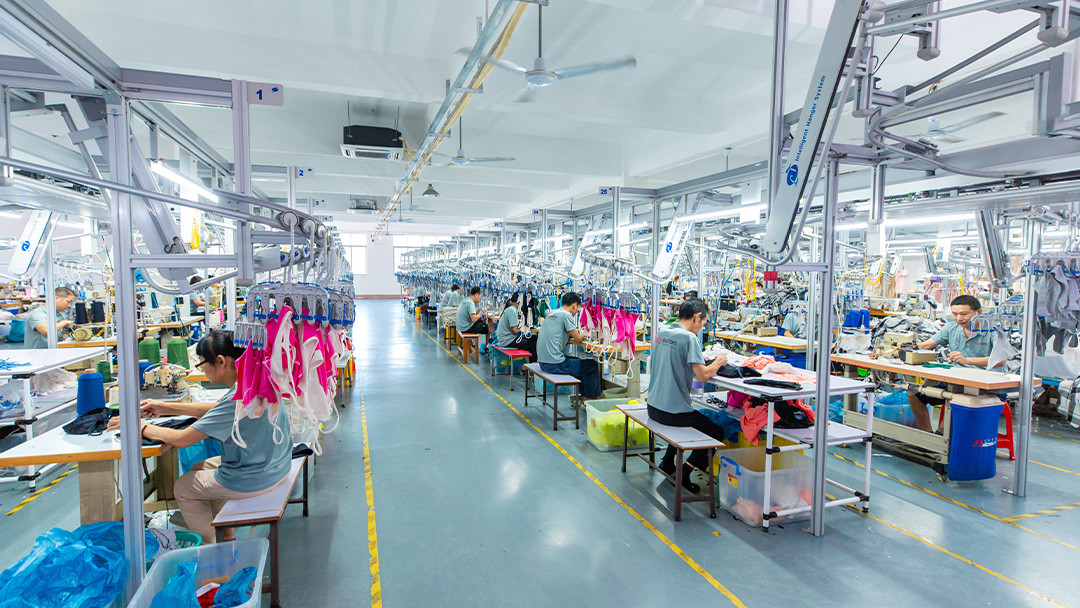
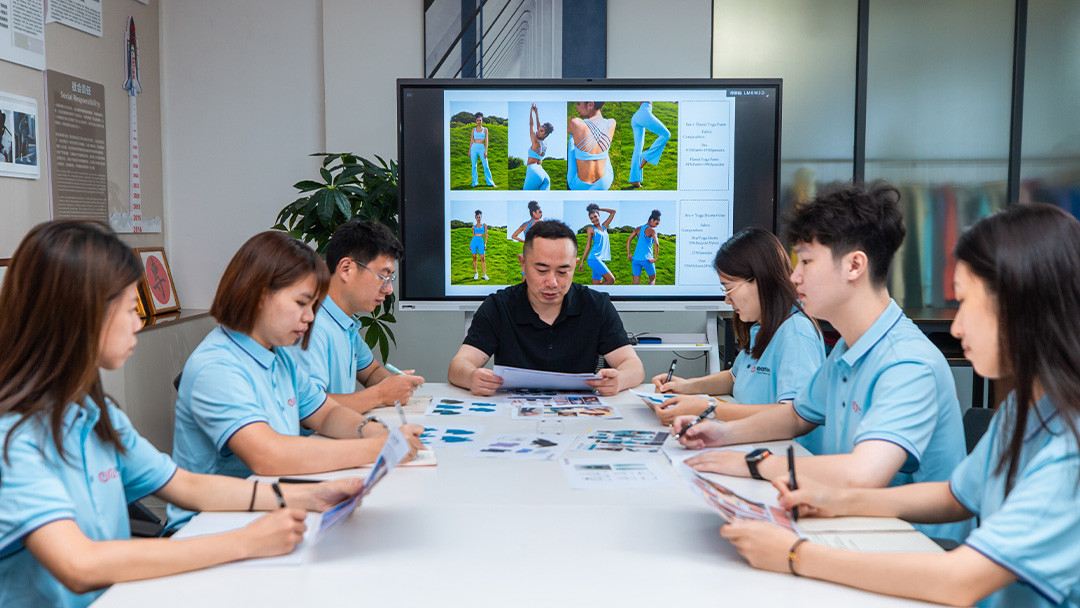
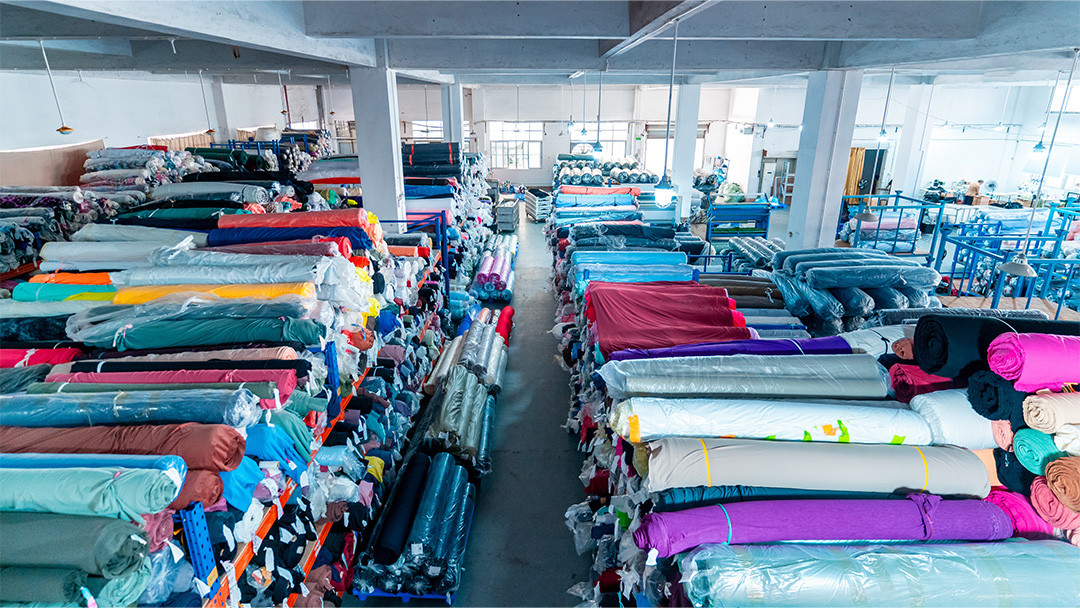
Call The STYLE's manufacturing operations are supported by a 20,000-square-meter facility in Dongguan. The factory case is included to show how an integrated Chinese operation works; it should not be interpreted as a description of every factory in China.
For qualified custom programs, our typical operational targets are:
- MOQ: 100 pieces per style and color, distributed across the approved size range
- Sample development: approximately 7–15 days after specifications and materials are confirmed
- Bulk production: approximately 25–30 days after pre-production sample approval and material readiness
- Services: fabric sourcing, pattern development, grading, sampling, logo application, packaging, inline inspection, and final inspection
- Typical products: yoga leggings, sports bras, activewear sets, training tops, running shorts, tennis wear, golf wear, hoodies, and athleisure
Actual MOQ and lead time still depend on fabric availability, dyeing requirements, logo technique, order quantity, testing requirements, and production season. Buyers should request a project-specific production schedule rather than relying on a universal lead-time promise.
5. Vietnam: Competitive for Stable and Predictable Programs
Vietnam has a mature export-oriented garment industry and is widely used by international apparel brands. Its strength is not simply “cheap labor.” Qualified Vietnamese factories can offer disciplined production management, strong workmanship, and substantial capacity.
The main sourcing issue is the structure behind the sewing floor. WTO data indicates that Vietnam's textile and clothing exports contain a high share of foreign inputs. This means fabrics, yarns, chemical inputs, or specialized trims may be sourced from China, South Korea, Japan, Taiwan, or other markets.[1]
Imported materials are not automatically a problem. Many excellent global supply chains rely on imported inputs. The risk appears when buyers assume that placing the garment order in Vietnam also localizes every part of the supply chain.
Where Vietnam Usually Performs Well
- Established products with completed tech packs and approved materials
- Predictable mid-to-large production programs
- Long-term supply agreements with reserved capacity
- Standardized performance tops, shorts, outerwear, and cut-and-sew activewear
- Brands with professional sourcing teams capable of managing nominated fabric suppliers
- EU-focused programs that satisfy the applicable EVFTA rules of origin
Where Buyers Can Run Into Problems
- A garment factory accepts the order, but the nominated fabric mill has a much higher MOQ.
- The sample is made with available fabric, while bulk material must be imported later.
- Production begins only after material crosses the border and completes customs processing.
- A small collection receives less priority than a large program from an established customer.
- A product qualifies as “Made in Vietnam” but does not satisfy the separate rule required for preferential duty treatment.
6. Bangladesh: Strongest Cost Position for Large, Stable Orders
Bangladesh is one of the world's most important ready-made garment production centers. Its scale, labor structure, and specialization make it highly competitive for volume-driven apparel.
According to the WTO, approximately 40% of Bangladesh's ready-made garment exports went to the European Union in 2024, while another 18% went to the United States.[5] This export base supports experienced factories, large workforces, and production systems designed for substantial programs.
Bangladesh should not be described as incapable of producing high-quality sportswear. There are factories with advanced equipment, international compliance programs, and experience serving demanding brands.
The practical issue is capability variation. A buyer sourcing complex activewear must confirm that the selected facility—not simply the country—has relevant experience.
What Must Be Verified for Technical Activewear
- Experience sewing fabrics with 20–25% elastane
- Flatlock and stretch-seam capability
- Needle, thread, and seam settings for high-extension materials
- Heat-setting and dimensional stability control
- Bonding, laser cutting, ultrasonic welding, or seamless knitting where required
- Fabric stretch-recovery and opacity testing
- Colorfastness, pilling, perspiration, and wash-testing procedures
- Ability to control multiple colorways and size assortments
- Availability and lead time of technical imported fabrics
Where Bangladesh Usually Performs Well
- Large quantities of basic sports T-shirts and tanks
- Standardized fleece, joggers, hoodies, and lifestyle sportswear
- Long-running replenishment programs with stable specifications
- Cost-sensitive private-label programs with fewer colors and variations
- Retailers able to plan orders and materials several months ahead
7. Why the Lowest FOB Price May Not Be the Lowest Total Cost
A country comparison based only on the FOB quotation can be misleading.
Assume one supplier quotes a legging at a lower unit price. That quotation may still create a higher commercial cost if it requires:
- A larger fabric-dyeing minimum
- Fewer colors per order
- More sample rounds
- Imported waistband elastic or branded trims
- Longer material transit
- Higher inspection and travel costs
- More safety stock
- Slower repeat orders
- Higher markdown exposure caused by excess inventory
A more useful calculation is:
The difficult items in that equation are expected rework and inventory loss. They do not appear on the supplier's proforma invoice, but they can erase the savings created by a lower sewing price.
A Practical Example
A startup wants to launch four legging colors but does not know which color will sell. Factory A offers a lower unit price but requires a large quantity per color. Factory B charges more per piece but supports a controlled pilot run using qualified stock fabric.
Factory A may win the FOB comparison. Factory B may produce the better business outcome because the brand can test demand before committing to large inventory.
For a retailer with confirmed purchase orders and a stable best-selling product, the answer could be the opposite. Large-volume production may make Factory A the more economical choice.
8. Six-Factor Activewear Sourcing Comparison
The following ratings are editorial scores for custom performance activewear programs. A higher cost score means stronger price competitiveness. The assessment assumes projects that require genuine cut-and-sew customization rather than adding a logo to ready-made blanks.
| Dimension | China | Vietnam | Bangladesh |
|---|---|---|---|
| Cost competitiveness | 3.5 / 5 | 4.0 / 5 | 5.0 / 5 |
| Technical quality capability | 4.7 / 5 | 4.1 / 5 | 3.4 / 5 |
| Development and replenishment speed | 4.8 / 5 | 3.5 / 5 | 3.0 / 5 |
| MOQ and style flexibility | 4.7 / 5 | 3.3 / 5 | 2.7 / 5 |
| Sustainability readiness | 4.1 / 5 | 4.0 / 5 | 3.6 / 5 |
| Communication and project handling | 4.4 / 5 | 4.0 / 5 | 3.5 / 5 |
How to Read the Scores
These scores do not mean that China “wins” every project. They show the difference between two sourcing models.
China tends to score higher when the project contains technical uncertainty: unfinished patterns, custom fabric, several trims, multiple colors, fit revisions, or uncertain first-order volume.
Bangladesh tends to gain an advantage when uncertainty has been removed: the style is stable, demand is confirmed, materials are booked, and the order is large enough to absorb setup costs.
Vietnam often sits between those positions, providing strong export manufacturing for brands that can bring organized development packages and predictable production plans.
9. Best Country for Different Sportswear Categories
| Product category | Recommended sourcing option | Why | What to verify |
|---|---|---|---|
| High-compression leggings | China; selected Vietnam factories | Requires controlled stretch, recovery, opacity, seam strength, and fit engineering | GSM, modulus, stretch recovery, squat test, waistband construction, seam extension |
| Molded-cup sports bras | China | Strong access to cup molding, elastic, mesh, hardware, bonding, and repeated fit development | Cup source, support level, elastic recovery, wash stability, strap slippage |
| Seamless activewear | China; qualified Vietnam suppliers | Requires specialist knitting machinery, yarn knowledge, mapping, and wash control | Machine type, yarn source, minimum dye lot, compression mapping, shrinkage |
| Basic polyester training T-shirts | Bangladesh, Vietnam, or China | The product is easier to standardize, making large-scale cost efficiency more important | Fabric weight, wicking finish, colorfastness, print durability, measurement tolerance |
| Large-volume hoodies and joggers | Bangladesh or China | Bangladesh is highly cost-competitive at scale; China offers more flexible styling and trims | Fabric shrinkage, brushing, pilling, rib recovery, color consistency, garment weight |
| Fashion-led yoga sets | China | Frequent silhouette, trim, color, and fit changes reward supply-chain proximity | Pattern ownership, color MOQ, fit sample process, trim lead time, repeat-order availability |
| Running shorts with liners and bonding | China or specialized Vietnam factories | Multiple materials and technical finishing require strong process coordination | Bond strength, liner stretch, pocket bounce, reflective logo durability, drying performance |
| High-volume promotional sportswear | Bangladesh | Large, standardized programs can benefit from production scale and lower sewing cost | Capacity reservation, inspection plan, printing consistency, shipment schedule |
| Low-MOQ multi-color capsule collection | China | In-stock performance fabric and local trims can reduce material commitments | Whether the quoted MOQ is garment MOQ or the actual fabric-dyeing MOQ |
| Certified sustainable activewear | Qualified factories in all three countries | Sustainability depends on traceability and certification—not nationality | GRS transaction certificates, OEKO-TEX scope, social audit, chain of custody, wastewater controls |
10. Tariffs, Rules of Origin, and Destination Market
A factory's location affects more than production. It can also change the duty, documentation, and origin risk attached to the finished product.
Importing into the United States
There is no reliable universal tariff such as “the China apparel rate” or “the Vietnam sportswear rate.” U.S. duty starts with the product's Harmonized Tariff Schedule classification, which can change according to:
- Knitted or woven construction
- Fiber composition
- Garment type
- Gender classification
- Country of origin
- Preferential eligibility
- Additional reciprocal, Section 301, or other applicable measures
The United States International Trade Commission publishes the current HTS, while the Office of Textiles and Apparel provides current textile and apparel import data.[6] U.S. reciprocal and additional tariff measures also changed during 2025–2026, so a quotation should distinguish the normal product duty from any additional country-level measure.[7]
Ask the importer or customs broker to classify the product using the final construction, composition, and origin—not an approximate code copied from a different style.
Importing into the European Union
The EU-Vietnam Free Trade Agreement can provide preferential treatment for qualifying Vietnamese products. However, “Made in Vietnam” does not automatically mean that every garment receives a reduced or zero tariff.
The product must meet the applicable origin rule and documentary requirements. Textile and clothing rules may require specified production processes or originating materials.[2] The European Commission's Rules of Origin Self-Assessment tool can help buyers evaluate product-specific eligibility.[3]
This is especially important when a Vietnamese garment uses fabric imported from another country. Country-of-origin marking and preferential origin qualification are related, but they are not always the same test.
Bangladesh and LDC Graduation
Bangladesh is scheduled to graduate from the United Nations least developed country category on 24 November 2026.[4]
Long-term EU sourcing plans should therefore model more than the current duty position. Buyers should evaluate possible post-graduation treatment, transition arrangements, origin compliance, and the commercial effect on orders scheduled for future seasons.
Do Not Choose a Country Based on Tariff Alone
A tariff advantage can be valuable, but it should be compared with:
- Material origin and compliance risk
- Factory qualification
- MOQ and inventory exposure
- Defect and return risk
- Lead time
- Freight route
- Ability to replenish best sellers
A product with a lower duty but a slower, less flexible supply chain may still generate a weaker margin.
11. Hybrid Sourcing: Using More Than One Country
Mature brands do not always force every product into one manufacturing country. A hybrid strategy can reduce concentration risk and match each product with the most suitable supply chain.
Model 1: Development in China, Bulk Production Elsewhere
China can be used for early-stage fabric sourcing, pattern development, fit samples, and construction engineering. Once the style becomes stable and annual demand is predictable, the brand may qualify a second large-volume facility in Vietnam or Bangladesh.
This model is most practical when the brand owns:
- The complete tech pack
- The approved patterns and grading rules
- The fabric specification
- The bill of materials
- The construction standard
- The testing protocol
- The approved color and trim standards
Model 2: Core Products and Innovation Products
Place stable, high-volume basics in a cost-efficient production base. Keep new silhouettes, experimental fabrics, seasonal colors, and rapid-response styles with a more flexible development supplier.
For example:
- Large-volume core T-shirts in Bangladesh
- Established training shorts in Vietnam
- New compression leggings and sports bras in China
Model 3: Main Supplier and Qualified Backup
A second factory can be qualified for important repeat styles before a disruption occurs. However, “backup factory” should not mean sending the same PDF to another supplier at the last minute.
The second supplier needs:
- Approved material equivalents
- Matching shade standards
- Confirmed patterns
- Fit approval
- Wash and performance test results
- Trial production
The Hidden Cost of Multi-Country Sourcing
Diversification reduces some risks but creates others:
- Duplicate development cost
- Fabric hand-feel differences
- Color variation between mills
- Different grading and measurement interpretation
- Additional QC resources
- More origin documentation
- More complex freight and inventory planning
Multi-country sourcing works best when a brand has detailed technical control. Without that control, diversification can produce inconsistent products rather than resilience.
12. Country Selection Framework for Sportswear Brands
Start by identifying the most expensive risk in your project.
| Your main concern | Country to investigate first |
|---|---|
| Complex design and unfinished product development | China |
| Low initial order with multiple colors | China |
| Established style with predictable mid-to-large volume | Vietnam or China |
| Very large standardized program with strong price pressure | Bangladesh |
| Potential EU tariff preference | Vietnam or Bangladesh, subject to current origin and preference rules |
| Fast product testing and replenishment | China |
| Supply-chain diversification | China plus a qualified Vietnam or Bangladesh partner |
Factory and Country Decision Checklist
- Is the selected factory experienced in this exact product category?
- Is the required performance fabric locally available?
- Who owns the fabric specification and approved standard?
- Is the quoted MOQ based on garments, fabric dyeing, trims, or all three?
- Can sizes be mixed within the MOQ?
- What happens if one color sells faster than the others?
- Can repeat orders use the same fabric mill and dyeing process?
- What is the sample timeline after all materials are confirmed?
- When does the bulk-production clock officially begin?
- Does the quotation include packaging, testing, inspection, and export documents?
- Which Incoterm is being quoted?
- Which HS or HTS classification is expected?
- Does the garment meet the claimed preferential rule of origin?
- What fabric performance tests will be completed?
- Are pre-production, inline, and final inspections documented?
- How will the factory manage shade variation between dye lots?
- Can the factory provide a production schedule with material, PPS, cutting, sewing, inspection, and shipment milestones?
- Who is responsible when bulk fabric fails pilling, colorfastness, shrinkage, or stretch-recovery requirements?
Frequently Asked Questions
Is China or Vietnam better for garment manufacturing?
China is usually better for complex development, lower custom quantities, broad material sourcing, and fast product changes. Vietnam can be a strong option for established products with predictable volumes and well-controlled materials. The correct choice depends on product complexity, order size, material origin, destination market, and factory capability.
What is the best country for sportswear production?
For technical custom sportswear, China is often the strongest all-round choice because of its fabric, trim, machinery, and product-development ecosystem. Vietnam is competitive for organized mid-to-large programs. Bangladesh is particularly strong for high-volume, price-sensitive basics. No country is best for every sportswear category.
Is Bangladesh suitable for high-quality activewear?
Yes, but factory qualification is essential. Some Bangladeshi factories have advanced equipment and international brand experience, while others specialize in basic apparel. Buyers should verify stretch-fabric sewing, flatlock capability, bonding equipment, testing procedures, material sourcing, fit control, and relevant activewear production records.
Is manufacturing activewear in Vietnam cheaper than China?
Vietnam may offer a lower sewing cost for certain products, but that does not guarantee a lower total landed cost. Imported technical fabrics, higher material commitments, longer development cycles, and capacity reservation can affect the final result. Compare equivalent specifications, quantities, Incoterms, testing, and material sources.
Why does China remain important for custom activewear manufacturing?
China's advantage is supply-chain density. Performance fabrics, dye houses, elastic suppliers, molded cups, labels, logos, packaging, machinery, sample rooms, and garment factories can often be coordinated within the same industrial region. This reduces development friction when a product contains several custom components.
Can a sportswear brand use factories in more than one country?
Yes. A brand can develop technical products in China, place established mid-volume programs in Vietnam, and source large standardized basics in Bangladesh. The strategy works only when the brand controls its specifications, patterns, material standards, testing requirements, and quality documentation.
Which country is best for low-MOQ private-label activewear?
China is generally the most practical of the three for low-MOQ custom activewear, particularly when the factory has an in-stock performance fabric library. Buyers should still confirm whether the advertised MOQ applies per style, per color, per fabric, or per logo technique.
Final Verdict
China, Vietnam, and Bangladesh should not be treated as interchangeable low-cost manufacturing locations.
Choose China when development speed, technical construction, multiple custom components, flexible quantities, or rapid replenishment are central to the project.
Choose Vietnam when the style and materials are stable, the forecast is predictable, and the brand can reserve qualified factory capacity in advance.
Choose Bangladesh when the order is large, the product is standardized, and unit-cost control is more important than frequent development changes.
The best sourcing decision is not the country with the lowest quotation. It is the supply chain that can reproduce the approved product consistently, deliver it on time, meet the correct origin and compliance requirements, and support the brand's real inventory model.
Planning a Custom Activewear Collection?
Send us your tech pack, target quantity, fabric preference, destination market, and expected launch date. Our production team will review the project and explain the likely MOQ, sample process, material options, testing requirements, and production schedule.
Request a Manufacturing ReviewSources and Further Reading
-
World Trade Organization, Global Value Chains Sectoral Profiles: Textiles and Clothing Industry. Includes data on Asia's export share, China's domestic value-added content, and Vietnam's foreign-input share.
View the WTO report -
European Commission Access2Markets, EU-Vietnam Free Trade Agreement.
Review the EU-Vietnam agreement -
European Commission Access2Markets, Rules of Origin and ROSA Self-Assessment.
Review the rules-of-origin tool -
United Nations LDC Portal, Bangladesh Graduation Status.
Review Bangladesh's graduation status -
World Trade Organization, Bangladesh: Working Towards a Sustainable Export Future.
Review Bangladesh garment export information -
U.S. International Trade Administration, Office of Textiles and Apparel, OTEXA Import Data.
Review current U.S. textile and apparel import data -
Office of the United States Trade Representative, Presidential Tariff Actions.
Review current U.S. tariff actions