Activewear Fabric Testing: What to Ask Your Factory Before Bulk
Ask a factory for a fabric test report and you will usually get a PDF with a big "PASS" on the last page. That PASS tells you almost nothing on its own. The report might be for a similar fabric, a different colour, a sample that was never washed, or a method that does not match what you actually care about. Before bulk production, what you need is not more paper — it is proof that the report belongs to the exact material in your order, was tested in a defined way, and meets a limit you agreed in advance. This guide shows you how to ask for the right tests and read the result like a buyer who knows what they are looking at.
Quick Answer
Before bulk, ask your activewear factory for test reports tied to the exact fabric number, colour and batch in your order — request an order-to-fabric-to-colour-to-batch-to-report mapping sheet. Check the basics for every product: fabric weight (GSM), stretch and recovery, shrinkage after washing, colourfastness and pilling. Add functional tests only for claims you actually make, such as squat opacity or moisture management. Then read each report in order: is it the current material, how was it tested, what was measured, and against what limit? A method number alone never defines a pass.
One honest note before we start: the test methods below come from public standards bodies such as AATCC, ASTM and Intertek, and they are real. What this guide does not do is claim we ran them on your fabric or that a universal "activewear pass number" exists. Confirm which methods and limits apply with your factory and lab before you send samples. Testing should serve your product and your claims — not be a longer checklist for its own sake.
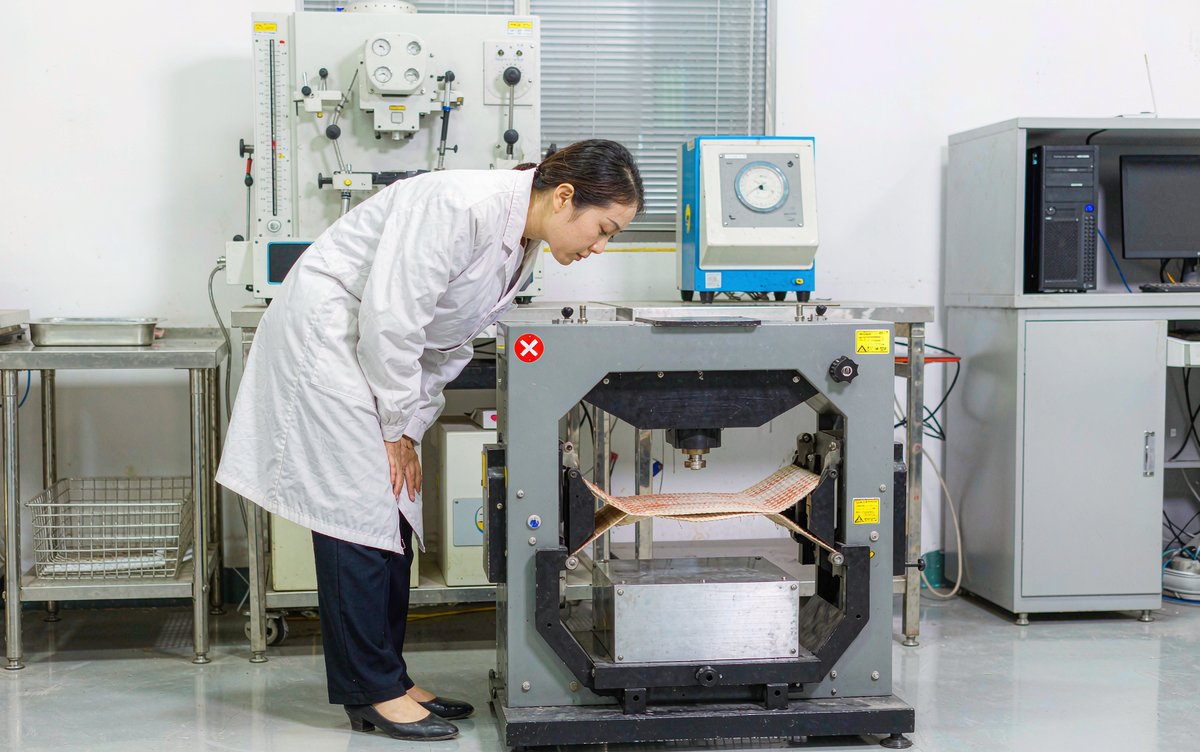
A report is only useful when it describes the fabric in your order, not a relative someone tested last year. (AI-generated image)
1. What Fabric Tests Should You Ask for Before Bulk Production?
Different garments fail in different ways, so the test list should follow the product. All three categories below need the fabric identity and basic performance checked. Where they differ is in the functional add-ons.
| Product | Priorities to check | Reports or records to request |
|---|---|---|
| Yoga leggings | Fabric content and GSM; stretch and recovery in both directions; dimensional change after washing; colourfastness to washing, perspiration and wet/dry crocking; pilling. Add garment opacity verification if you claim squat-proof | Reports matched to fabric number, colour and batch; stretch data in both directions with test conditions; before/after wash records; garment squat check under defined conditions |
| Sports bras | Fabric content and GSM; stretch and recovery; shrinkage; perspiration, wash and crocking fastness; pilling. Confirm elastic, lining and other key materials separately by their intended use | Identification and test data for main fabric, lining and critical elastics; after-wash performance; wear and movement check records |
| Training tops | Fabric content and GSM; shrinkage; wash, perspiration and crocking fastness; pilling. Add stretch for performance styles, and functional tests if you claim wicking or quick-dry | Basic reports for actual bulk fabric; reports stating direction and sample state; absorbency, wicking, liquid moisture management or drying tests matched to the claim |
Those basics have established test methods. Absorbency, wicking, liquid moisture management and drying are separate properties — one result does not stand in for the others.
Ask for one extra document alongside the reports: a simple mapping of order → fabric number → colour → batch → report number. This is the single most useful thing you can request, because it is what turns a stack of PDFs into evidence about your order. For sports bras in particular, keep fabric reports separate from garment wear checks: a passing stretch result on the fabric is not proof that support in the finished bra has been validated. If colour is part of the claim, our colour matching guide explains how dye lots relate to bulk.
2. How to Check Fabric Weight, Stretch and Recovery
These three numbers answer different questions. Weight says how heavy the fabric is per unit area. Stretch says how far it extends under a defined force. Recovery says how much it comes back. "Heavy, stretchy fabric" is a description, not data. Weight, stretch and recovery each have their own methods; do not merge them into one sentence.
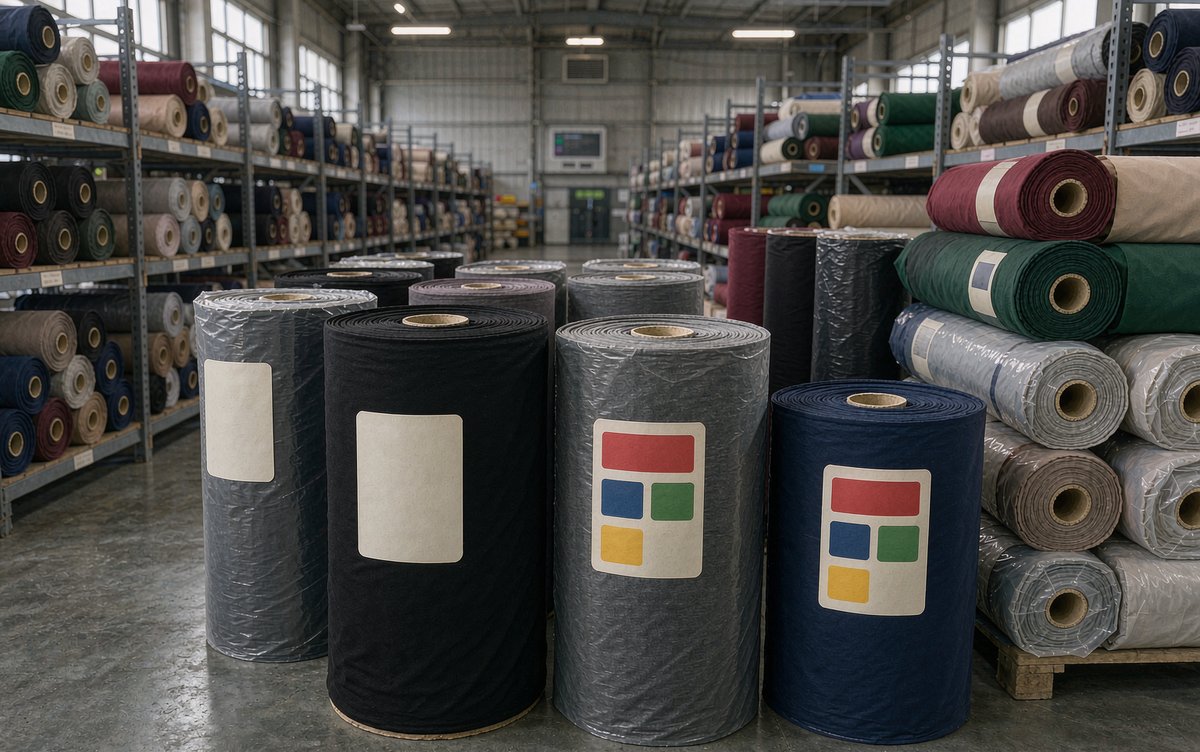
Batch labels are what connect a test report to the fabric that will actually be cut. (AI-generated image)
GSM: check the agreed weight, not every other property
GSM is grams per square metre. A common method is ASTM D3776 / D3776M. It confirms the material matches the weight you agreed and that different lots fall inside an agreed tolerance. It is not a substitute for opacity, durability or stretch — testing bodies list weight, opacity, strength and stretch as separate performance items.
As a buyer, look at three things:
- Does the measured value match the target and tolerance in your order?
- Was the sample in its original state, or already washed or otherwise treated?
- Are the method and sample state comparable across the reports you are comparing?
Stretch: how far does it go under load?
Stretch describes how much the fabric extends under specified conditions. Read past the single percentage: check the load or fixed-extension condition, the hold time, and the test direction. Different knit structures and elastane levels may call for different methods, so do not assume every stretch fabric uses the same one. Confirm the method applies to your material — see the public standards list from AATCC as a starting point.
Recovery: does it come back?
Recovery describes how well the fabric returns to its original dimension. Reports may express it as a recovery percentage, or as residual extension or growth after a set relaxation time. These are read differently, so confirm the definition first.
Here is a simplified illustration, not a standard test procedure:
A 10 cm piece of fabric is stretched to 15 cm — an extension of 50%. After release and the specified rest time, it measures 10.5 cm. It has retained 5% residual extension relative to its original length.
So "stretches a lot" and "recovers well" are not the same claim. The first is about freedom of movement; the second is about the risk of a garment losing shape over repeated wear.
Why read each direction separately?
Fabric can behave differently across and along the knit. "Four-way stretch" does not mean both directions share identical stretch and recovery figures. Ask the factory to mark the fabric direction on the report and explain which garment direction it corresponds to. For close-fitting styles, a single favourable direction is not enough — both should be tested by the agreed method, then judged together with the pattern and a garment movement check. Our guide to premium activewear fabrics covers how construction affects this.
3. What Do Colorfastness and Pilling Tests Tell You?
Colorfastness tells you whether colour changes or transfers under specified conditions. Pilling tells you how the surface changes after rubbing. They map to different after-sale risks and cannot replace each other.
| Test | What the buyer should read | After-sale risk it addresses |
|---|---|---|
| Wash fastness | After the specified wash cycle, does the fabric change colour or stain adjacent material? | Fading, or colour bleeding onto light panels or other laundry |
| Perspiration fastness | Colour change and transfer under defined perspiration conditions | Colour shift or transfer in areas that sweat |
| Dry and wet crocking | Colour transfer from rubbing, in dry and wet states | Colour rubbed onto light surfaces during wear |
| Pilling | Fuzzing, pills or other surface change after a defined rubbing procedure | Inner thigh, underarm and other friction areas looking old quickly |
AATCC method examples include TM61 for accelerated wash fastness, TM15 for perspiration and TM8 for crocking. Always state the method version and conditions. Pilling uses different machines and procedures — random tumble and Martingale among them — so a grade means little without the method and the cycle count. You can see the scope of physical methods in AATCC's standards information.
Two misreadings to avoid. First, a single overall "PASS" with no sub-results for colour change, staining or dry/wet crocking is not enough detail. Second, passing a pilling test does not mean the garment will never pill in real wear; laboratory results are a controlled comparison, and actual wear depends on conditions and the wearer. Our pilling guide goes deeper on that gap.
4. When Should You Test Squat Opacity or Moisture Wicking?
Add a functional test when a property decides the wearing experience, or when you claim it in marketing. Intertek links activewear testing to performance claims and benchmarks; the same logic applies here.
If you claim squat-proof
A laboratory opacity or light-blockage test gives material-level evidence — AATCC TM203 relates to light obstruction, for example. But a material result and a garment squat check are not the same thing. Record them separately.
Agree a repeatable garment check with your factory in advance:
- Which colours, sizes and body-size ranges are tested;
- Whether the sample is before washing or after a defined wash;
- Lighting, background, viewing distance and angle;
- The squat pose, check positions and stretch condition;
- The pass criterion and how photos or video are recorded.
This is a suggested internal protocol, not an industry standard. The point is that "squat-proof" becomes something both sides can repeat, instead of the factory saying "we tried it and it was fine." Our dedicated guide to testing leggings for squat opacity covers the garment check in detail.
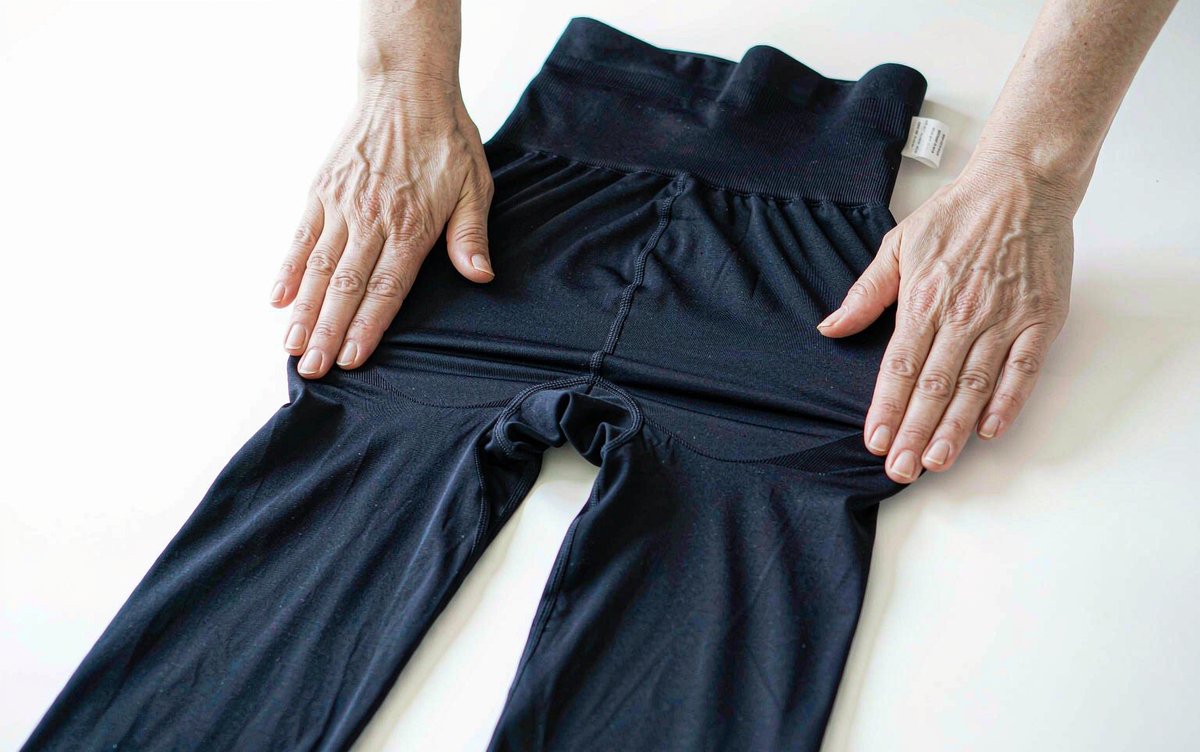
Material light-blockage data and a real garment squat check are two different pieces of evidence. (AI-generated image)
If you claim moisture wicking
First break the marketing phrase into testable questions. Absorbency, transporting liquid along the fabric, liquid moisture management and drying are different properties with different methods.
| Claim you want to make | Test direction | Example methods |
|---|---|---|
| Absorbs surface moisture readily | Absorbency | AATCC TM79 |
| Moves liquid along the fabric | Vertical or horizontal wicking | AATCC TM197, TM198 |
| Moves moisture between the two faces | Liquid moisture management | AATCC TM195 |
| Dries faster after washing or sweating | Drying time or rate | AATCC TM199, TM201 |
These are distinct tests in AATCC's programme, and the results do not substitute for one another — absorbing quickly does not by itself prove drying quickly. Confirm the current method names and applicability with the lab. If you plan to claim performance "after many washes," specify the wash count, procedure and after-wash acceptance; performance retention is its own durability requirement, not something a fresh-fabric report automatically covers.
5. How to Read a Fabric Test Report and Check the Pass Criteria
Read in this order: is it the current material, how was it tested, what number came out, and against what limit? Do not jump to the conclusion page.
| Check | What the buyer confirms |
|---|---|
| Submitted sample | Fabric number, content, construction and finish match the material actually used |
| Colour and batch | Colour reference, dye lot or production batch can be traced to this order |
| Report identity | Lab name, report number, sample receipt and test dates, page count and revision status are complete |
| Test method | ASTM, ISO or AATCC number, version and options, and whether a modified method was used |
| Test conditions | Before/after wash, direction, load, time and cycle count match what was requested |
| Measured result | A number, a grade, or "report only"; units and sub-results are complete |
| Acceptance limit | Which order, quality annex, brand spec or explicitly applicable standard sets it |
| Verdict and limits | Which item failed, which items were not tested, and any scope restrictions in the notes |
Method and limit answer two different questions
A method answers "how do we measure it". An acceptance limit answers "how much is good enough". For the performance tests discussed here, an ASTM or ISO number alone does not mean a pass value was agreed. Performance specifications from testing bodies separate "Method and Index" from "Requirement" precisely because the two must be confirmed together — see Intertek's performance standard information for an example of that structure.
A "report only" result is neither a pass nor a fail on its own; it means the value is recorded and the brand must judge it against its own purchasing requirement. So do not copy a universal "activewear pass value" from the internet. Define the use, garment structure, claim and test conditions first, then agree the limits with your factory and lab and lock them before testing.
6. When Should You Retest Fabric Before Bulk Approval?
Retest when the report cannot be reliably tied to the current material, or when material, colour or finish changed in a way that could affect performance. Pause that item's release, ask the factory what changed, then agree the retest scope with the lab. This is a suggested risk-review framework, not a rule that every change requires a full retest.
| Situation | What to confirm and retest |
|---|---|
| Report material differs from current fabric | Establish the difference and traceability first; do not carry the old report over if the link cannot be confirmed |
| Fabric batch changed | Check GSM, stretch and dimensional stability; use history to decide how far to expand testing |
| Colour added or changed | Prioritise wash, perspiration and crocking fastness; confirm opacity too for light colours or squat-proof claims |
| Dyeing or functional finish changed | Reassess affected fastness, hand feel, dimension, stretch and functional items |
| Supplier, yarn or knit structure changed | Treat as a material change; reconfirm the key spec and test plan |
| Failure was corrected | Retest the failed item on a representative corrected sample; check whether the fix affected other properties |
| Marketing claim changed | Add tests for the new claim; the old basic report does not cover new functions |
Retest scope should follow the change itself — not "the report is still new, so reuse it" and not "something changed, so retest everything."
What should the final approval record contain?
Keep a fabric approval note with at least: order and style; fabric supplier and number; content, construction, GSM and tolerance; colour and batch; methods and limits applied; report number; open items; approver and date; and a retained sample number. If you approve only one colour or batch, write that scope down. If garment squat checks, wear trials or after-wash verification are still pending, list them as separate open conditions so "fabric approved" is not read as "the whole garment and every claim are released."
The final decision should form one clean chain: the current material has a clear identity, the report covers the right properties, the results meet limits agreed in advance, and the garment use and claims have their own verification. That is what turns a test report from a PASS on a page into a decision you can defend.
Frequently Asked Questions
What fabric tests should a brand ask for before bulk production?
Ask for reports tied to the exact fabric number, colour and batch in your order. Cover basics — GSM, stretch and recovery, wash shrinkage, colourfastness and pilling — then add functional tests only for claims you make, such as squat opacity or moisture management.
Does a high GSM mean leggings are squat-proof?
No. GSM is weight per square metre and is a different property from opacity. Testing bodies list weight and opacity separately. Verify opacity on the actual garment under defined lighting and movement, not by weight alone.
What is the difference between stretch and recovery?
Stretch is how far the fabric extends under a defined force; recovery is how much it returns afterwards. A fabric can stretch a lot and still recover poorly. Read both, in both directions, with the test conditions.
Does "report only" on a test result mean it passed?
No. "Report only" means the value is recorded without a pass or fail verdict. You still need to judge it against the limit agreed in your order or quality specification.
When should fabric be retested?
Retest when the report cannot be tied to the current material, or when fabric batch, colour, finish, supplier or claim changed in a way that affects performance. Scope the retest to the change rather than retesting everything by default.
Make the Report Answer Your Question
A test report is not a certificate of quality. It is an answer to a specific question about a specific sample under specific conditions. Ask a better question — is this the fabric in my order, tested this way, against this limit — and the report becomes genuinely useful. Match the report to the material, and the material to the claim.
Framework note: standards and method references here are drawn from public AATCC, ASTM and Intertek information, checked November 2026. Confirm applicability, current versions and acceptance limits with your factory and lab before testing. No results in this guide represent testing performed by the author. For production quality processes, see our quality control guide.