How to Test if Leggings Are Squat-Proof Before Bulk Production
A pair of leggings can look completely opaque while standing still and become noticeably sheer once the fabric stretches across the hips and seat. That is why checking a fabric against a hand, a light box, or an unstretched swatch is not enough before approving bulk production.
For a brand, the useful question is not simply, “Is this fabric squat-proof?” It is: does this exact fabric, in this color, garment size, fit and construction remain acceptably opaque during the movements the product is designed for?
A reliable pre-production opacity check should use the actual production-intent fabric, approved color and intended garment size under consistent lighting and movement conditions.
Check the leggings while standing, bending, half squatting and fully squatting. Record the fabric code, GSM, color, size, wash status and test conditions, and photograph any pass, review or fail result.
When wash performance is relevant, repeat the garment check after the agreed laundering procedure. A visual squat test is an internal garment QC assessment—not a laboratory certification or universal industry standard.
1. Why Leggings Become See-Through During Movement
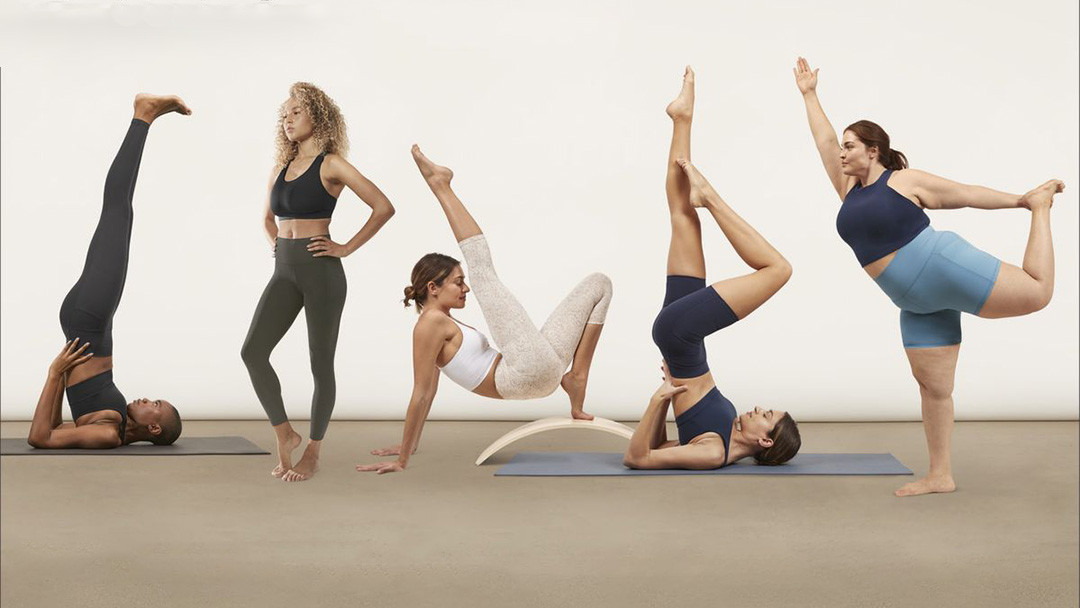
When leggings stretch over the hips, thighs and seat, the fabric structure opens. Yarn spacing changes, the fabric becomes thinner in the stretched area, and more contrast from underneath may become visible.
Several variables influence the result.
Fabric Construction
Two fabrics with the same fiber composition and similar weight can behave differently because their yarn size, knitting structure and density are different.
A tightly constructed interlock may maintain coverage differently from a lighter or more open knit even if both are listed with similar nylon-spandex or polyester-spandex percentages.
Fabric Weight
GSM—grams per square meter—is useful because it records fabric mass per unit area. But a higher GSM does not automatically make a fabric squat-proof.
A dense 280 GSM construction may maintain better coverage than a poorly engineered 320 GSM fabric. Weight needs to be considered together with knit density, yarn, stretch and color.
Garment Stretch
The same fabric may be opaque at low extension and become visibly more transparent when stretched farther.
This is particularly important in fitted activewear because negative ease means the garment is intentionally smaller than the body area it covers.
If the selected size is too small or the pattern creates excessive extension across the seat, the opacity problem may be caused partly by fit rather than fabric alone.
Color
Dark and light colors should be checked separately. A black sample passing the movement test does not prove that an ivory, pastel, neon or light beige version will behave the same way.
Each commercially important color should be evaluated on the actual production-intent material.
Construction Details
Local areas may behave differently because of:
- Pockets
- Double layers
- Gussets
- Seam placement
- Printed panels
- Mesh inserts
- Lining
- Waistband construction
This is another reason why a fabric swatch alone cannot replace a finished-garment test.
2. GSM Alone Does Not Guarantee Squat-Proof Leggings
Buyers often ask a factory for a minimum GSM because they want to reduce the risk of see-through leggings.
That is reasonable as part of the fabric specification, but it should not become a shortcut such as:
That statement is too broad.
ASTM D3776/D3776M provides methods for measuring fabric mass per unit area. The result tells you fabric weight. It does not establish whether the finished garment remains opaque during a squat.
For opacity decisions, record at least:
- Fabric code
- Fiber composition
- Measured or supplier-declared GSM
- Knit construction
- Color
- Garment size
- Fit and stretch level
- Movement-test result
Over time, a brand can build its own useful material database from these records rather than relying on a universal GSM number.
3. Set Up the Pre-Production Sample Correctly
The value of the test depends on what is being tested.
Ideally, the garment should be made from the same or confirmed production-intent material intended for bulk production.
Confirm Before Testing
- Correct style number
- Current sample revision
- Approved or production-intent fabric code
- Correct fabric composition
- Correct GSM specification
- Approved color or representative bulk color
- Correct garment size
- Approved or near-approved pattern
- Correct waistband and gusset construction
- Correct lining where applicable
- Correct finishing or washing status
4. Control Lighting, Color and Fit Before Comparing Results
A visual test becomes difficult to compare when conditions change each time.
Imagine testing one black legging in a dim fitting room and another light beige legging directly in front of a bright window. Calling one fabric “better” from those two observations is not a controlled comparison.
Record the Test Conditions
- Garment color
- Garment size
- Fabric code
- Fabric GSM
- Tester's approximate fit in the garment
- Underwear or contrast color used for the test
- Lighting environment
- Camera position
- Wash status
- Test date
The goal is not to create a fake laboratory environment. It is to make the internal check repeatable enough that one sample can be compared with another.
Do Not Test Only in Low Light
A product intended for yoga, running or outdoor training may be worn under bright daylight. If commercial risk is high, include a realistic bright-light viewing condition in addition to standard indoor inspection.
At the same time, direct backlighting should be documented separately instead of being treated as the only pass/fail condition.
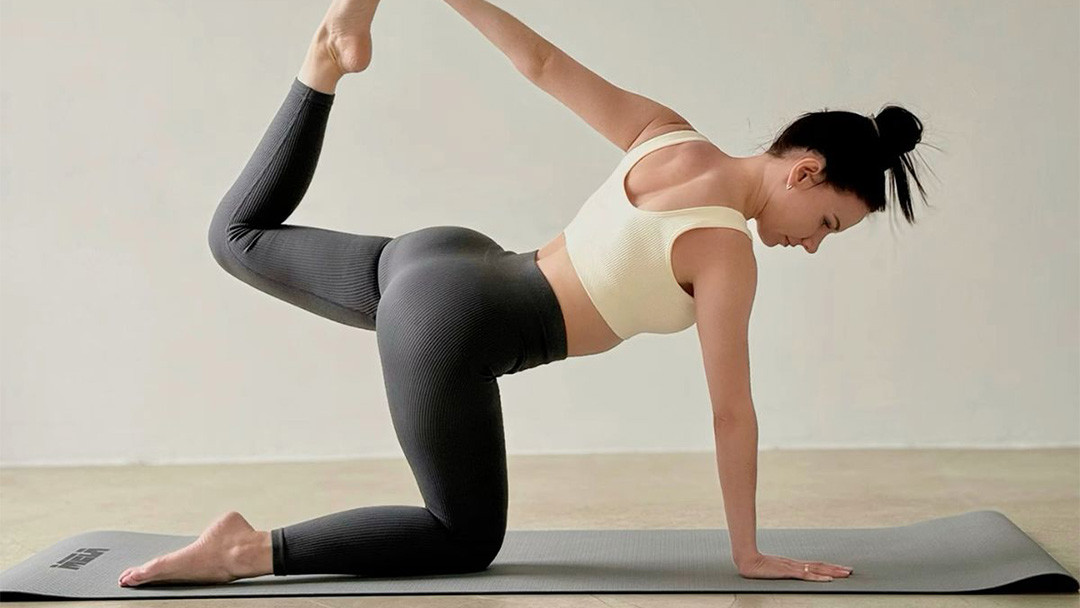
5. Use a Repeatable 5-Step Movement Test
Call The STYLE recommends using a documented movement sequence rather than asking someone to perform one quick squat and saying “looks fine.”
Step 1 — Standing
Check the garment from the back and side in a natural standing position. Note visible underwear color, outlines, surface whitening or obvious construction issues.
Step 2 — Hip Hinge
Bend forward at the hips to begin increasing extension across the seat. Check whether coverage changes before a full squat is reached.
Step 3 — Half Squat
Move into a controlled half-squat position. Review the center seat, upper thigh, gusset and seam areas.
Step 4 — Full Squat
Perform a normal deep squat consistent with the intended use of the garment. Record whether background or undergarment contrast becomes clearly visible.
Step 5 — Return to Standing
Recheck the surface after extension. Look for temporary or persistent whitening, bagging, growth, seam distortion or poor recovery.
The same movement sequence should be used when comparing revised samples or alternative fabrics.
6. Use Pass, Review and Fail Instead of an Undefined 1–5 Score
A five-point score may look more scientific, but it is not useful unless every score is clearly defined.
For internal product development, three categories are often easier to manage:
7. A 5-Garment Pre-Production Opacity Check
When sample availability permits, checking more than one garment can help identify whether an issue appears consistently or only on one piece.
The following five-garment scorecard is a practical internal comparison tool. It is not an AQL sampling plan and should not be presented as an industry statistical standard.
| Garment | Standing | Half Squat | Full Squat | Whitening | Result |
|---|---|---|---|---|---|
| #1 | Pass | Pass | Pass | No | PASS |
| #2 | Pass | Pass | Minor contrast | No | REVIEW |
| #3 | Pass | Visible contrast | Clearly visible | Moderate | FAIL |
| #4 | Pass | Pass | Pass | No | PASS |
| #5 | Pass | Pass | Pass | No | PASS |
The results above are illustrative examples only. They are not actual test data and should not be presented as Call The STYLE production statistics.
8. Record the Fabric and Test Conditions With the Result
“Black leggings passed” is not enough information to reproduce the decision six months later.
A more useful record includes:
| Record field | Example |
|---|---|
| Style number | LG-2608 |
| Fabric code | Internal / supplier fabric code |
| Composition | Enter actual supplier specification |
| GSM | Enter actual measured or approved value |
| Color | Approved color name / Pantone reference |
| Garment size | M |
| Sample revision | PPS V3 |
| Wash status | Before wash / after agreed wash cycle |
| Lighting | Documented indoor / bright-light condition |
| Movement result | Pass / Review / Fail |
| Photo reference | LG-2608-V3-Opacity-01 to 05 |
This type of record becomes especially useful when a repeat order uses a new dye lot or when the brand asks why a previously approved fabric was changed.
9. Stretch and Recovery Should Be Checked Separately
Opacity is only one part of performance.
If a fabric becomes less transparent simply because the garment was made looser, the fit may no longer meet the brand's compression requirement.
Stretch and recovery therefore need their own evaluation.
ASTM D2594/D2594M is designed to measure stretch properties in knitted fabrics that exhibit high stretch and good recovery from low tension. It evaluates fabric stretch under a known load and fabric growth after extension is removed.
The practical sourcing lesson is simple:
10. Recheck After Washing When It Matters to the Product
Washing can change more than color. Depending on the fabric and construction, it may affect:
- Garment dimensions
- Fabric surface
- Color appearance
- Stretch and recovery
- Fit
- Print or logo appearance
When these changes could affect opacity, repeat the same movement check after the agreed laundering procedure.
AATCC TM61 is an accelerated method used to evaluate colorfastness to laundering. It can support evaluation of wash-related color change, but it should not be described as a squat-proof test.
Laboratory fabric testing can quantify defined textile properties. The garment squat check evaluates whether the finished product meets the brand's visual opacity expectation during intended movement.
11. What to Do When Leggings Fail the Test
The wrong corrective action is to automatically say, “Increase GSM.”
Start by identifying why the product failed.
Problem: Fabric Opens Too Much During Stretch
Possible actions:
- Evaluate a denser knit construction
- Review yarn structure
- Compare a different fabric
- Evaluate a suitable increase in fabric weight
- Review garment negative ease
- Check whether the selected size is being overstretched
Problem: Surface Turns White During Extension
Possible actions:
- Review fabric construction
- Compare another yarn or dye combination
- Check another dye lot
- Reduce excessive extension where fit permits
- Test an alternative approved color or fabric
Problem: Only Light Colors Fail
Possible actions:
- Evaluate a denser fabric construction
- Test another material specifically in the affected color
- Review local lining where product design allows
- Confirm the intended contrast/underwear condition with the buyer
- Do not rely on the black color approval
Problem: Only One Size Fails
The fabric may not be the only issue. Review:
- Grading
- Hip width
- Rise
- Negative ease
- Pattern proportions
- Fit-model suitability
If M passes but XL fails—or the reverse—the grading relationship deserves investigation before changing the entire fabric.

12. Buyer Approval Before Bulk Production
Once the production-intent sample and fabric meet the agreed requirements, keep an approval record.
A practical record may include:
- Style number
- Fabric code
- Composition
- GSM
- Color
- Sample size
- Revision number
- Test date
- Wash status
- Lighting condition
- Movement-test result
- Photo references
- Corrective action, if any
- Buyer approval status
- Approval date
PPS V4 approved for bulk using Fabric Code XX-123, Black, Size M. Opacity reviewed under documented standing, half-squat and full-squat conditions. Reference photos attached. Any bulk material change requires reapproval.
That creates a much clearer handoff between product development, merchandising, production and quality control.
13. Pre-Bulk Squat-Proof Leggings Checklist
Fabric
- Production-intent fabric code confirmed
- Composition recorded
- GSM recorded
- Bulk color or approved representative color used
- Fabric construction unchanged from approved version
Garment
- Correct style and revision
- Correct sample size
- Approved pattern or PPS construction
- Correct gusset, pocket and lining construction
- Fit does not create unintended overextension
Test Conditions
- Lighting documented
- Contrast/underwear condition documented
- Standing position checked
- Hip hinge checked
- Half squat checked
- Full squat checked
- Recovery after movement checked
Approval
- Result recorded as Pass, Review or Fail
- Photos saved
- Corrective action recorded where required
- After-wash recheck completed when relevant
- Buyer approval recorded before bulk production
Frequently Asked Questions
How can you tell if leggings are squat-proof?
Test the finished leggings while the fabric is under realistic body stretch. Check standing, bending, half-squat and full-squat positions under consistent lighting, using the production-intent fabric, color and intended size. Record whether undergarment or background contrast becomes unacceptably visible.
Does higher GSM mean leggings are more squat-proof?
Not automatically. Higher fabric weight can contribute to coverage, but knit density, yarn construction, stretch, color, fit and surface behavior also affect opacity. GSM should be recorded as one specification rather than used as a universal pass/fail rule.
What GSM is best for squat-proof leggings?
There is no universal GSM that guarantees squat-proof performance. Brands should test the exact fabric at realistic garment stretch. A target GSM range can help narrow sourcing options, but final approval should come from the production-intent fabric and garment test.
Why are light-colored leggings more likely to show through?
Light colors can reveal underlying contrast more easily in some fabric constructions, especially when the material is highly stretched. However, color is only one factor. The exact knit structure, density, yarn, dyeing, fit and viewing conditions also matter.
Should every color be tested?
Commercially important colors should be reviewed individually when opacity risk is relevant. Passing a black sample does not prove that ivory, pastel, neon or other light colors made from the same base construction will give the same visual result.
Should squat-proof leggings be retested after washing?
When laundering could affect dimensions, fit, surface appearance, color or stretch recovery, an after-wash movement recheck is useful. Use the same documented test conditions so the before- and after-wash results are comparable.
Is a squat test a laboratory test?
No. A visual or movement-based squat test is a product-specific quality-control check. Laboratory methods can measure defined textile properties such as fabric weight, stretch, growth and colorfastness, but they should not be presented as a universal “squat-proof certification.”
Final Recommendation
A good squat-proof test is not complicated, but it needs to be controlled.
Use the production-intent fabric. Test the actual approved colors. Check realistic garment sizes and fit. Keep lighting and movement conditions consistent. Photograph the results. Record the fabric code, GSM and revision. Recheck after washing when the product requirement makes that relevant.
Most importantly, do not reduce the decision to one number.
Higher GSM does not automatically mean squat-proof. Nylon does not automatically mean squat-proof. Black does not automatically mean squat-proof.
The meaningful answer comes from the exact fabric, color, construction, fit and movement conditions of the product that will actually go into production.
Developing Squat-Proof Leggings for Your Brand?
Send us your leggings design, target fabric, colorways, size range and order quantity. Our activewear development team can help evaluate fabric options, sampling requirements and the key QC points to confirm before bulk production.
Discuss Your Leggings ProjectTechnical References
-
ASTM International — D3776/D3776M, Standard Test Methods for Mass Per Unit Area (Weight) of Fabric.
ASTM D3776/D3776M -
ASTM International — D2594/D2594M, Standard Test Method for Stretch Properties of Knitted Fabrics Having Low Power.
ASTM D2594/D2594M -
AATCC — TM61, Colorfastness to Laundering: Accelerated.
AATCC TM61