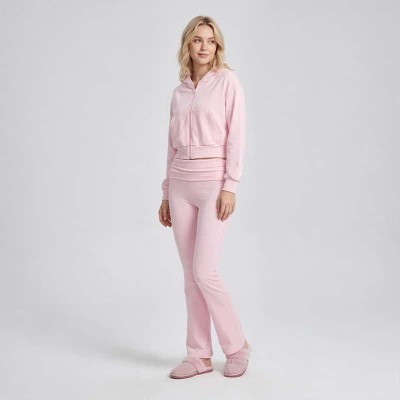
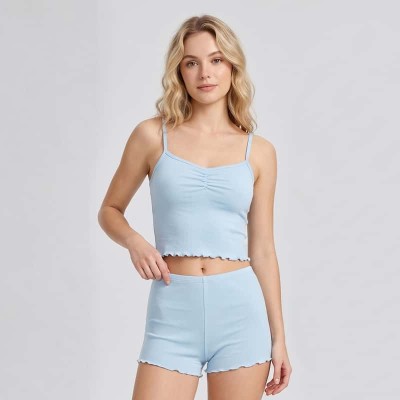
Flatseam construction
Flatseam or flatlock-style construction can help reduce bulk and friction in high-contact areas, such as leggings and fitted tops.

For close-fitting yoga and training apparel, the construction should stretch with the fabric without thread breakage, excessive puckering, or restricting movement.
Flatseam or flatlock-style construction can help reduce bulk and friction in high-contact areas, such as leggings and fitted tops.
Overlock seams are commonly used to join stretch-fabric panels efficiently and should be selected with the garment’s stretch and recovery in mind.
Coverstitching is often used for hems, bindings, and selected topstitching where stretch, finish, and appearance need to work together.
Reinforced seams or bartacks may be needed around pockets, straps, gussets, and other points exposed to higher load or repeated movement.
Confirm seam allowance, thread type, stitch density, needle selection, fabric thickness, and fabric recovery together. The same stitch construction can perform differently when the fabric, tension, or garment area changes.
Check that the seam extends with the fabric and recovers without thread breakage or visible distortion.
Check bulk, friction, pressure, and seam feel in close-contact areas during intended wear.
Test the sample during stretching, squatting, training, and other relevant movements for the style.
At Call The STYLE, seam construction can be selected according to the garment design, fabric, activity, comfort requirements, and expected stress points. Final construction should be confirmed through sample fitting, stretch testing, and movement testing before bulk production.
Review Your Seam Construction