Payment Terms & Incoterms for Custom Activewear: T/T, Deposits, FOB Explained
The single most common way brands lose money on a first order is not a bad factory, it is a payment structure they never understood. Before you wire a deposit, know three things: what the deposit should be, whether you are paying T/T or L/C, and which Incoterm decides who owns the risk between the factory floor and your warehouse.
Quick Answer
For a first custom activewear order, expect a deposit of roughly 30-50% with the balance due before shipment, paid by T/T (wire transfer) in most cases. FOB is the most common Incoterm for apparel exports: the factory covers everything up to the port of loading, and you own the risk and freight from there. L/C (letter of credit) is worth considering for large first orders, but it costs more and requires paperwork. Avoid 100% prepayment.
How Activewear Payment Typically Works
Most activewear orders run on two milestones: a deposit to start production, and a balance before the goods leave the factory. This is normal and is how factories protect themselves against a brand that cancels after the fabric is cut.
A common first-order structure looks like this:
| Milestone | Typical Share | When |
|---|---|---|
| Deposit | 30-50% | When you confirm the order and production starts |
| Balance | 50-70% | Before shipment, after the pre-shipment inspection you approve |
These percentages are industry common practice, not a fixed rule. Every factory sets its own terms, and the exact split shifts with order size, your history with the factory, and whether it is a first order or a reorder. Confirm the numbers in writing before you pay anything.
T/T vs L/C: How You Actually Pay
Two payment methods cover nearly all B2B activewear orders. They solve different problems, and choosing wrong costs money.
| Method | What It Is | Best For | Watch Out For |
|---|---|---|---|
| T/T (Telegraphic Transfer) | Direct wire transfer from your bank to the factory's bank | Most first orders, lower fees, faster setup | Less protection than L/C; pay against documented milestones |
| L/C (Letter of Credit) | Bank guarantees payment when shipping documents are met | Large first orders, when you want a bank in the middle | Bank fees, strict document requirements, more admin |
For a first order of a few hundred pieces, T/T with a clear milestone structure is usually the practical choice. L/C starts to earn its cost when the order value is high enough that you want a bank guaranteeing the terms.
Incoterms: FOB, EXW, and CIF in Plain Terms
An Incoterm is a three-letter code that decides two things: who pays for each leg of the journey, and where the risk transfers from the factory to you. It is not the payment method, it is the delivery-and-risk agreement, and it should be written on your purchase order.
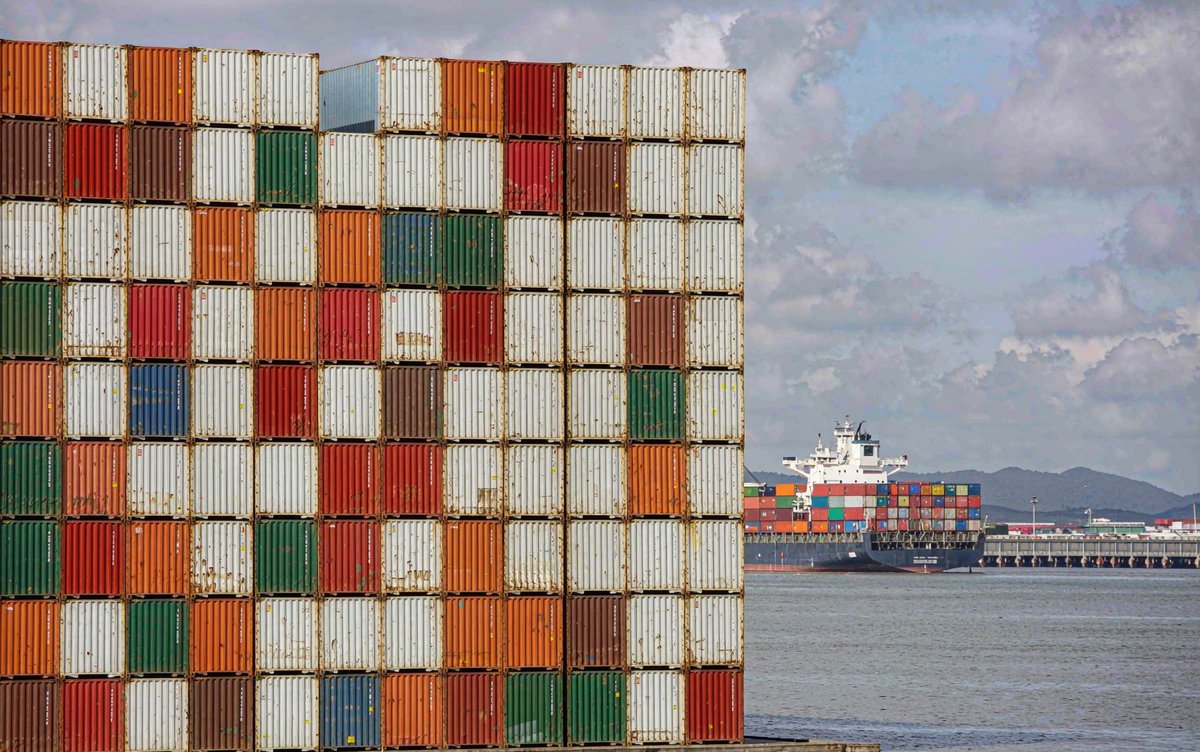
Incoterms decide where risk and cost transfer from the factory to you; get the term in writing on your order. (AI-generated image)
EXW — Ex Works
The factory's obligation ends at its own loading dock. You arrange and pay for everything from pickup onward, including export clearance. Cheapest factory price, but the most work and risk for you.
FOB — Free On Board
The factory handles export clearance and delivers the goods onto the vessel at the port of loading. From there, you own the freight, insurance, and risk. This is the standard for most apparel exports, because it draws a clean line at the ship's rail.
CIF — Cost, Insurance, and Freight
The factory pays freight and insurance to your destination port. Risk still transfers to you once the goods are loaded, but the factory handles the ocean leg and bills it into the unit price. More convenient, higher quoted cost.
| Incoterm | Who Handles Export & Freight | Where Risk Transfers | Best When |
|---|---|---|---|
| EXW | You, from the factory door | Factory loading dock | You have a freight forwarder and want the lowest unit price |
| FOB | Factory to the port, you after | On board the vessel | Most apparel exports, clean handoff |
| CIF | Factory to your destination port | On board the vessel | You want the factory to handle the ocean leg |
What Is Normal for a First-Order Deposit
Expect a deposit, and expect it to be meaningful. A factory that asks for no deposit before production is either very small or has not been burned yet, and the terms will usually make up for it elsewhere. The deposit is what commits both sides.
What is not normal is 100% prepayment. A supplier demanding the full amount before production removes your leverage if quality fails or the order runs late. If you hear 100% upfront, treat it as a red flag unless there is a compelling, written reason.

Confirm deposit, balance, and the Incoterm in writing before any money moves. (AI-generated image)
Payment Red Flags to Avoid
These are the patterns that should make you stop and ask harder questions.
| Red Flag | What It Usually Means |
|---|---|
| 100% prepayment demanded | You carry all the risk; leverage disappears once you pay |
| Payment to a personal or third-party account | Not a company account; harder to trace and dispute |
| Refuses to put terms in writing | No paper trail to fall back on if the order goes wrong |
| Deposit jumps after you hesitate | The "special price" was never tied to real cost |
| No pre-shipment inspection before balance | You pay the balance without verifying what was made |
A Payment Timeline for Your First Order
Here is how a clean first-order payment flow usually runs, from first contact to goods in hand.
| Step | Payment | What You Should Hold Onto |
|---|---|---|
| 1. Quote & terms agreed | None yet | Written quote, Incoterm, deposit and balance split |
| 2. Order confirmed | Deposit 30-50% | Purchase order signed by both sides |
| 3. Production runs | None | Milestone updates, photos, and a pre-production sample |
| 4. Pre-shipment inspection | None | Inspection report you actually read |
| 5. Balance & shipment | Balance 50-70% | Bill of lading and tracking, freight arranged per Incoterm |
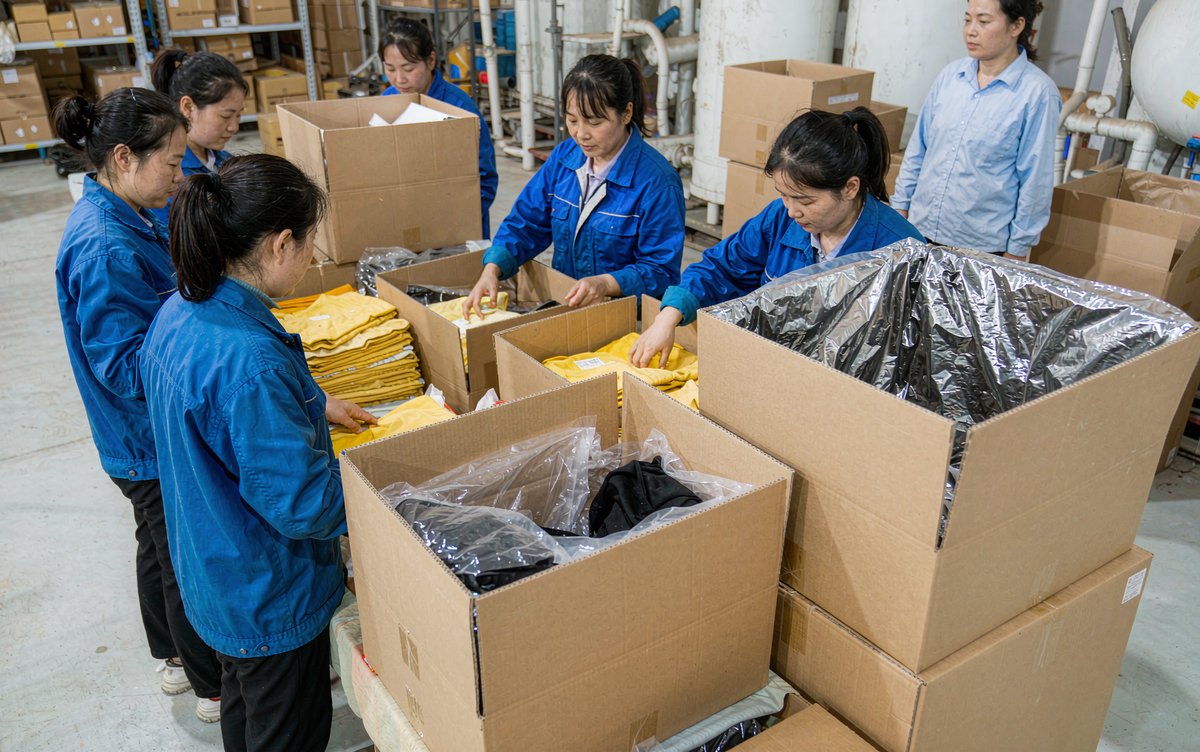
The balance is due before shipment; an approved pre-shipment inspection is what protects it. (AI-generated image)
Frequently Asked Questions
What deposit should I expect on a first activewear order?
Roughly 30-50% is common, with the balance before shipment. The exact split varies by factory, order size, and history, so confirm it in writing.
Is T/T or L/C better for a first order?
For most first orders, T/T with clear milestones is the practical choice. L/C adds bank protection and cost, which is worth it mainly on large orders.
What is the difference between FOB and CIF?
With FOB the factory covers everything to the vessel and you own freight and risk after loading. With CIF the factory also pays freight and insurance to your destination port, and it is built into the price.
Should I ever pay 100% upfront?
Rarely. Full prepayment removes your leverage if quality fails or the order is late. Ask for a milestone structure instead.
Get the Terms in Writing Before You Pay
Payment is where good sourcing decisions get locked in, or quietly undone. Confirm the deposit, the balance, and the Incoterm in writing, and only move money after you have verified the factory and compared the quote properly. For the two steps that come right before this, read how to audit a factory before your first order and how to compare activewear manufacturing quotes. For the full cost picture, see costs, MOQs, and lead times.
If you are ready to structure your first order, send us your tech pack or order details and we will walk you through the terms in plain English before any money moves.