How to Audit an Activewear Factory Before Your First Order
Before you wire a deposit, find out whether you're buying from a factory or a middleman. Most "factory" quotes in activewear come from trading companies that mark up your price and never touch a sewing machine. A thirty-minute video walkthrough will tell you more than a polished website ever will.
Direct Answer
Verify five things before your first activewear order: (1) real factory identity, not a trading company; (2) certifications you can look up online; (3) production capability that matches your order; (4) a sampling process that includes a pre-production sample; (5) communication that asks about your design, not just your quantity.
Why a Factory Audit Matters Before You Pay
Here's the part most brands miss: a quote tells you the price, but it doesn't tell you who actually makes the garment. In activewear sourcing, the gap between "what you were quoted" and "what shows up at your warehouse" is usually a trading company you never saw.
A trading company is not automatically bad. Some add real value through consolidation and language support. The problem is when one presents itself as a factory, adds 15-30% to your unit cost, and takes no responsibility for what comes off the line. When quality fails, they vanish or blame "the factory" you were never allowed to contact.
You are not auditing to be difficult. You are auditing because the factory you choose is the single biggest variable in whether your first 100 pieces are sellable or unsellable. The audit is cheaper than a failed order.
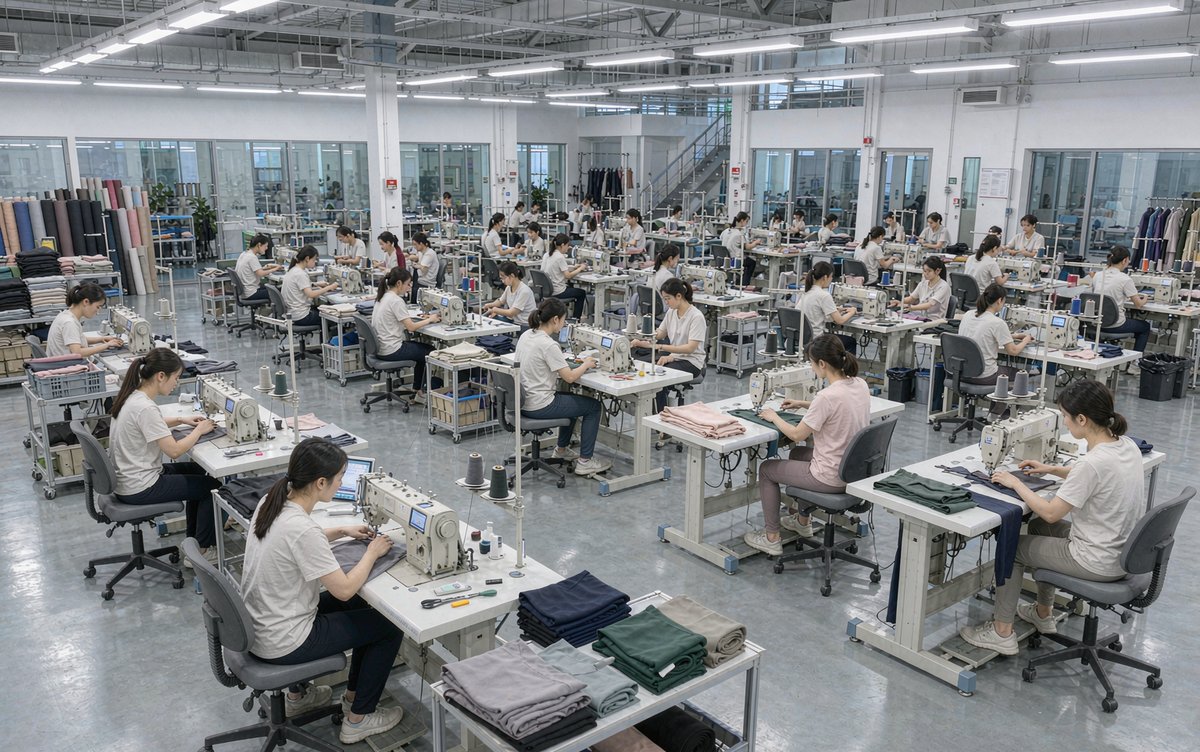
A live walkthrough of the cutting room, sewing lines and QC area separates a factory from a reseller. (AI-generated image)
Trading Company vs Real Factory: How to Tell the Difference
You usually cannot tell from a website. Both trading companies and real factories use the same stock photos, the same "factory" vocabulary, and the same certifications page. The difference shows up when you push for evidence.
| Signal | Real Factory | Trading Company |
|---|---|---|
| Live video walkthrough | Shows the floor, sewing lines, cutting room, fabric warehouse on request | Avoids it, delays it, or shows a "partner" factory they cannot answer questions about |
| Specific questions | Answers about GSM, stitch type, seam construction, machines | Deflects technical questions back to "we will check with our team" |
| Pre-production sample | Offers PPS as standard before bulk | Pushes straight to bulk, or samples come from a different location |
| MOQ talk | Explains why 100 pieces per style per color works, or why not | Quotes any MOQ instantly, because they are reselling capacity |
For the earlier question of how to find candidate factories in the first place, read our guide to activewear manufacturers for startups. This article assumes you already have candidates, and now you need to separate the real ones from the resellers.
The Pre-Order Factory Audit Checklist
Work through these five dimensions in order. Each one is a gate; if a factory fails an early gate, you usually do not need to keep going.
1. Identity and certifications
Ask for the registered business license and the factory address, then check that the certifications actually exist. A BSCI or ISO 9001 certificate has a number you can look up. If a factory will not share the number, treat the logo as decoration. For what each certification actually verifies, read GRS, OEKO-TEX and BSCI explained.
2. Production capability
Match the factory's line to your order, not to its brochure. Ask how many sewing lines it runs, what machines those lines have, and what it currently produces. A factory making woven shirts may not be set up for four-way-stretch leggings, even if it says "activewear" on the homepage.
3. Quality system
Ask who checks the garments and when: inline inspection, end-of-line inspection, or only a final random check. A real factory can describe its QC stages by name and show the checkpoints. If "quality" is only a promise, it is not a system.
4. Sampling process
Confirm there is a pre-production sample (PPS) between the fit sample and bulk. The PPS is made from production fabric on the production line. Skip this and the first bulk run becomes your real sample, which is how brands end up with 100 pieces of a mistake.
5. Communication
Watch how they respond to a technical question. A manufacturer asks about your rise, your gusset, your seam allowances. A reseller asks for your quantity and your target price. The first one is who you want cutting your fabric.
How to Audit a Factory Remotely
You do not need a plane ticket to separate a factory from a reseller. A structured video call works, and it is how most first orders are vetted now.
On the call, ask them to walk the floor live, not send a recording. Recordings can be borrowed. Then look for these specifics rather than just a row of machines:
- The cutting room and fabric warehouse. Resellers rarely have access to either, and it is the part they struggle to fake.
- Work in progress. Are there real garments on the tables, in colors and fabrics that match what you discussed?
- One specific question about your product. "How would you handle the gusset on this legging?" A real factory answers from experience.
- The QC area. Is there a designated inspection table with measurement tools, or does quality happen on the same table as sewing?
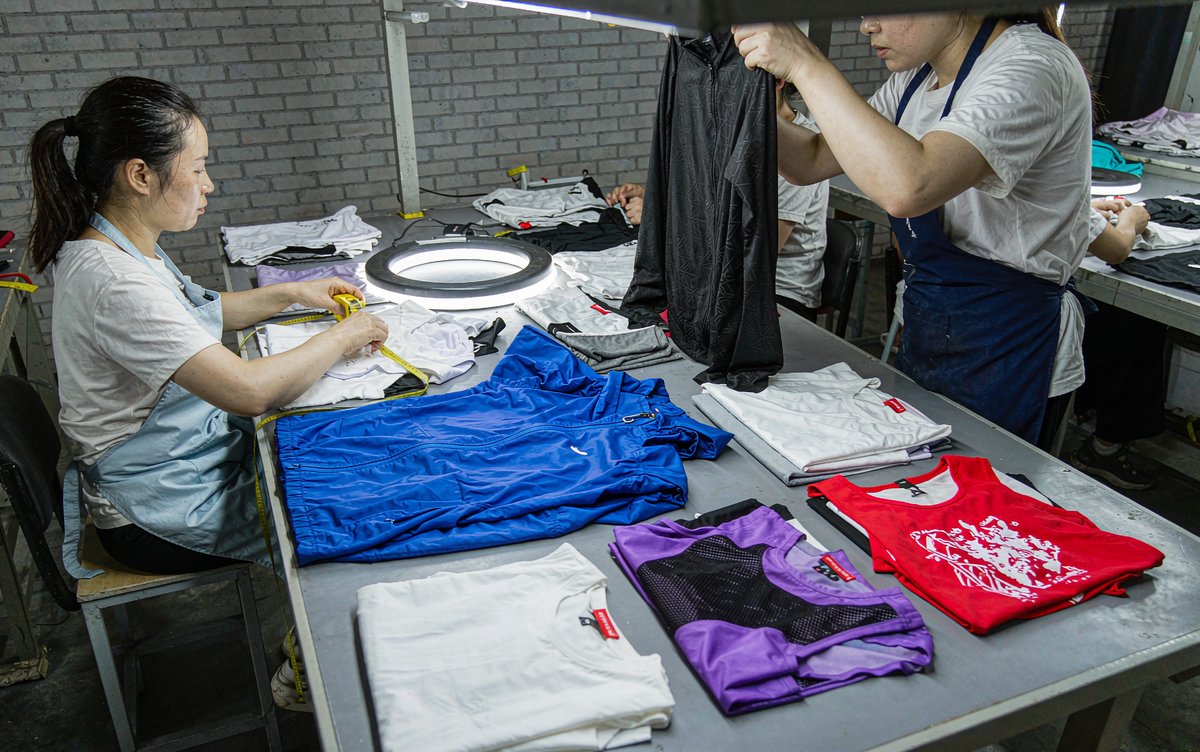
Ask where QC happens and who checks the garments, not just whether quality is a promise. (AI-generated image)
Red Flags That Should Stop the Order
Some signals are not warnings; they are stop signs. If you see these, walk away before you pay.
| Red Flag | What It Usually Means |
|---|---|
| Refuses or endlessly delays a video walkthrough | There is no floor to show, or the floor belongs to someone else |
| Quotes instantly without asking for a tech pack | You are getting a reseller's price, not a production quote |
| Samples arrive from a different city than the "factory" | The factory address is not where the work happens |
| Price drops sharply the moment you hesitate | The first price was never tied to real cost |
| No pre-production sample offered | Bulk becomes the first real test of the production line |
Documents to Request Before the Deposit
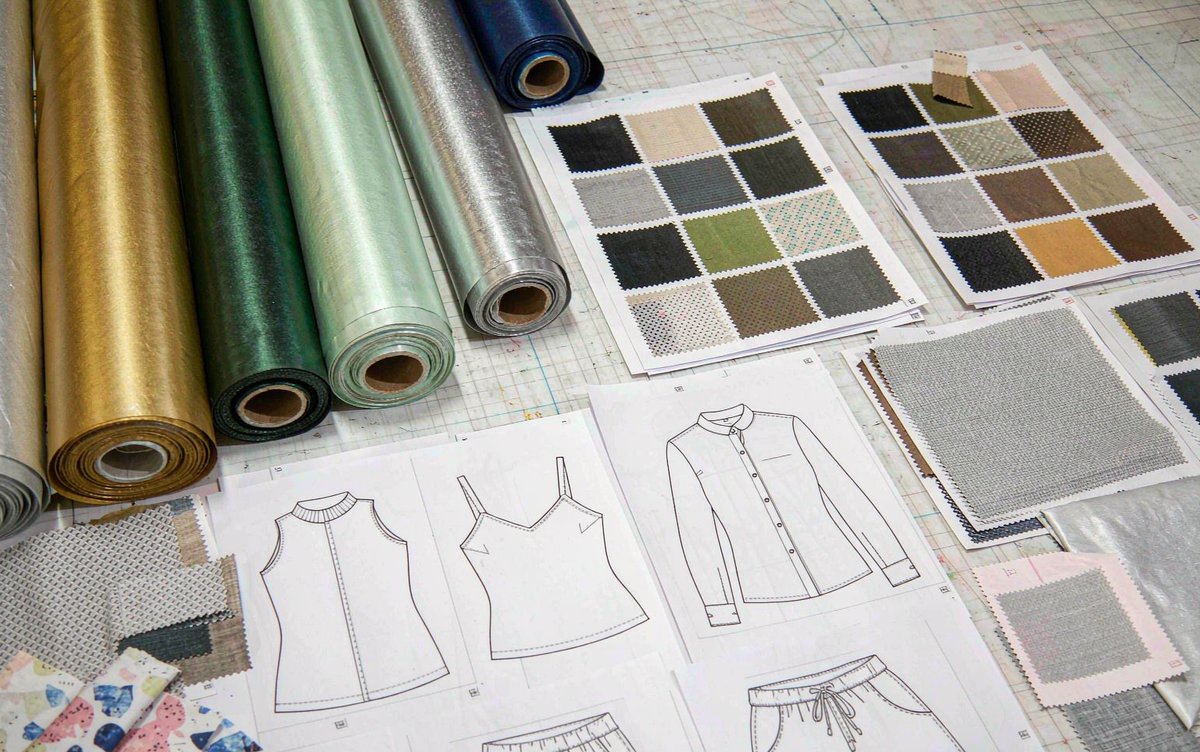
A pre-production sample from production fabric on the production line is your last gate before bulk. (AI-generated image)
Get these in writing, and cross-check rather than accept at face value:
- Business license with the registered company name and address
- Certification numbers for BSCI, ISO 9001, OEKO-TEX, or GRS, whichever they claim
- The factory address where your order will actually be produced
- A written QC process, even a one-page version
- Confirmation of the pre-production sample step and its timeline
Buyer-Side Audit Protocol
Use this as your own pass/fail checklist. It is a buyer-side review framework, not a formal third-party audit standard.
| Check | Pass | Fail |
|---|---|---|
| Live video walkthrough completed | Shows cutting room, sewing lines, QC area | Recording only, or floor avoided |
| Certifications verified by number | Number checks out on the certifier's database | Logo only, no number shared |
| Answers a specific technical question | Answers with fabric and construction detail | Deflects or resets to price |
| Pre-production sample confirmed | PPS step included before bulk | Straight to bulk offered |
| Documentation provided | License, address, QC process in writing | Nothing in writing |
Frequently Asked Questions
Can I audit a factory without visiting in person?
Yes. A structured live video walkthrough covers most of what you need for a first order. Ask to see the cutting room, fabric warehouse, and QC area live, not a recording.
How do I know if I am dealing with a trading company?
Watch what happens when you ask a technical question or request a live floor walkthrough. A trading company deflects or delays; a real factory answers and shows you.
Is an audit worth it for a 100-piece first order?
Yes. The point of a 100-piece minimum is to reduce risk, not to skip verification. A failed 100-piece order still costs you time, budget, and your launch window.
What certifications should a real activewear factory have?
Common and relevant ones are BSCI for social compliance, ISO 9001 for quality management, and OEKO-TEX or GRS for fabric safety and recycled content. The key is that the number verifies, not that the logo appears.
Audit First, Then Talk Price
If you remember one thing, make it this: verify the factory before you negotiate the price. A cheap quote from an unverified source is not a saving; it is a bet you did not know you were placing.
Work through the checklist, separate the factory from the reseller, and only then move to numbers. Once the factory checks out, the next step is comparing quotes properly, which we cover in how to compare activewear manufacturing quotes. And if you want the selection criteria that lead up to this point, start with how to select a sportswear manufacturer.
If you already have a factory in mind, or want a second opinion on a quote you have received, send us your tech pack or the details. We will help you confirm what is real before you commit.