Import Duties and Customs for Activewear: How US Brands Calculate Landed Cost
If you are importing activewear into the United States, stop asking "what is the duty rate?" and start asking "what is my landed cost built from?" There is no single number. Your final cost is a stack: the base tariff on the HTS code, any additional trade action layered on top, and the entry fees that almost everyone forgets. Get the HTS code wrong and every number downstream is wrong.
Quick Answer
US import cost on activewear has three layers: (1) the MFN base duty set by the garment's 10-digit HTS code, (2) any additional trade action such as Section 301 duties for Chinese-origin goods, and (3) entry fees including the Merchandise Processing Fee and, for ocean freight, the Harbor Maintenance Fee. The HTS code is determined by knit vs woven construction, fiber content, garment type and gender. Tariff rules changed repeatedly in 2026, so treat any published rate as a reference and confirm it with CBP or the current USITC HTS before you price an order.
I have watched brands build a beautiful cost sheet, negotiate a great FOB price, and then get blindsided by a landed cost that was 20% higher than expected. Almost always, the gap is duty and fees. The factory price was never the problem. This guide walks through how to calculate the number properly, and where the 2026 rules make it trickier than it used to be.
Why "What Will I Pay?" Is the Wrong First Question
Ask a freight forwarder "what duty do I pay on leggings?" and you will get a shrug. That question has no answer until three things are fixed: the HTS classification, the country of origin, and the date of entry. Duty is not a property of the garment alone. It is a property of the garment as classified, shipped from a specific origin, on a specific date.
That is why the smartest brands flip the order. They settle the classification first, then the origin, then they calculate. If you want the bigger picture on how factory price, MOQ and lead time interact before you even get to customs, our guide to activewear manufacturing costs, MOQs and lead times is the right starting point.
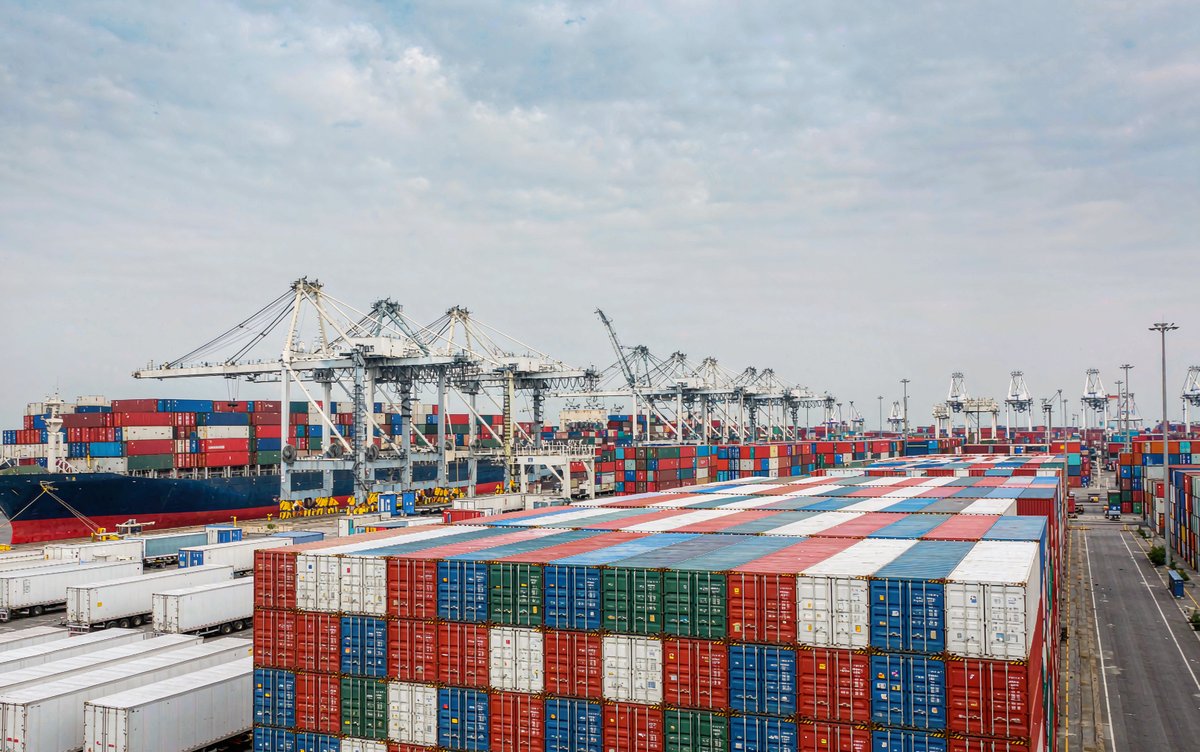
Duty is calculated at the border, but the number is decided much earlier — at the classification stage. (AI-generated image)
The Three Layers of US Import Cost
Here is the structure I use when I build a landed cost. Think of it as three layers stacked on top of each other, not one magic percentage.
| Layer | What It Is | What Drives It |
|---|---|---|
| 1. Base duty | The MFN (General) rate in the USITC Harmonized Tariff Schedule, charged on customs value | The 10-digit HTS code and origin |
| 2. Additional trade action | Extra duties layered on top of the base rate for certain origins — for example Section 301 for Chinese-origin goods | Country of origin and the current trade action in force |
| 3. Entry fees | Merchandise Processing Fee (MPF) on formal entry; Harbor Maintenance Fee (HMF) on ocean shipments | Shipping mode and declared value, not the HTS code |
Two things here catch people out. First, the base duty for most knitwear already sits above 10%, so some of the recent "top up to 10%" trade actions add nothing at all. Second, MPF and HMF are charged whether the duty rate is 0% or 30%. Brands that only count the tariff line consistently under-budget.
How the HTS Code Actually Gets Determined
This is the part that decides everything, and it is more logical than it looks. You are not picking a code that sounds close. You are answering four questions in order.
1. Knit or woven?
Knitted and crocheted garments sit in Chapter 61; woven garments sit in Chapter 62. Most activewear — leggings, sports bras, T-shirts, hoodies — is knit, so Chapter 61 is where you usually land. A woven training short or a woven windbreaker goes to Chapter 62. Get this branch wrong and nothing else matters.
2. What is the garment, specifically?
Within the chapter, the heading is defined by garment type. A T-shirt, a sweatshirt, a pair of trousers and a swimming costume are different headings. "Activewear" is not a category the tariff schedule recognizes. "Men's or boys' knitted trousers" is.
3. What is the fiber?
Cotton, man-made fibers and wool split into different subheadings, often with noticeably different rates. A cotton knit T-shirt and a polyester knit T-shirt are classified apart. This is where a fabric change mid-development can quietly change your duty.
4. Men's or women's?
Finally, gender and the specific cut determine the 10-digit line. That last digit matters, because it is the rate you actually pay.
Here is the part I would flag to any founder: ask your supplier for the fabric composition and construction in writing before you finalize a classification. A vague "performance fabric" answer is not enough. If the factory later swaps 82% nylon / 18% elastane for 90% polyester / 10% elastane, your classification question may change with it.
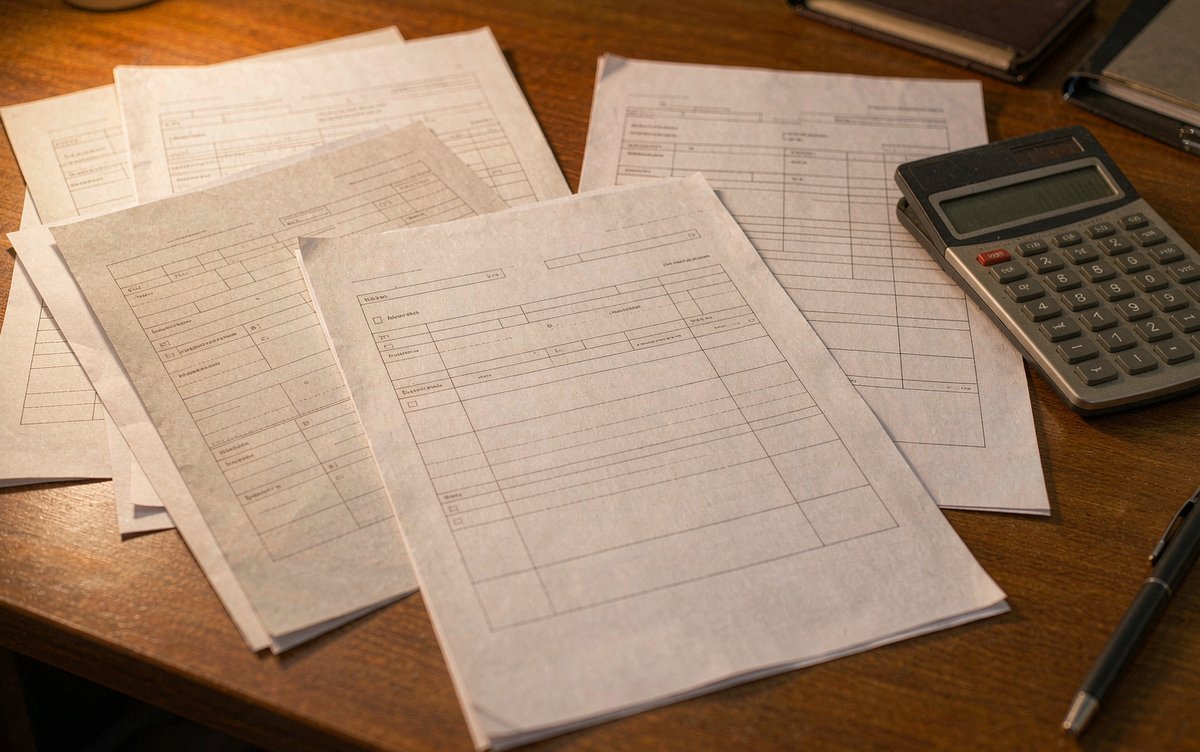
Commercial invoice, packing list and a clear fabric spec are the documents that make classification defensible. (AI-generated image)
The Landed Cost Formula, With a Worked Example
Once the code is settled, the arithmetic is straightforward. Here is the formula I use:
Landed cost = FOB value + freight + insurance → customs value → + base duty → + trade-action duty → + MPF → + HMF (ocean only) → + local delivery
Now let's run it with a clearly illustrative example. This is a teaching scenario, not a quote and not a real shipment.
| Step | Illustrative figure | Note |
|---|---|---|
| FOB value, 1,000 knit leggings | USD 8,000 | Example only |
| Ocean freight + insurance | USD 900 | Varies by route and season |
| Customs value | USD 8,900 | Basis for duty |
| Base duty (illustrative rate) | rate × 8,900 | Use the actual HTS General rate |
| Additional trade action | applicable rate × 8,900 | Only for affected origins |
| MPF | 0.3464% of value, with min/max per entry | Applies to formal entry |
| HMF (ocean only) | 0.125% of value | Not charged on air freight |
Notice that I deliberately left the duty lines as formulas instead of hard numbers. That is not laziness. Rates move, and a blog post with a frozen percentage is a liability six months later. Use the formula, plug in the rate you verify today, and the math stays correct.
This is also why landed cost belongs in the same conversation as supplier pricing. A cheaper FOB quote from one country can lose its advantage once origin-based duties are added — which is exactly the tension we unpack in our China vs Vietnam vs Bangladesh sourcing comparison.
What Changed in 2026, and Why It Matters to You
If you learned how US apparel importing worked in 2024, some of what you know is now wrong. A short version of the moving parts:
- De minimis is gone. The USD 800 duty-free exemption was suspended for all countries from 29 August 2025, and made indefinite for non-postal shipments in June 2026. Low-value parcel strategies no longer work the way they used to.
- IEEPA tariffs ended. Following a February 2026 Supreme Court decision, CBP stopped collecting those duties in late February 2026. If a quote you received still lists them, it is out of date.
- New trade actions came and went. A Section 122 surcharge ran from February to July 2026 and then expired; a July 2026 Section 301 action topped certain goods up to a combined 10% where the base rate was lower. For most knitwear, whose base rate already exceeds 10%, this added nothing.
- Entry fees were updated. The MPF rate and its per-entry minimum and maximum changed on 1 October 2026.
My honest read: the direction is toward more frequent changes, not fewer. The practical response is not to memorize today's rates. It is to build a cost model you can update in ten minutes when the rules move, and to keep a dated record of which rate you used for each order.
Data note: the policy points above reflect sources checked in November 2026. Tariff rates and fee levels change; verify current figures with USITC HTS and CBP before pricing an order. Latest available full-year data and official actions should be re-checked at the time of entry.
The Documents That Keep Clearance Simple
Most customs delays are paperwork delays. A complete file does not make duty cheaper, but it stops your shipment sitting at the port while someone asks a question you could have answered in advance.
- Commercial invoice — value, currency, terms, buyer and seller, and an accurate description of the goods.
- Packing list — cartons, quantities, net and gross weight, matching the invoice.
- Bill of lading or airway bill — the transport document.
- Fabric composition and construction spec — supports the HTS classification you declared.
- Certificates and origin documents — where a trade program or preference applies.
One practical detail founders miss: the product description on the invoice should match the language of your HTS classification. "Yoga pants" is a marketing term. "Women's knitted trousers, 82% nylon 18% elastane" is a customs description. Those extra words cost nothing and prevent a lot of back-and-forth.
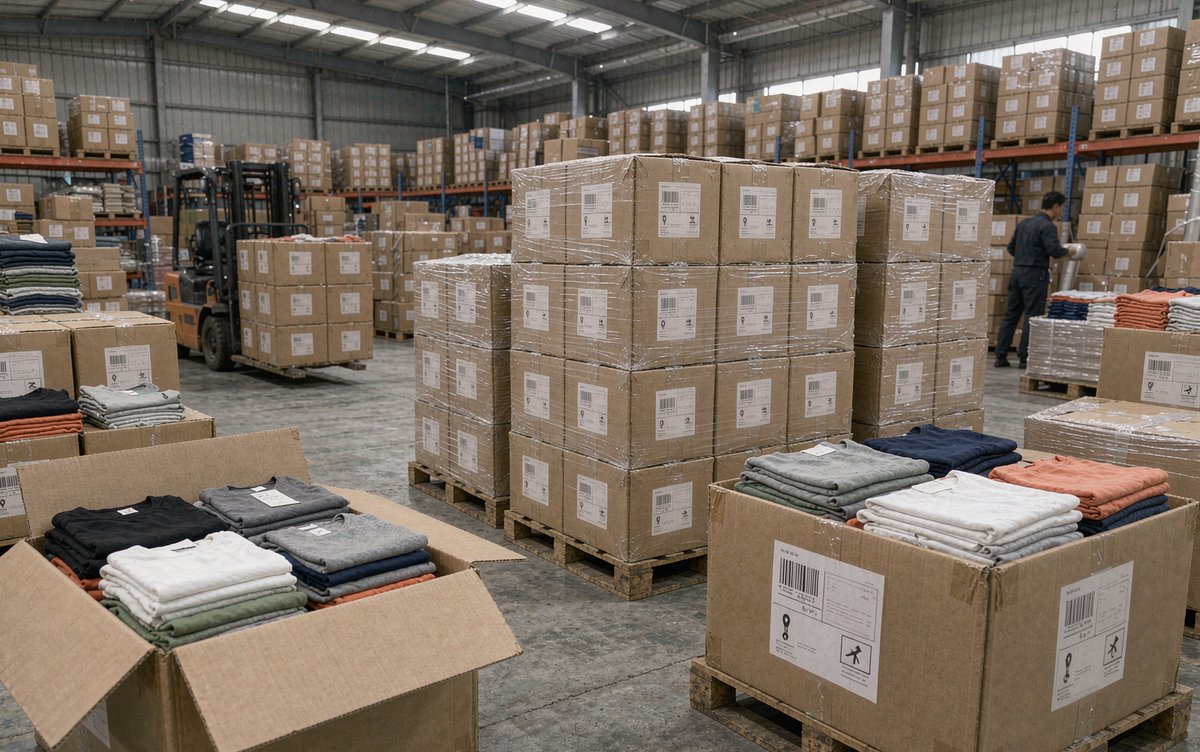
Accurate packing data and a matching invoice do more for smooth clearance than any expedite fee. (AI-generated image)
Five Mistakes I See Repeatedly
- Pricing from FOB alone. The factory quote is not your cost. Duty, fees and freight are part of the same number.
- Copying a competitor's HTS code. Their fabric, construction or origin may differ from yours. Classification is garment-specific.
- Using last year's rate. In 2026 especially, a rate from a previous order may no longer apply.
- Forgetting entry fees. MPF and HMF are small individually but real, and they apply regardless of the duty rate.
- Letting a fabric substitution slide. A silent fiber change can change your classification. Stay involved in the approvals — our piece on comparing activewear manufacturing quotes shows where those details usually hide.
Frequently Asked Questions
How much import duty does a US brand pay on activewear?
There is no single rate. Duty depends on the 10-digit HTS code, country of origin and date of entry. Most knitwear base rates are in the teens or low thirties, and additional trade actions may apply for certain origins. Check the current USITC HTS and CBP guidance before you price an order.
How is the HTS code for leggings or sports bras determined?
Start with knit versus woven (Chapter 61 versus 62), then garment type, then fiber content, then gender and cut. The 10-digit line you land on sets the rate. Get the fabric composition in writing from your supplier before classifying.
Does the de minimis exemption still apply to small apparel shipments?
No. The USD 800 de minimis exemption was suspended for all countries from August 2025 and made indefinite for non-postal shipments in June 2026. Low-value shipments are no longer automatically duty-free.
Are MPF and HMF the same as import duty?
No. They are entry fees, separate from the tariff. MPF applies to formal entry and HMF applies to ocean shipments. Both are charged on the value of the goods regardless of the duty rate, so include them in landed cost.
Can my supplier tell me the correct HTS code?
A supplier can provide the fabric composition and construction details you need, but classification is the importer's responsibility. Use the supplier's data, then confirm the code against the current HTS or with a licensed broker.
Build the Cost Model Before You Place the Order
The brands that handle imports well are not the ones with the cheapest factory. They are the ones who know exactly what sits between the factory price and the price on their website. Build the three-layer model, verify the HTS code, and keep the math updateable. Do that, and a policy change becomes a five-minute revision instead of a margin surprise.
If you are still comparing suppliers, the next step is our guide to comparing activewear manufacturing quotes, which covers the cost lines that belong in every factory comparison.
Last reviewed: November 2026. Tariff rates, trade actions and fee levels change frequently; confirm current figures with USITC HTS and CBP before making a purchasing decision.