How to Negotiate with Activewear Manufacturers: Price, MOQ and Terms
Here is the truth about negotiating with an activewear factory: the buyer who just asks "can you make it cheaper?" usually pays more in the end. Not because the factory is greedy, but because that question never gets answered properly. What actually moves a price, a minimum order or a delivery date is the structure of the order — quantity, colours, packaging, how many styles share one fabric. Get the structure right and the terms follow. Get it wrong and you either overpay or quietly lose the quality you approved.
Quick Answer
A brand can realistically negotiate unit price, how the MOQ is counted, lead-time structure, packaging, payment milestones and split deliveries — but should not trade away approved fabric specs, size tolerances, construction or inspection criteria. Start by putting every quote on the same basis: same tech pack, same trims, same packing, same shipping scope. Then trade order structure, not quality: consolidate colours, share one fabric across styles, accept simpler packaging, or pay a higher unit price for a smaller first run. Ask what each change actually costs before agreeing to it.
I want to be upfront about where this guide is coming from. We are a factory, and we are telling you what is genuinely negotiable and what is not. That is not a sales trick — it is the same conversation we would rather have before an order than after one. A negotiation that ends with a cheaper garment nobody wants to wear helps nobody.

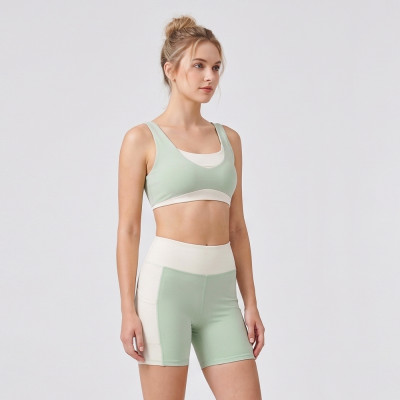
Good negotiation is a conversation about structure, not a contest over one number. (AI-generated image)
1. How to Negotiate Unit Price With an Activewear Manufacturer
The first rule is boring and it decides everything: you cannot compare two prices until they cover the same garment. Same style photo tells you almost nothing. If one quote includes the fabric, elastic, labels, polybags and testing, and another lists the sewing only, the cheaper number is not cheaper.
Put every quote on the same basis first
Send the same tech pack to every factory and ask them to state what is inside the price. This checklist is the one I would use.
| Compare | What must be confirmed |
|---|---|
| Fabric and trims | Fibre content, GSM, construction and finish; whether elastic, cups and zips are included |
| Construction | Seam type, reinforcement, panel cuts, printing or heat-transferred branding priced to the same spec |
| Labels and packing | Main label, care label, hangtag, barcode, individual polybag and carton |
| Quality and testing | Which internal checks, tests or third-party inspections are included and which are extra |
| Development costs | Pattern making, grading, samples and print screens — listed separately or built into the unit price |
| Commercial terms | Quantity, currency, quote validity, and how far freight and trade terms extend |
Once the scope matches, ask for a few comparable options rather than one number. Apparel pricing contains two very different things: costs that rise with every unit, like fabric and labour, and batch costs like pattern work, marker planning and machine setup that stay roughly the same whether you make 200 pieces or 2,000. That is why quantity changes the price, and why a long explanation usually sits behind any real discount. If you want the deeper cost breakdown, our guide to costs, MOQs and lead times walks through it.
- A stepped price by total quantity: ask whether each tier means total order quantity or quantity per style per colour. Those are very different commitments.
- Standard versus custom packaging: keep the labels and transit protection you actually need, then price hangtags, printed bags or gift boxes as separate options.
- Different order combinations, same material: compare several styles sharing one fabric and colour against styles that each buy their own material.
Here is a request you can send almost as written:
Please quote the same tech pack and acceptance standard at several order quantities, and state how colours and styles are counted at each tier. Please also separate standard from custom packaging, and list one-off charges and anything excluded. If you have a cost-reduction idea, describe the exact change — please do not substitute fabric or construction without our approval.
Compare the full picture: unit price, one-off charges, total order value and the inventory you will actually hold. A bigger order lowers some unit costs; it does not make the first cheque smaller. For a step-by-step method on reading offers side by side, see our quote comparison guide.

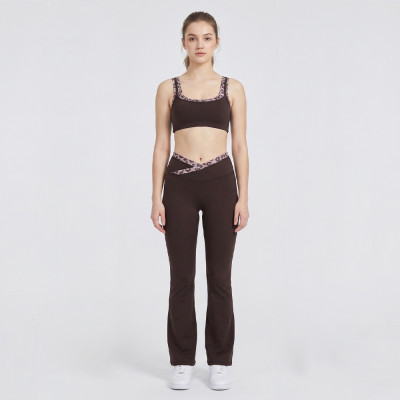
Two quotes are only comparable when they describe the same garment. (AI-generated image)
2. How to Negotiate a Lower MOQ for Your First Order
Before asking a factory to lower its minimum, find out what the minimum is actually attached to. This is the single most useful question in the whole conversation. In apparel, an MOQ can be set by the total order, by style, by colour, or upstream by the fabric mill's own minimum. Each one needs a different solution.
Break the MOQ into negotiable constraints
| Where the limit sits | Ask the factory | What you can propose |
|---|---|---|
| Total order | Can different styles combine to reach the total? | Consolidate the order, reduce scattered buying |
| Per style | How are colours and sizes counted within one style? | Launch fewer styles, concentrate on the core one |
| Per colour | Can one fabric colour be shared across styles? | Fewer colours, or several styles using the same colour |
| Fabric purchase | Is the minimum per fabric, per colour, or per dye run? | Ask about stock or regularly held fabric that still matches your spec |
| Trims and packaging | Do custom labels or packaging have their own minimum? | Simplify optional customisation; price leftovers separately |
Fewer colours, existing fabric, and several styles sharing one fabric batch are the usual routes to a lower opening quantity. Whether any of them work depends on the specific material and production schedule. Our guide to finding a low-MOQ yoga wear manufacturer goes deeper on the sourcing side.
A higher unit price can be the honest trade
Small runs do not spread setup cost over many garments, so a higher unit price is often arithmetic rather than opportunism. Ask whether the factory will accept any of these:
- A smaller quantity at a higher unit price.
- A separate small-run setup charge, so the base price stays clean.
- Simpler packaging or fewer colours for the first order.
Then compare two complete scenarios: the total spend at the standard minimum, and the total spend at a lower minimum plus any additional charge. Make the factory state exactly which styles, colours and size mixes the lower quantity covers.
We want to control inventory on the first order. If we cut the number of colours and let suitable styles share one fabric and colour, what is the lowest workable quantity? If a small-run charge still applies, please list the unit price, one-off charges and what happens to leftover material so we can compare the options.
One warning, because it causes real pain later: do not write a future reorder into an email as if it were a purchase commitment. If the factory must buy fabric up front and make the garments in batches, settle the leftover fabric — quantity, ownership, storage period, later processing cost and what happens if it is never used — before you agree.
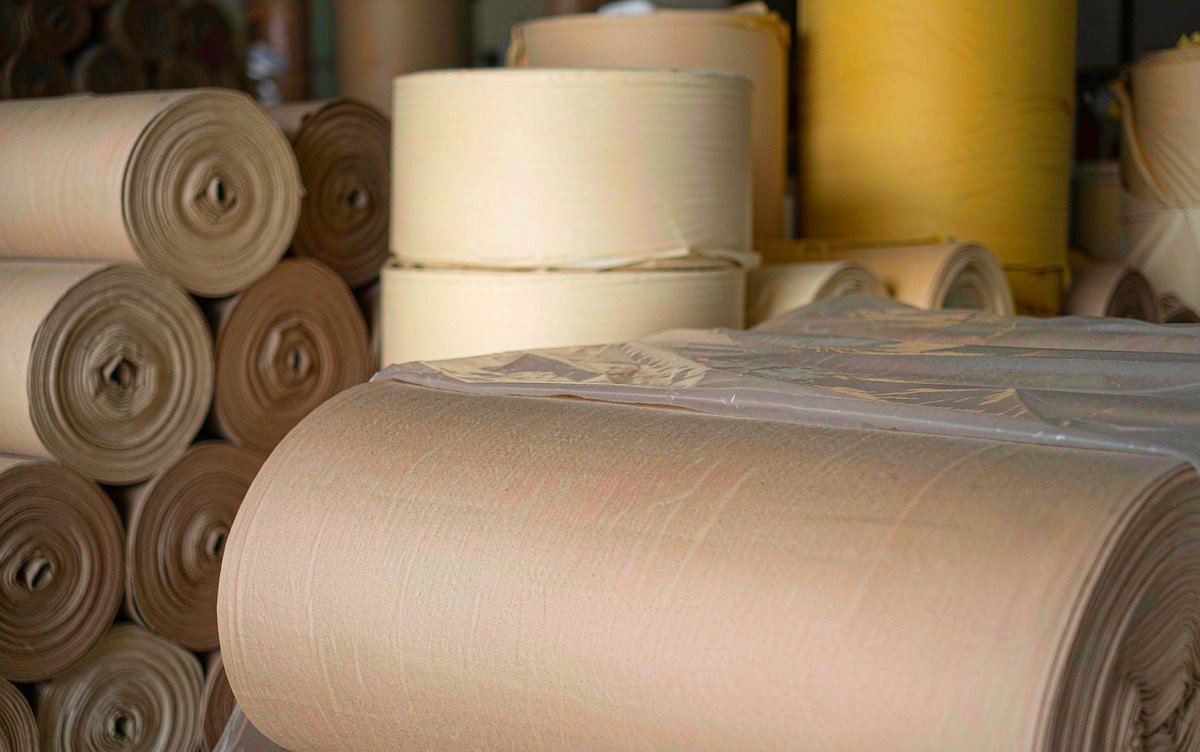
One fabric colour shared across styles is often the simplest way to lower an opening quantity. (AI-generated image)
3. How to Negotiate Lead Times and Shipping Dates
"How fast can you do it?" is the wrong opening question. The right one works backwards from the date you need the goods in market, then checks whether sample approval, materials, production and inspection can all fit. Garment production is a chain of dependent stages — material development and arrival, sample approval, cutting and sewing, finishing, inspection and transport. A promise at one end means nothing if the other end cannot move.
First, ask when the clock starts
A factory's "production time" may begin only after the pre-production sample is approved, or it may require all fabrics and trims to be production-ready first. That number is not the time from your deposit to your warehouse. Always ask for the starting condition in writing.
| Work backwards from | Confirm in the negotiation |
|---|---|
| Target shipping date | Handover to forwarder or actual departure? Who books transport? |
| Final inspection | Latest readiness date, inspection date, and buffer for corrections and re-inspection |
| Finishing and packing | Completion date, and when packing materials arrive |
| Sewing and cutting | Line start and finish, and whether capacity is actually reserved |
| Materials | What is in stock, what must be purchased or custom-made, and when each is usable |
| Sample and document approval | Latest date the buyer must approve samples, colours and tech files to hold the schedule |
These nodes should become a schedule both sides confirm, not a single total number. Materials, approvals and production load all move the real timeline. For how to build the dates from your launch backwards, our launch calendar guide is the companion piece.
When time is short, change the structure
Rather than asking the factory to work a miracle, discuss two options that can genuinely work.
- Prioritise the core style or colour. Confirm materials, quantity and line capacity are available, and get new dates for the rest — not a vague "we will rush some."
- Split the shipment. A first batch covers the launch, later batches fill in. If different transport modes are used, price the time and cost separately. Air for a small first drop and sea for the balance is a valid discussion, not a universal answer.
Any split plan needs the basics written down: styles, colours, sizes and quantity per batch; production-complete, inspection and handover dates per batch; inspection and payment per batch; who pays added transport, handling and inspection; and what happens to earlier batches if a later one slips.
The goal is to ask what arrangement makes the date possible — never to buy speed by skipping inspection.
4. What Can You Negotiate, and What Should You Protect?
Here is the line I would draw every time. Payment terms, packaging, quantity combinations and delivery structure are all fair to trade. Approved product and acceptance requirements are not something to quietly give up to make a number look better.
Conditions that can be exchanged
| Adjustment the buyer proposes | Condition to get in writing in return |
|---|---|
| Fewer styles or colours | New MOQ, new unit price, and which styles and colours it covers |
| Several styles sharing one fabric and colour | What material quantity can be combined, and the resulting price and purchase plan |
| Accepting a higher first-order price | Actual lower quantity, any additional fee, and the total order value |
| Switching to standard packaging | Exactly what is removed, what is saved, and which requirements stay |
| Accepting split delivery | Quantity, dates, acceptance, payment and added costs per batch |
| Moving a payment milestone | Amount, trigger condition, and what happens if the condition is not met |
Consolidating material buying, reducing complexity and pricing a small run honestly all have real cost logic behind them. Do not assume every concession produces a fixed discount. If you want the language for writing the result down, our supplier contract guide covers exactly that.
What should not be quietly relaxed
Treat these as the control baseline of a confirmed order:
- Fabric and trim specs — composition, GSM, tolerance and agreed performance.
- The size chart, measuring method and tolerance at each measuring point.
- Approved construction details and sample corrections.
- Defect classification, sampling or test methods, and release criteria.
Inspection works by comparing goods against a clear specification. "Allowable normal tolerance" is not a specification; a number at each measuring point is. This is not a claim that specs can never change. If you choose to change a design or material, treat it as a new proposal: assess the impact, re-sample or re-test if needed, then approve a new version and a new price. The factory should never downgrade a spec on its own.
Close the negotiation with one confirmation
In the final PO or agreement, capture in one place: the final unit price, currency, inclusions and extras; how the MOQ is counted and the real quantity by colour and size; the tech pack, approved sample and quality version; the lead-time start condition and batch dates; inspection, correction, release and payment conditions; and every exception created in this negotiation.
Those documents also give an inspector something to work with — which order, which approved sample and which specification version defines "acceptable." A negotiation is finished not when the factory says "we can do it," but when both sides give the same answer about quantity, price, dates and acceptance.
Frequently Asked Questions
What can a brand realistically negotiate with an activewear manufacturer?
Unit price, how the minimum is counted, lead-time structure, packaging, payment milestones and split delivery. Approved fabric, size, construction and inspection requirements should stay fixed unless you formally re-approve a new version.
Can I lower the MOQ for a first activewear order?
Sometimes. It depends on whether the minimum sits at the total order, per style, per colour or at the fabric mill. Reducing colours, sharing one fabric across styles and using stock fabric that still matches your spec are common routes. A lower quantity usually means a higher unit price.
Why is a smaller order more expensive per piece?
Pattern making, marker planning and machine setup cost roughly the same whether the run is small or large. Spread over fewer garments, that batch cost raises the unit price. It is arithmetic, not a factory arbitrarily adding margin.
How should I ask for a shorter lead time?
Work backwards from your needed date and confirm each stage — sample approval, material arrival, cutting, sewing, finishing and inspection. Ask when the clock starts. If time is tight, discuss prioritising the core style or splitting the shipment rather than skipping checks.
Should I accept a lower price if the factory changes the fabric?
Only if you treat it as a new proposal: assess the impact, request a new sample or test, and approve the new version and price in writing. Never let a substitution quietly replace a spec you already approved.
Negotiate the Structure, Protect the Spec
The strongest negotiation position is not the loudest one. It is the buyer who arrives with a clean spec, a clear order structure and a list of exactly what is flexible and what is not. You will get better terms, and you will still receive the garment you approved. Trade the order — never the quality.
Framework note: survey requests, message templates and the options listed here are negotiation tools, not guarantees — not every factory can offer the same terms. Cost relationships described are general apparel-production logic. Inspection references were checked in November 2026; confirm current standards with the relevant provider before relying on a figure.