How to Manage Production with Your Activewear Factory: Follow-Up and Milestones
Here is the thing most first-time brand founders learn the hard way: placing the order is not the end of your job, it is the start of a second job you did not budget for. "The factory says we are on track" is not a status update. It is a sentence. What you actually need is a short list of milestones, each with a planned date, a real completion date, a piece of evidence, and a name attached to it. If you cannot point to those four things for every stage, you are not managing production. You are waiting and hoping.
Quick Answer
After you place an activewear order, confirm four things in writing before bulk cutting: approved pre-production sample, materials received and inspected, an agreed stage schedule, and named contacts. Then track five milestones — cutting, sewing, finishing, final inspection, and shipment — and for each one ask the same three questions: how many units are done, did they pass, and have they moved to the next stage? Keep one shared sheet with planned date, actual date, evidence, owner, and next action. Treat this as a buyer-side management framework, not an industry standard.
I have seen a launch miss its date not because the factory lied, but because nobody on the brand side was checking the right thing. The sewing was "almost done" for eleven days. Everyone genuinely believed it. No one had asked for the daily output count or the transfer record to finishing. That is the gap this guide closes.
Why "It Is On Track" Is Not an Answer
A progress sentence tells you how someone feels about the order. A progress record tells you what happened. Those are different things, and only one of them helps you make a decision.
Think about what you need to decide: do I book the photoshoot? Do I tell customers the drop is on? Do I pay the balance? Do I escalate? None of those decisions can be made from "we are almost finished." They need a number, a date, and proof. So the whole approach here is to turn a vague order into a chain of small, verifiable checkpoints — what the industry calls production milestones.
This is the follow-up half of working with an activewear manufacturer. If you are still at the stage of choosing one, our factory audit guide comes first. This one starts after the deposit is paid.
Four Things to Confirm Before Bulk Cutting Starts
An order is not ready for bulk just because a deposit cleared. Before anyone opens a fabric roll, get four answers in writing and log any unresolved items in a pre-production meeting record with owners and deadlines.
| Confirm | What to ask | Evidence to collect |
|---|---|---|
| Sample approval | Is the pre-production sample formally approved, made with actual bulk fabrics and trims, with every fit, size, stitch, colour and label change closed? | Final sample number, written approval, closed comment list, latest tech pack |
| Materials ready | When do fabric in each colour, elastic, zips, cups, main labels, care labels and packing materials arrive? Is the quantity enough, and has each batch passed inspection? | Bill of materials, staged arrival plan, receiving records, fabric and trim inspection reports |
| Stage schedule | When does cutting start and finish, then sewing, finishing, packing and final inspection? When is the handover to the forwarder? | A mutually agreed schedule with start date, finish date and owner per stage |
| Your contacts | Who sends daily updates? Who approves scheduling and quality calls? Who steps in when the main contact is away? | Named list: merchandiser, production planner, quality lead, escalation contact |
Activewear adds one more thing you should settle before cutting. Write the acceptance rules for stretch and structure into the tech pack or quality agreement — stretch and recovery, opacity after stretching, seam construction, stitch density, reinforcement points. "Good stretch" and "not see-through" are not specifications. A method, a body area and a pass criterion are.
Then set one clear release point. Anything still unapproved goes on a list with a note saying whether it blocks cutting. If you allow part of an order to move ahead, write down exactly which colours or quantities are authorised. A conditional approval should never quietly become a full green light. For how the approval samples fit into the bigger development sequence, see our pilot production checklist.
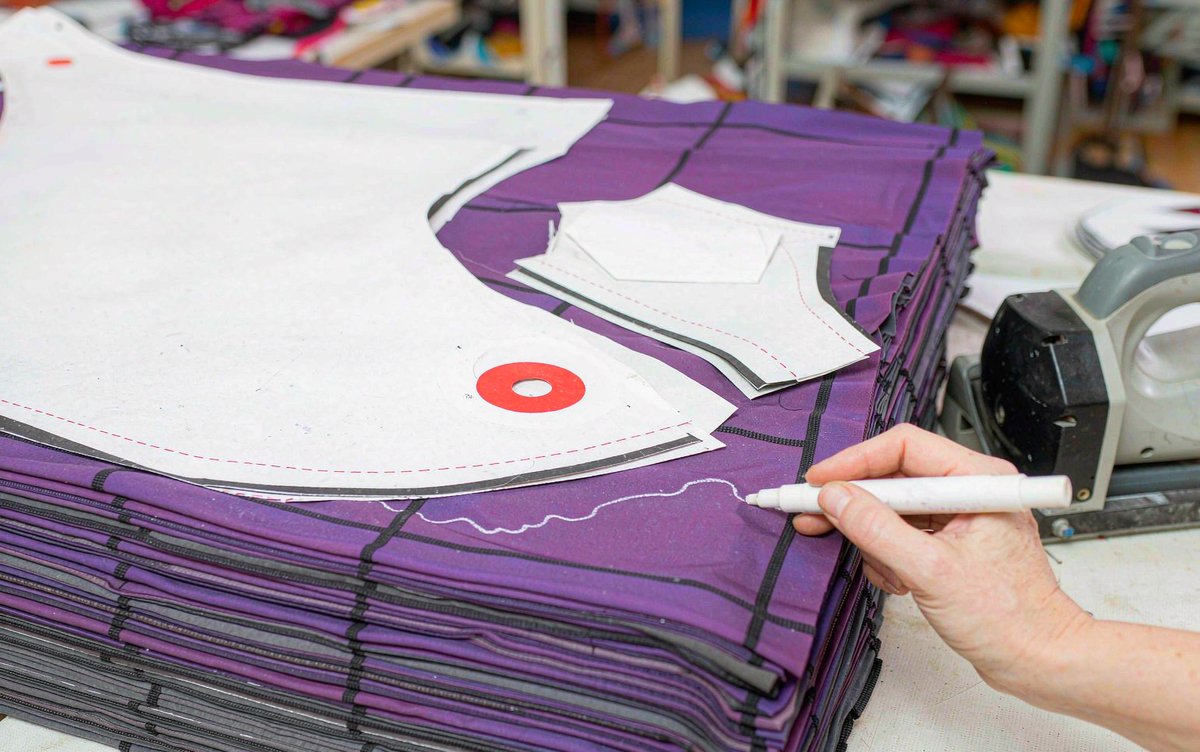
Cutting is the first stage where a schedule turns into physical units — and the first place records should start. (AI-generated image)
The Five Milestones Worth Tracking
Every stage should answer the same three questions: how many were completed, did they pass, and have they been handed to the next process? Photos and "80% done" messages do not answer those. Counts and records do.
The completion definitions below are a framework a buyer and factory can agree on, not a universal rule. Adjust them to your order and put them in writing.
| Stage | Ask the factory | Records to see | What "done" should mean |
|---|---|---|---|
| Cutting | Which styles, colours and sizes are cut? Has fabric relaxation, shrinkage and shade separation been handled? Any short cuts or re-cuts? | Fabric inspection and shrinkage records, marker plan, cutting daily report, cut-by-colour-and-size sheet, bundle tickets | Agreed batch count reconciled; defects and shortages resolved; approved panels transferred to sewing |
| Sewing | Which line is it actually on? Was the first article approved? How many good units per day? How many WIP, rework and pending inspection? | First-article approval, daily production report, in-line and end-of-line checks, rework log, transfer-to-finishing count | Agreed quantity sewn and passed stage checks; rework traceable; good units handed to finishing |
| Finishing | How much trimming, cleaning, pressing and any required washing is done? Are size, appearance, labels and pre-packing checks complete? | Finishing daily report, size audit sheet, appearance check, label and packing verification, carton records | Agreed units through the required processes and passed; rework separated from good stock; packing readiness clear |
| Final inspection | Is the order ready for inspection? Which sampling plan applies? How are failures handled and re-checked? | Final inspection report, sampling and defect breakdown, size records, packing check, corrective action and re-inspection report | Acceptable result under the agreed standard; open issues resolved by authority; buyer releases shipment |
| Handover | Are documents complete and does the carton count match the packing list? Who receives the goods on the buyer side? | Commercial invoice, packing list, transport document, handover confirmation | Goods and documents reconciled; forwarder handover recorded; shipping status updated |
What Deserves Extra Attention in Activewear
Some stages carry more risk in stretch garments than in ordinary basics. Knowing where to look is half the job.
- At cutting: relaxation time for stretch fabric, shrinkage treatment, fabric direction and dye-lot separation. "Already cut" means very little without material records behind it.
- At sewing: seam type, stitch density, reinforcement placement and whether the work matches the approved sample and tech pack. Critical operations need a first-article check and in-line checks — not a surprise at the end of the order.
- At finishing: size, appearance, label position and packing checked against the approved standard. Sewing off the line is not the same as a finished garment.
- At final inspection: agree the sampling plan, defect categories, acceptance criteria and re-inspection process in advance. AQL is a sampling tool used together with defect definitions, not a single number that certifies the whole order. Our guide on quality control checkpoints covers what to inspect; this section is about when to ask.
One distinction saves a lot of arguments: being ready for inspection is not the same as the whole order being finished. Public guidance from inspection provider QIMA notes that a pre-shipment inspection can take place once production is at least around 80% complete. That is a threshold for scheduling an inspection, not proof of completion. Agree the exact production and packing readiness ratio with your inspector and write it down. QIMA's published pre-shipment inspection procedure is a useful reference; check the latest version before you rely on a number.
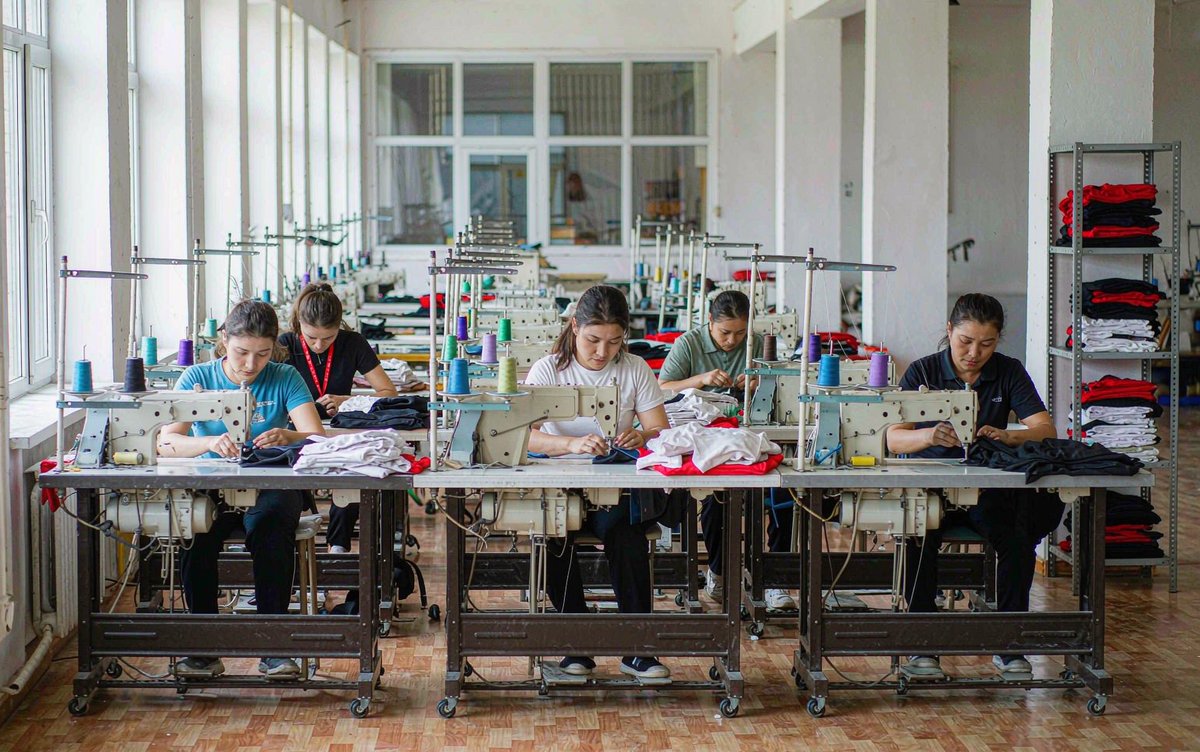
Daily output counts matter more than progress percentages when a sewing line runs behind. (AI-generated image)
How Often to Follow Up, and How to Do It
Schedules only stay useful if they are updated against the original plan. Every change should have an owner and a piece of evidence. When a material is late, ask for the confirmed arrival date and the record behind it — not "coming soon."
The frequency below is a practical suggestion, not an industry rule. Scale it to your order size, complexity and how the factory performs.
| Situation | Suggested cadence | What the update should cover |
|---|---|---|
| Normal production | Two fixed written updates per week | Planned vs actual by process, counts by colour and size, risks, items waiting on the buyer |
| Key milestones | Confirm as soon as they happen | Completion evidence, actual date, acknowledgement by the next process |
| Delay, quality issue, or approaching shipment | Daily brief until the risk is controlled | Good output, rework progress, recovery plan, impact on shipping |
Keep one version of the truth. A shared sheet or order system should be the master; instant messages handle reminders and urgent questions, while approvals, schedule changes and quality decisions go back to email or the system so they leave a trail. Photos and videos support the story, but the completion status still needs to tie back to a count and a record. This is how you avoid three chat groups carrying three different ship dates. Planning the dates in the first place is its own exercise — our launch calendar guide builds the timeline backwards from your target date.
When a Delay Happens: Six Questions to Ask
Delays are normal. Unmanaged delays are not. When something slips, ask for six things and do not accept a progress sentence in place of them.
- Cause: which process, which material batch, which approval point — and what is the evidence?
- Scope: which styles, colours, sizes and quantities? How many are good, how many in rework, how many not yet made?
- Containment: how will affected units be isolated so they do not keep moving or mix with good stock?
- Recovery: who owns it, what action, what additional resource, and by when?
- New dates: separately for the affected process, the whole order, and the ready-to-ship date.
- Shipment impact: does it affect inspection, forwarder handover or the original departure? If yes, what are the options?
Judge a recovery plan by how it works, not by how many days it claims to win back. A material delay should map to a confirmed new arrival date and a re-sequenced production window. A quality failure should map to rework, re-inspection and release. Every recovered day should have an action behind it.
Here is a message you can send almost as written when an order slips:
Please update this exception by style, colour and size: the specific cause and its evidence, units affected, units completed and accepted, units awaiting rework, current containment, owner, and completion dates for each recovery action.
Also list the revised sewing completion date, finishing completion date, final inspection date and ready-to-ship date, and confirm whether the original departure is affected. If it is, provide an executable recovery option with costs for our written confirmation.
A Follow-Up Sheet You Can Actually Copy
This template uses a simple structure — stage, planned date, actual date, evidence, owner, next action — and works in Excel, Google Sheets or a project tool. The point is that every status change traces back to a person and a record.
Start with a header block: PO number, style, factory, order quantity, original factory delivery date, original departure date, destination target, buyer owner, factory merchandiser, quality lead, last updated.
| Milestone | Planned | Actual | Evidence | Owner | Next action |
|---|---|---|---|---|---|
| Order and delivery requirements confirmed | — | — | PO and confirmation email | Buyer / merchandiser | Close order discrepancies |
| Tech pack, size chart and BOM locked | — | — | Approved version and change log | Buyer tech / factory tech | Issue controlled documents |
| Pre-production sample approved | — | — | Sample number, written approval, closed comments | Buyer / sample room | Close unapproved items |
| Bulk fabric received and inspected | — | — | Quantity, dye lots, inspection record | Procurement / warehouse / QC | Resolve shortage or rejects |
| Trims, labels and packing received | — | — | Receiving record and checklist | Procurement / warehouse | Fill missing items |
| Pre-production meeting and release | — | — | Minutes, risk and owner list | Production / quality / buyer | Confirm cuttable scope |
| Cutting started | — | — | First cutting record | Cutting supervisor | Reconcile cut by colour and size |
| Cutting complete, transferred to sewing | — | — | Cutting summary and transfer record | Cutting / sewing leads | Close shortages and re-cuts |
| Sewing first article approved | — | — | First-article check and approval | Factory tech / QC | Fix process before full run |
| Sewing progress checks | — | — | Daily report, in-line checks, rework log | Production lead / QC | Update output and variance |
| Sewing complete, transferred to finishing | — | — | Accepted count and transfer record | Sewing / finishing leads | Close open and rework units |
| Finishing and finished-goods checks done | — | — | Size, appearance and finishing records | Finishing lead / QC | Handle non-conforming units |
| Packing and inspection readiness confirmed | — | — | Packing list, carton record, readiness status | Packing lead / QC | Confirm inspection booking |
| Final inspection | — | — | Formal inspection report | Buyer-appointed inspector | Accept, correct, or re-inspect |
| Corrections / re-inspection, if needed | — | — | Closed corrective action and report | Factory quality / inspector | Obtain shipment release |
| Buyer shipment release | — | — | Written release | Buyer authorised signer | Confirm delivery arrangement |
| Documents and forwarder handover ready | — | — | Invoice, packing list, handover plan | Documents / forwarder | Check pieces, cartons and timing |
| Actual delivery / departure confirmed | — | — | Handover and transport documents | Factory logistics / forwarder | Update shipping status |
Add columns for latest estimated date, accepted quantity, work-in-progress, rework quantity and risk status — and keep the original plan intact. Do not overwrite it each time a date moves. That is the only way the sheet shows variance and recovery instead of becoming a schedule that always looks fine.
One last thing to define in the order: what does "delivery" actually mean? Factory-to-forwarder handover, actual departure, or arrival at destination? List those dates separately. A single "ship date" used by both sides for different events is a reliable source of disputes.
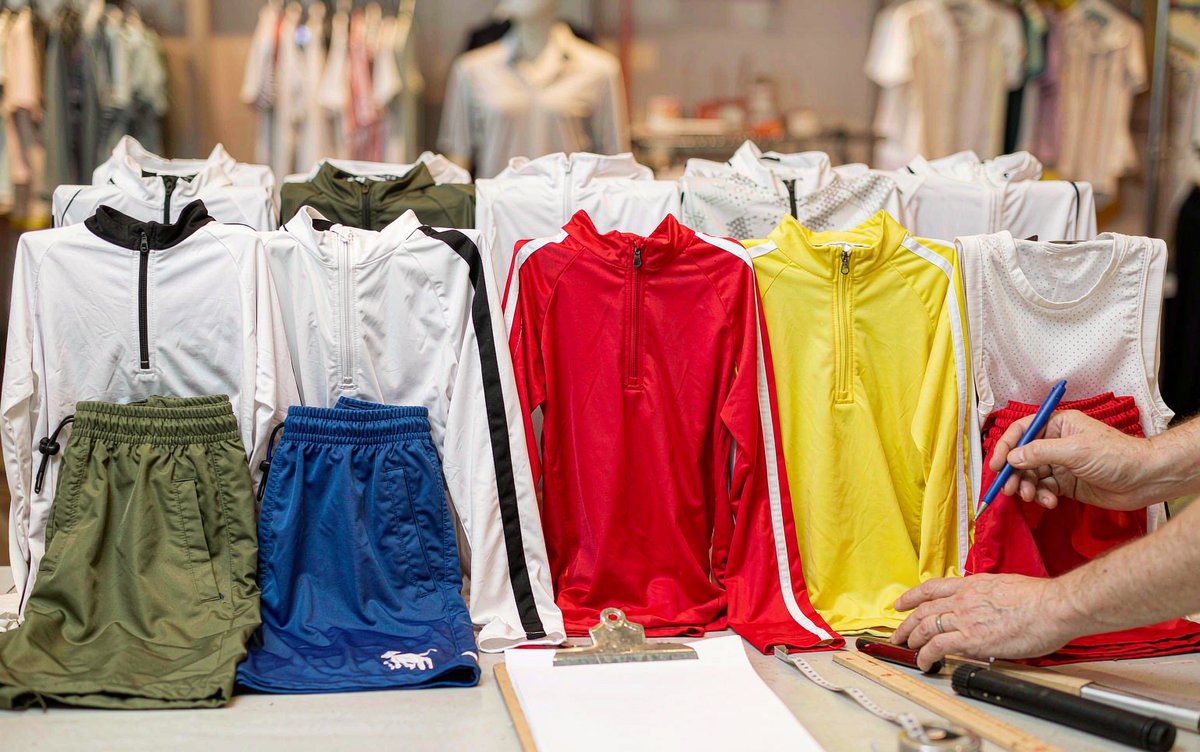
A final inspection report is evidence — but it should be tied to an agreed sampling plan, not a number on its own. (AI-generated image)
Frequently Asked Questions
What should a brand confirm with an activewear factory after placing an order?
Four things in writing before bulk cutting: the pre-production sample is formally approved, materials are received and inspected, a stage schedule is agreed with owners, and named contacts are in place for updates and escalation. Log anything unresolved with a deadline.
Which production milestones should I track?
Track cutting, sewing, finishing, final inspection and handover. For each one ask how many units are done, whether they passed, and whether they moved to the next stage. Require a record, not just a progress message.
How often should I follow up during production?
A practical rhythm is two fixed written updates a week during normal production, immediate confirmation at key milestones, and daily briefs during a delay or near shipment. Agree the cadence with the factory in writing.
What should I ask when production is delayed?
Ask for the cause with evidence, the exact scope, containment steps, a recovery owner and actions, new dates for the affected process and the whole order, and the impact on the original shipment. Reject vague answers without dates.
Does 80% production mean the order is finished?
No. Around 80% is a common threshold for when a pre-shipment inspection can be scheduled, according to inspection providers such as QIMA. It is not proof that the whole order is complete. Agree the readiness ratio in advance.
Make the Follow-Up a Habit, Not a Fire Drill
Good production management is not dramatic. It is a boring sheet, updated on schedule, with names and evidence next to every date. Do that and most problems show up while they are still small — a material batch short by 200 metres, a first article that needs one change, a sewing line slipping behind plan. Miss it and the same problems surface four days before departure, when your only option is to pay for speed.
One milestone sheet, one owner per stage, one version of the truth. That is the whole system. Start it before cutting, not when something goes wrong. If you want to understand how the approvals before this stage work, our pilot production checklist picks up the story one step earlier.
Framework note: the cadences, completion definitions and sheet fields in this guide are buyer-side management suggestions. Agree them with your factory in writing; they are not a single industry standard. Inspection thresholds reference publicly available QIMA guidance, checked November 2026 — verify the current procedure before relying on a figure.