Top 10 Criteria for Choosing a Reliable Ribbed Loungewear Manufacturer
The demand for ribbed loungewear and modal sleepwear sets has exploded. Consumers want garments that function as comfortable sleepwear but look structured enough to wear outside the house. Achieving this balance requires strict control over fabric recovery and sewing tension.
You need a factory that knows how to stabilize soft materials. At Call The Style, we rely on specialized machine settings, specific yarn constructions, and chemical-free finishing processes. Ask your potential supplier these 10 practical questions to verify their capability.
1. Knee Bagging: The Fabric Recovery Failure
The Common Problem: Deformed Knees and Elbows
The most frequent defect in ribbed loungewear is loss of recovery. After sitting on the couch for an hour, the fabric over the knees and elbows stretches out completely, leaving large, unsightly baggy areas that do not snap back.
The Factory Solution: Core-Spun Spandex
We fix this at the yarn level. Standard factories just blend cheap spandex with cotton. We specify Core-Spun Yarn. In this process, a continuous filament of high-denier spandex is wrapped entirely inside the soft modal or cotton fibers. The skin only touches the soft outer fiber, but the internal spandex acts like a heavy-duty rubber band, forcing the garment to retain its shape after bending.
2. Wavy Hems: The "Lettuce Edge" Effect
The Common Problem: Distorted Bottom Hems
When an operator runs a soft ribbed knit through a standard sewing machine, the feed dogs drag and stretch the fabric as the needle punches through. When the fabric comes off the machine, the hem looks wavy, rippled, and stretched out.
The Factory Solution: Differential Feed Adjustment
We calibrate the machines for soft knits. We use coverstitch machines equipped with a Differential Feed mechanism. We adjust the front and rear feed dogs to move at slightly different speeds, deliberately gathering the fabric to counteract the stretching force of the needle. This results in a dead-flat, straight hemline on highly elastic fabrics.
3. Micro-Pilling on Modal and Bamboo
The Common Problem: Fuzz Balls After Friction
Modal, bamboo, and rayon are cellulosic fibers that feel incredibly soft because their fibers are fine. However, this means they break easily under friction. After a few nights of sleeping in the garment, the friction against the bedsheets causes the fabric to develop heavy micro-pilling (fuzz balls).
The Factory Solution: Enzyme Bio-Washing
We treat the fabric before cutting. At the finishing mill, the fabric rolls undergo an Enzyme Bio-Wash. The natural enzymes safely eat away the microscopic loose, fuzzy fibers on the surface of the knit. By removing these loose ends during production, there is nothing left to tangle and pill during consumer wear.
4. Neckline Stretching on Hangers
The Common Problem: Drooping Shoulders
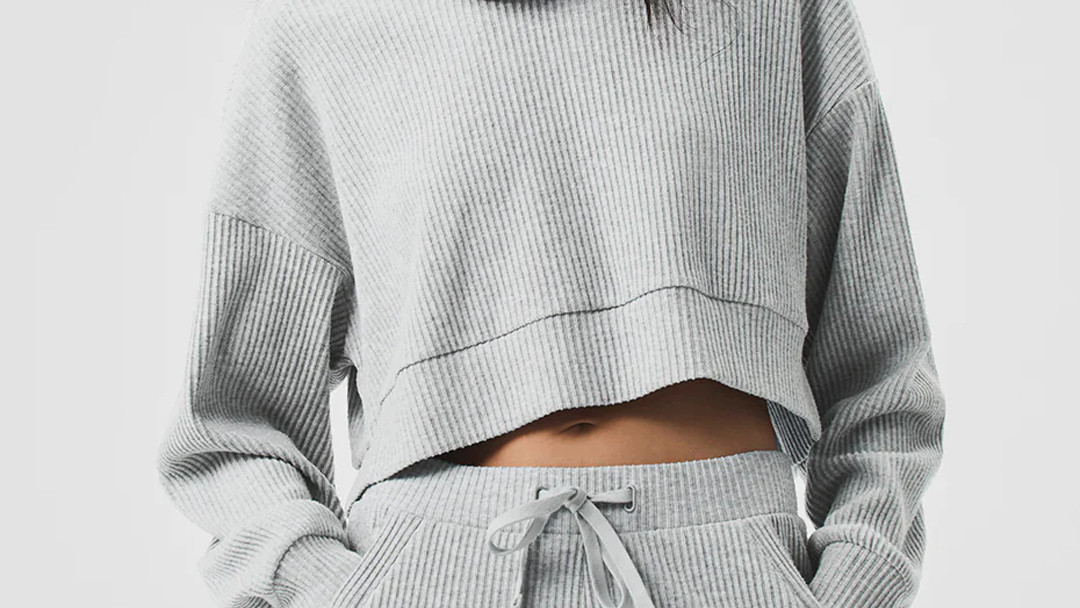
Heavy ribbed fabrics carry a lot of downward weight. When a loungewear top is hung in a closet, gravity pulls the soft fabric down, permanently stretching out the neckline and shoulder seams.
The Factory Solution: Mobilon Tape Reinforcement
We structurally anchor the width. During the assembly of the shoulder and back neck seams, the operator feeds a thin strip of Clear Elastic Tape (Mobilon Tape) directly into the overlock stitch. This tape acts as an invisible physical barrier, stopping the soft knit from stretching past its designed width.
5. Skin Irritation: Scratchy Threads
The Common Problem: Uncomfortable Sleep
Loungewear is often worn without undergarments directly against the skin. If a factory uses standard, stiff polyester thread and leaves thick overlock seams on the inside, those seams will press into the wearer's skin and cause severe irritation while they sleep.
The Factory Solution: Wooly Nylon and Flat Seams
We change the thread composition. For the loopers on our sewing machines (the threads that touch the skin), we use Wooly Nylon thread. This thread is un-twisted and fluffs up, creating a soft, cloud-like texture over the seam. We also compress bulky intersections using coverstitching so nothing digs into the skin.
6. Managing Shrinkage in Matching Sets
Loungewear is almost always sold as a matching top-and-bottom set. Ribbed knits have notorious vertical shrinkage. If the factory ignores shrinkage tolerances, the pants will shrink by two inches while the top shrinks by one inch, ruining the proportions. We enforce strict pre-shrunk tumbling at the mill and adjust the paper patterns separately based on raw fabric wash-test data. (Avoid these dimensional errors with our Tech Pack Mistake Guide.)
7. Waistband Tension for Sleep Comfort
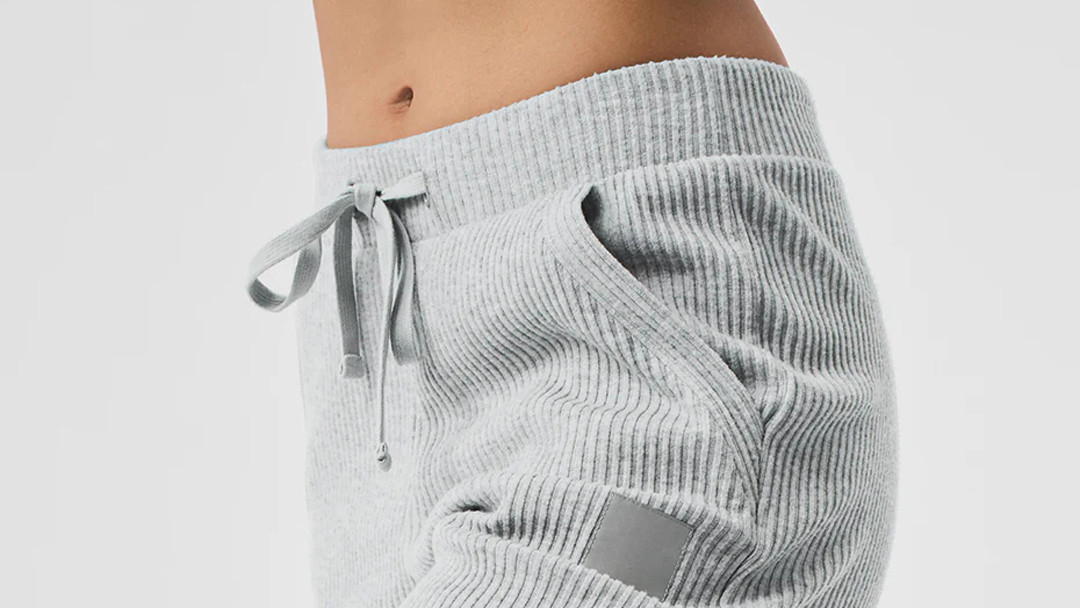
A tight elastic waistband on sweatpants is fine, but on sleepwear, it will restrict breathing and cause stomach pain. We engineer a low-tension fit. We use wider, 1.5-inch to 2-inch soft elastics with lower tensile strength, and we encase them fully in the fabric using multi-needle stitching so they sit flat and distribute pressure evenly across the waist. (See our waistband engineering in our Yoga Pants Guide.)
8. Fabric Weight (GSM) vs. Opacity
Modal and bamboo are thin fibers. If a factory tries to save money by dropping the fabric weight to 180 GSM, the loungewear becomes completely sheer, showing the wearer's underwear under household lighting. We specify denser weights. For unlined ribbed sets, we mandate a minimum of 250 to 280 GSM. This guarantees full opacity and a heavy, draping look without trapping excessive body heat. (Learn how material choices affect pricing in our Cost Analysis Guide.)
9. Color Bleeding in Spandex Blends
High-spandex ribbed blends are difficult to dye evenly. If the factory cuts corners in the color fixation process, the dye will bleed heavily in the washing machine, ruining other clothes. We conduct strict colorfastness wash tests in our lab before bulk cutting, ensuring the dye is securely bonded to both the cotton/modal fibers and the inner spandex filaments. (See our lab protocols in our Quality Control Breakdown.)
10. Chemical Safety on Skin-Contact Layers
Because loungewear and sleepwear press directly against open pores in bed for 8 hours a day, chemical safety is paramount. We protect your brand liability by enforcing strict environmental standards. We only use OEKO-TEX certified, non-toxic dyes, ensuring no formaldehyde or harsh fixing agents remain in the fabric. (Learn the risks of bad chemicals in our Eco-Friendly Guide.)
Manufacture Loungewear That Keeps Its Shape
Stop dealing with baggy knees, wavy hems, and heavy pilling. Partner with Call The Style for precision-engineered modal and ribbed knit loungewear sets.
START YOUR PROJECTFrequently Asked Questions (FAQ)
Q: Why do the knees on ribbed loungewear pants bag out so quickly?
A: Soft fabrics lack natural recovery. We specify core-spun spandex yarn, where a heavy-duty elastic filament is wrapped inside the soft cotton/modal, forcing the fabric to snap back into shape after bending.
Q: Why does the bottom hem of my ribbed shirt look wavy and stretched?
A: The sewing machine feed dogs stretch soft knits. We calibrate the differential feed on our coverstitch machines to slightly gather the fabric as it sews, counteracting the stretch and creating a perfectly flat hem.
Q: How do you stop super soft modal and bamboo fabrics from pilling?
A: Short fibers break and roll into fuzz balls under friction. We require the fabric mill to use an enzyme bio-wash, which safely eats away microscopic loose fibers before the garment is even cut.
Q: Why do loungewear waistbands sometimes hurt the stomach?
A: Using standard athletic elastic creates too much tension for sleepwear. We use wider, low-tension elastic bands encased with multi-needle stitching to distribute pressure softly and evenly across the waist.