Top 10 Criteria for Choosing the Best Yoga Pants Manufacturer in 2026
Most activewear brands fail not because of bad marketing, but because of bad manufacturing. Yoga pants (leggings) are structurally unforgiving. A minor miscalculation in stitch tension or fabric density by the factory will result in sheer fabrics, broken seams, and massive customer returns.
To rank among the world's best manufacturers, a factory cannot just sell you with adjectives like "premium." They must prove it with data. The production team at Call The Style has compiled the actual technical standards we use on our floor. Ask your potential supplier these 10 exact questions to see if they truly belong on your top list.
1. The Squat-Proof Metric: Demand >220 GSM & Double-Knit
Never accept a factory simply stating their fabric is "not see-through." Cheap factories use 180 GSM single-jersey knits to save money on yarn. When stretched during a squat, the fabric separates and becomes sheer.
The Audit Rule: Demand a minimum fabric weight of 220 to 250 GSM (Grams per Square Meter). Furthermore, require a high-gauge Double-Knit structure. Double-knit interlocks two layers of fabric, ensuring total opacity even at maximum stretch capacity.
2. Anti-Camel Toe Engineering: The Diamond Gusset
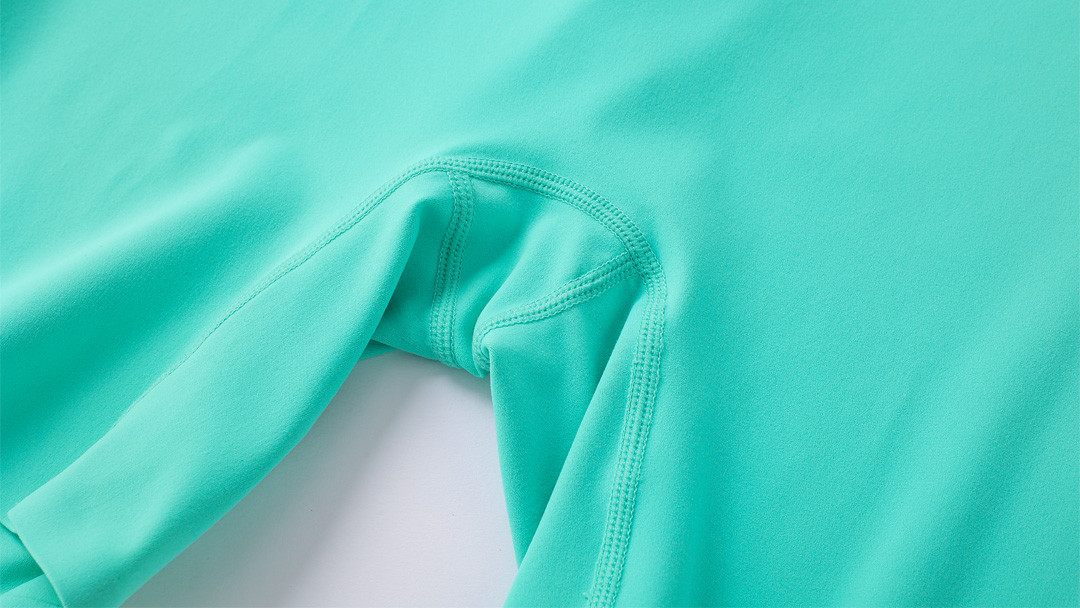
If your leggings have a standard four-way cross seam exactly at the crotch, your factory is cutting corners. This standard intersection creates a tension point that pulls the fabric up, causing extreme discomfort and the dreaded "camel toe" effect.
The Audit Rule: Check the prototype for a Diamond or Triangle Gusset. This specialized fabric insert disperses seam tension across the inner thighs, completely eliminating front-rise pulling.
3. Seam Tensile Strength: Flatlock vs. Overlock
Yoga pants endure multi-directional stress. If a factory sews the main panels with standard Overlock machines, the seams will snap during a deep stretch, and the thick thread ridge will chafe the skin.
The Audit Rule: Demand 4-Needle, 6-Thread Flatlock construction using high-elongation Wooly Nylon thread. This allows the seam to lay completely flat against the skin and stretch simultaneously with the fabric, withstanding over 50 lbs of tensile pulling force without bursting.
4. Preventing Waistband Roll-Down
High-waisted leggings that roll down during a workout indicate a failure in pattern grading and construction.
The Audit Rule: Ask the manufacturer how they stabilize the waist. A qualified factory will insert a thin, concealed clear elastic tape (Mobilon tape) into the top seam. They also apply negative ease (making the waistband slightly smaller than the body measurement) to lock the garment in place ergonomically.
5. Modulus Calibration: Horizontal vs. Vertical Stretch
Saying a fabric has "4-way stretch" means nothing. The specific stretch ratio determines if the leggings will become baggy at the knees after three uses.
The Audit Rule: The factory must verify the stretch modulus. For high-performance yoga wear, we engineer fabrics to have 60% horizontal stretch and 40% vertical stretch, with a 95% recovery rate within one minute.
6. Chemical Compliance: PFAS-Free Certification
Global laws regarding toxic chemicals in clothing are becoming strict. Cheap factories use unregulated chemical dyes and finishes that can cause skin irritation or legal issues for your brand.
The Audit Rule: The factory must guarantee PFAS-Free materials and provide Oeko-Tex Standard 100 compliance. (Protect your brand by reviewing our Guide to PFAS-Free Activewear Manufacturing.)
7. Moving Beyond AQL 2.5 Quality Control
The standard AQL 2.5 method means a factory only inspects about 3% of your bulk order. If the leggings at the bottom of the box have skipped stitches, they ship them anyway.
The Audit Rule: Your manufacturer must implement 100% in-line inspection. Every single garment must be checked for needle holes and seam alignment before packaging. (Read exactly how we do this in our 5-Step Quality Control Process.)
8. Agile MOQ: Protecting Your Cash Flow
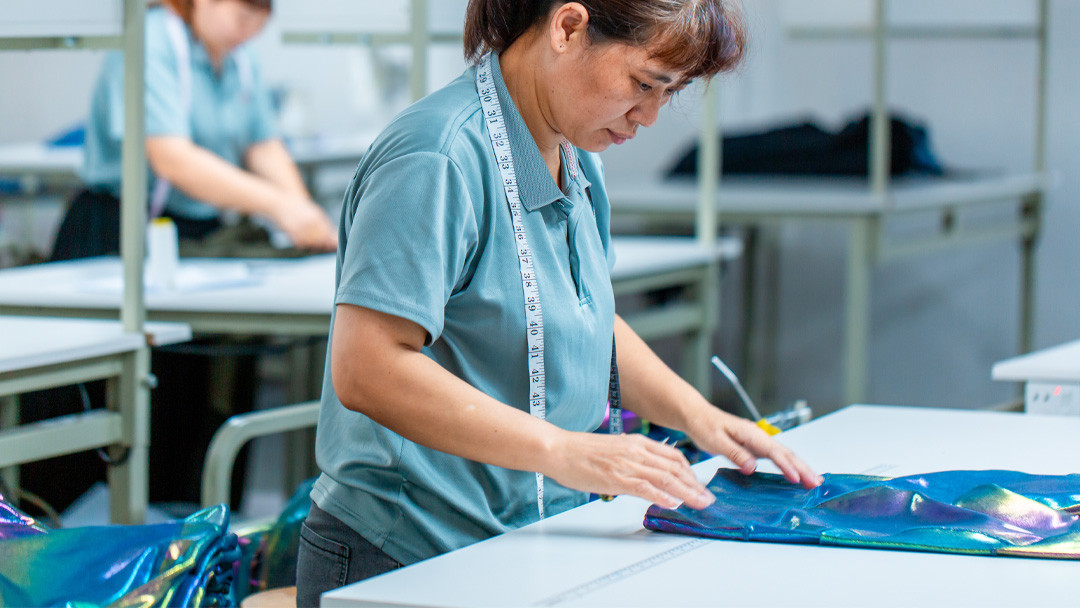
Traditional factories force you to order 3,000 units per color. If the market dislikes the style, you are stuck with $30,000 of dead stock.
The Audit Rule: Partner with an Agile Supply Chain. Look for factories offering Low MOQs starting at 100 to 300 pieces. This allows you to test new designs in the market with minimal capital risk. (Understand the true cost of inventory in our Agile vs. Cheap Manufacturing Analysis.)
9. Pre-Production Tech Pack Audits
A bad factory blindly sews whatever is on your tech pack, even if your measurements are mathematically impossible. A good factory acts as your safety net.
The Audit Rule: The manufacturer should actively audit your blueprints, correct your spandex ratios, and adjust your grading rules before cutting the prototype. (Ensure your blueprints are error-free with our Tech Pack Mistake Guide.)
10. Predictable Lead Times (30-45 Days)
If your supplier requires 120 days to produce a bulk order, the trend will be dead by the time the inventory arrives.
The Audit Rule: You need a manufacturer that maintains a steady supply of premium greige fabrics (undyed materials) and can turn around bulk production reliably in 30 to 45 days.
Audit Passed. Ready to Manufacture?
Call The Style executes all 10 engineering standards on our factory floor daily. Send us your tech packs, and let's build high-performance yoga wear with low MOQs and zero compromises.
SUBMIT YOUR TECH PACKFrequently Asked Questions (FAQ)
Q: Why do my yoga pants turn sheer when I squat?
A: This happens when the factory uses fabric with a low GSM (under 200) or a single-jersey knit. To fix this, your tech pack must specify a minimum of 220 GSM and a double-knit fabric structure to ensure complete opacity during maximum stretch.
Q: What causes "camel toe" in leggings, and how does a factory fix it?
A: It is caused by a basic 4-way cross seam intersecting directly at the crotch. A professional factory prevents this by engineering a diamond or triangle fabric gusset into the crotch area, which disperses the seam tension away from the center.
Q: What is the difference between Flatlock and Overlock stitching for activewear?
A: Overlock creates a raised, bulky seam on the inside of the garment that chafes the skin and snaps under high tension. Flatlock (4-needle, 6-thread) joins two pieces of fabric edge-to-edge, creating a completely flat, highly stretchable seam that withstands extreme athletic movement.
Q: Can I start an activewear brand without ordering thousands of pieces?
A: Yes, if you choose the right partner. While cheap factories require high MOQs (3000+ pieces) to cover their inefficient setups, agile manufacturers like Call The Style support independent brands with flexible MOQs starting at 100-300 pieces per color.