Removable vs. Fixed Pads in Sports Bras: How Should Brands Choose?
Removable pads are not the flexible option and fixed pads are not the premium one. Neither structure is automatically better. A brand should choose based on three things: the wearing experience you are designing for, the wash-and-care steps you are willing to ask customers to follow, and whether your factory can reproduce the structure consistently at bulk scale. What matters is not the label on the spec sheet — it is whether the pad stays where you intended after washing, and whether every garment does the same thing.
Quick Answer
Choose removable or fixed bra pads by intended use, care routine and factory repeatability — not by assuming one is better. With removable pads, approve the pad and the pocket together, then verify position and reinsertion after washing. With fixed pads, define exactly how the pad is attached and check symmetry, shape and connection points after washing. Support comes from the whole bra construction, not from whether a pad can be taken out. Record the decision against a real sample before bulk approval.
A note on what this guide can and cannot do. It draws on public care guidance and standard test references to explain the decisions and the verification method. It does not contain measurements from our own products, and it will not tell you that one structure never shifts or stays perfect after washing. Those claims need real development records. The tables below are built to be filled in with your own samples — leave a field as "to be confirmed" rather than guessing.
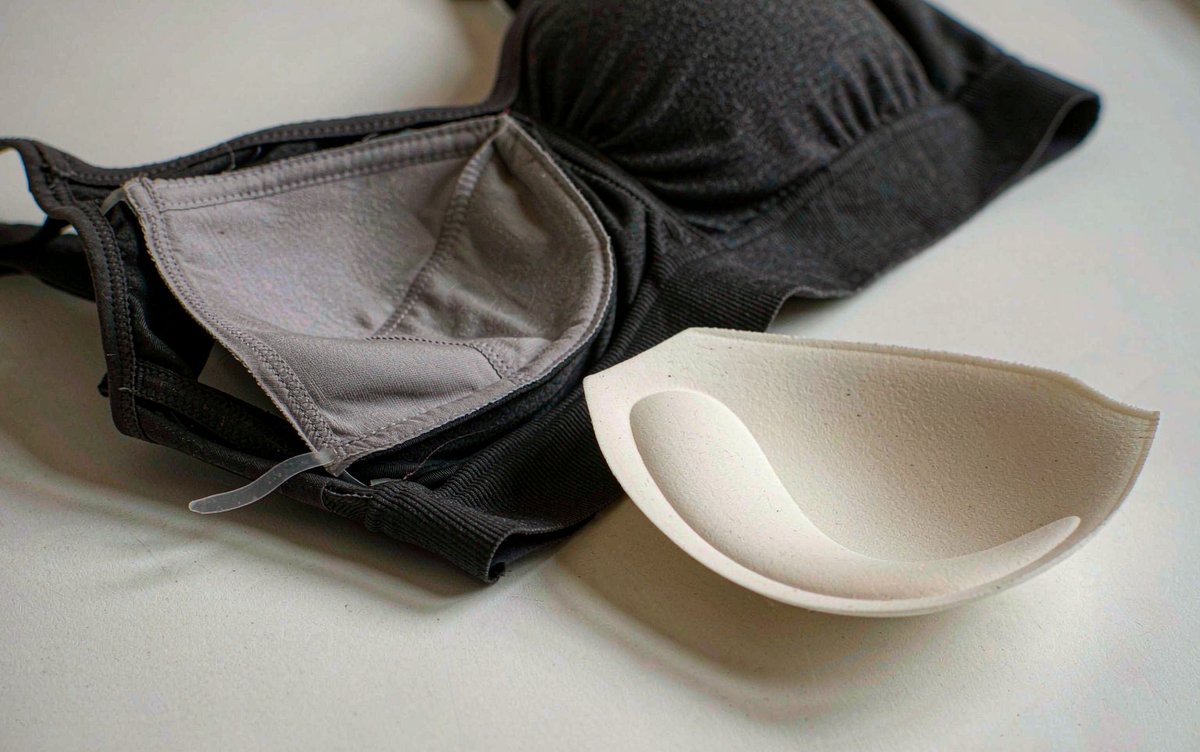
With removable pads, the pad and its pocket are one system — approve both. (AI-generated image)
First, Define What "Removable" and "Fixed" Mean in Your Design
Buyer and factory can discuss two different products while using the same word. Write the structure down before comparing anything.
Removable: the pad and pocket are a system
A removable pad usually sits inside an inner pocket accessed through an opening. Do not approve the pad on its own. Confirm the pocket shape, the opening position and how the pad sits once inserted. A build-sheet photo should mark:
- The pad outline, top-to-bottom direction and whether left and right differ;
- The pocket area and the exact opening location;
- How the pad matches the pocket after insertion;
- The inner fabric and where its seams sit.
Fixed: say exactly how it is fixed
"Fixed pad" is not a purchase description on its own. Ask the factory to state:
- Whether the pad is held by spot stitching, edge attachment or another method;
- How the pad, lining and outer fabric are combined;
- Which points are restrained and which areas can still move;
- Whether it is a separate insert or a moulded cup structure.
One distinction that gets blurred: "non-removable" describes whether you can take the pad out; "moulded" describes how the cup is formed. They are not the same category. Compare against a construction drawing and a taken-apart sample. For pad dimensions and shapes, our removable bra pad specification FAQ covers those details — this guide does not repeat them.
Trade-Offs to Weigh Before Choosing
This table gives you the questions to ask. It is not a ranking of consumer preferences, and not every structure will show every issue.
| Decision area | Removable structure | Fixed structure |
|---|---|---|
| Wearer choice | Can the pad be removed and reinserted as the design intends? Does the bra still look right without it? | Cannot be removed in normal use; thickness, outline and coverage must be right at development |
| Stability in wear | Does the pad rotate, fold or shift inside the pocket? | Is the fixed position right, or does it pull and distort the outline? |
| After washing | Does the customer need to remove, straighten and reinsert it — and is that step clear? | No reinsertion, but shape and attachment points still need checking |
| Appearance consistency | Are direction, position and flatness consistent? | Are left and right positions, fixings and surface outline consistent? |
| Bulk control | Pad numbering, pairing, insertion direction, missing pads, pocket size | Fixing position, process, left-right symmetry and deformation |
| After-sales | Are replacement pads offered, and how is the correct type identified? | How are internal problems handled — repair or replace the whole garment? |
| Cost | Pocket, opening, insertion and related checks | Fixing operation, equipment or tooling, and related checks |
The flexibility of removable pads and the fixed position of attached pads are real structural differences. Comfort and wash durability are not — those need sample verification. And do not treat how a pad is attached as a support rating. Support comes from the whole construction: encapsulation or compression design, fabric, underband, straps and adjustment systems. Our support-level FAQ defines those levels; a fixed pad alone does not make a bra suitable for high-impact activity.
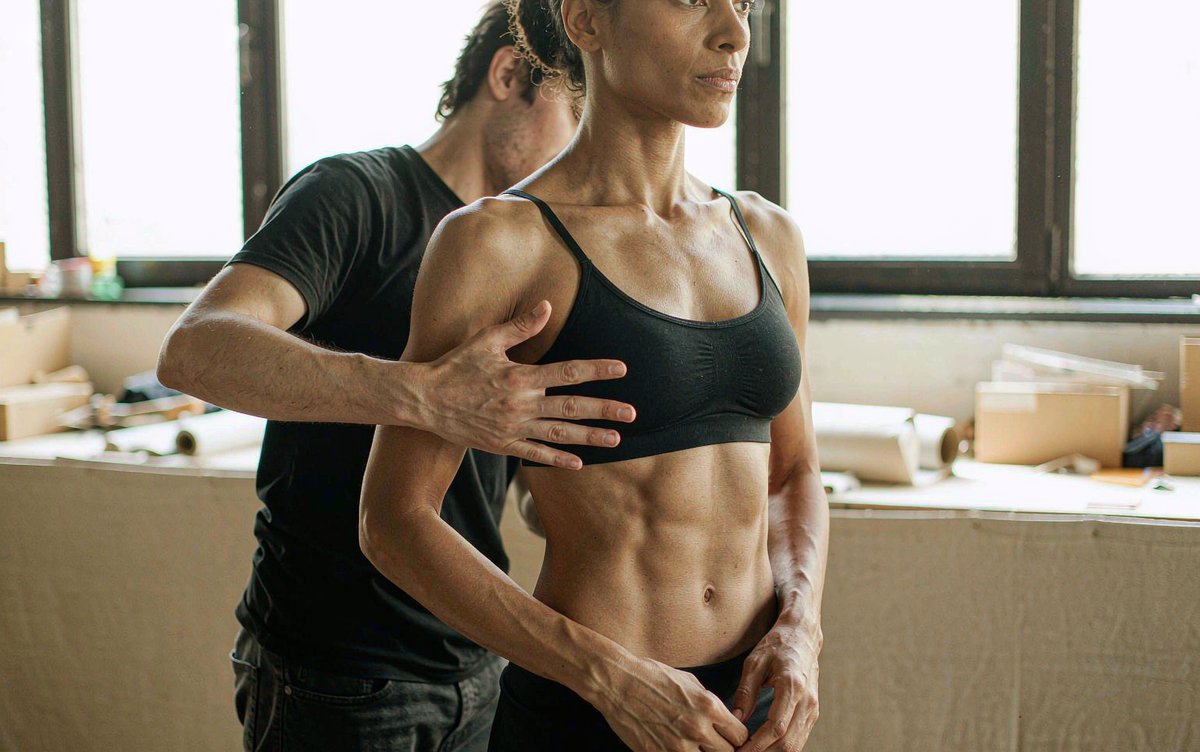
Compare wear performance on controlled samples — not on a general impression of which feels better. (AI-generated image)
Compare Wear Performance With Controlled Samples
"It felt better in the fitting" is too subjective to approve a structure. Define what you are comparing first.
Keep the main conditions the same
Use a similar base pattern, fabric and size across the two structures. If the fixed version must change the lining, cup or seams, record that clearly — otherwise you will credit the pad structure for a difference caused by something else.
Observe and record:
- Left and right outline when standing, and whether pad edges are visible;
- Whether the garment needs straightening after being put on or taken off;
- Whether the pad moves after arm raising, torso rotation and the target training movement;
- Any local pressure, seam contact or folding sensation;
- Whether appearance and comfort feedback change after sweating or activity.
These are suggested brand wear-check items, not a standard test procedure. Movements and pass criteria should follow the product's real use. Keep the scope in the record — size, sample version, movements and conditions — instead of writing only "comfortable". One tester's preference is not a global consumer preference, and no market-share or preference percentage should be claimed without research.
Validate Washing, Drying and Reinsertion
This is where many structure decisions fall apart. The question is not which bra looks neater before washing — it is whether the product still matches the design after the care routine you actually recommend.
Make care instructions and verification agree
Public care guidance shows the practice is not uniform: adidas, for example, notes that removing pads can reduce bunching inside the bra, and also describes leaving pads in and reshaping after washing where the product's own care label allows it. So do not write "removable pads must always be taken out before washing". Decide, for your product:
- Should the customer remove the pads or leave them in?
- What wash and dry conditions apply?
- Is a laundry bag required?
- Is straightening after washing allowed or required?
- Can an ordinary customer understand and follow the instruction?
Record before and after straightening separately
| Check point | Removable structure | Fixed structure |
|---|---|---|
| After wash, before straightening | To be recorded: flipped, folded, shifted or creased? | To be recorded: skewed, collapsed, wrinkled or locally deformed? |
| After drying | To be recorded: pad and pocket shape, edges, surface | To be recorded: pad shape, fixing points, garment surface |
| After handling | To be recorded: is direction obvious, easy to unfold and lay flat? | To be recorded: is manual straightening needed, and does it hold? |
| On re-wear | To be recorded: position, outline, coverage, comfort | To be recorded: position, outline, coverage, comfort |
Keep photos both before and after straightening, so the record cannot hide a real care burden by quietly putting everything back in place. And do not let one shrinkage report stand in for the whole wash verification. AATCC TM150 addresses dimensional change in garments after home laundering; it does not by itself confirm pad folding, reinsertion or the stability of a fixing point. Confirm method applicability with the lab, and keep appearance and handling checks as separate records. Wash cycles, conditions and acceptance limits need to be agreed for the project — no "five washes is enough" rule applies here.
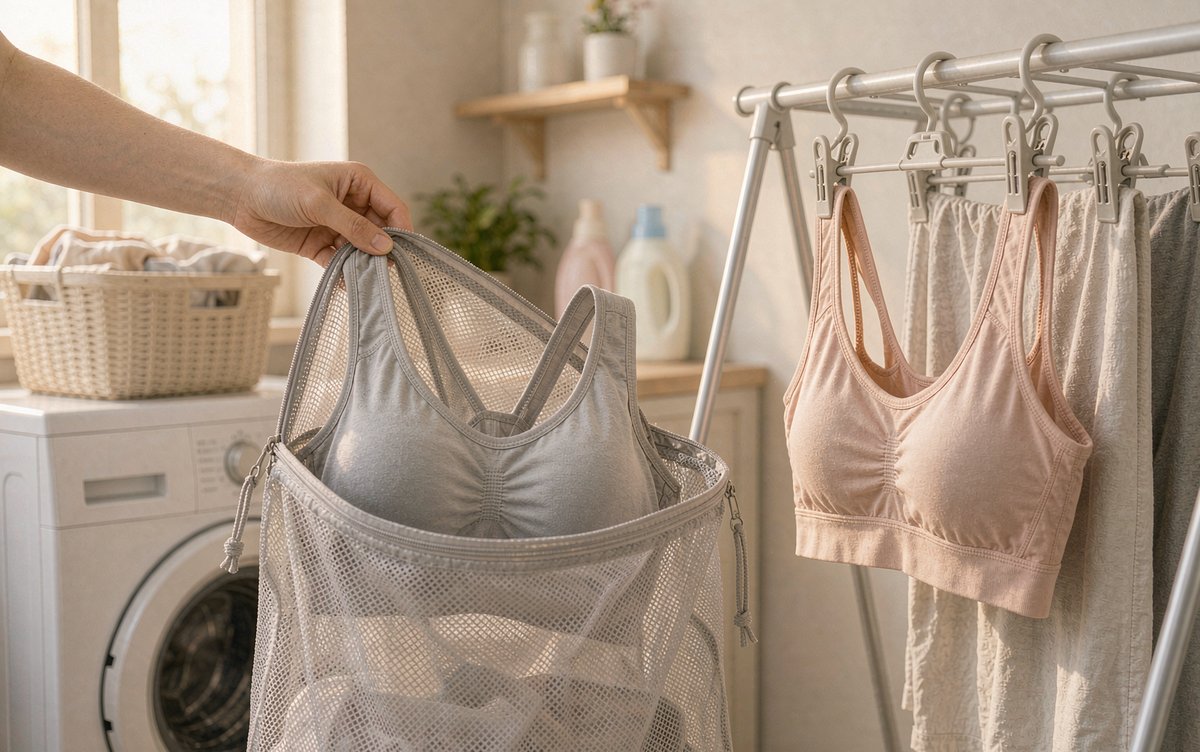
Verify the care routine you will actually recommend, and record the state before anyone straightens it. (AI-generated image)
Control Pad Identification and Bulk Consistency
A sample decision is only useful once the factory can repeat it. Build a pad-to-size relationship that purchasing, assembly and inspection can all use. If you are still assessing which supplier can hold these construction details at scale, our sports bra manufacturer engineering guide covers the factory-side capabilities to look for.
| Field | What to write down |
|---|---|
| Pad identity | Supplier, model, version and identification number |
| Shape and size | Measurement points, dimensions and tolerance in a defined state |
| Orientation | Top/bottom, front/back and whether left and right are distinct |
| Size mapping | Which garment sizes use which pad number |
| Structure version | Which pocket or fixing method applies |
| Approval basis | Approved physical sample, drawing, date and approver |
Do not assume every garment size needs a different pad, or that one pad fits all sizes. Verify the mapping across the target size range. Then write defects as observable states. For removable structures, check missing pads, wrong numbers, wrong direction, folding, and pockets or openings that differ from the approved sample. For fixed structures, check left-right height differences, position shift, missed fixing, and pulling or surface distortion caused by the fixing process. Quantities, sampling and allowable ranges belong in the order and quality agreement — this guide offers no universal limits.
Approve the Structure Through a Clear Decision Record
Do not end with "removable is more flexible" or "fixed is easier". Leave a record someone can trace when the next order is placed.
| Decision item | Final confirmation |
|---|---|
| Intended use | Target activity, wear time and expected appearance |
| Chosen structure | Removable, or the specific fixing method |
| Reason | Which wear, care or production need decided it |
| Verification scope | Sample version, sizes, wear check and care conditions |
| Key results | Position, appearance, comfort and after-wash behaviour |
| Bulk requirements | Pad number, size mapping, structure and critical checkpoints |
| Open items | Owner, deadline and whether they block bulk production |
| Formal approval | Approver, date and retained sample number |
Approve a structure for a specific style and version. A result on one bra should not silently cover every product in the range.
Frequently Asked Questions
Are fixed pads always better than removable pads?
No. Fixed pads remove the reinsertion step; removable pads keep the option to take them out and adjust. Which suits your product depends on intended use, care requirements and sample results.
Do fixed pads automatically provide more support?
No. Support comes from the whole bra — design approach, fabric, underband, straps and adjustment. How the pad is attached is not a support rating; check the construction and its verification.
Should removable pads be taken out before washing?
Follow the care instruction validated for that product. Public brand guidance includes both removing pads and leaving them in to reshape after washing, so the answer depends on the garment's own care label and your test.
How should a brand choose pad sizes for bulk production?
Build a pad-number to garment-size mapping, then verify it on samples across the target size range. Do not assume every size needs a unique pad, or that one pad covers all sizes. Specification details live in our removable-pad FAQ.
Choose the Structure You Can Verify
The right pad structure is the one you can explain, test and repeat. Share your intended use, care requirements and preferred cup construction — then approve it against a real sample, not a category label. That is what turns a pad choice into a production decision.
Framework note: comparison points, wear checks and record tables in this guide are buyer-side development suggestions, not a single industry standard. AATCC TM150 is referenced as a public method for dimensional change after home laundering; confirm its applicability with your lab. Care guidance referenced from public brand information was checked in November 2026. No result in this guide represents testing of a specific product. Have a qualified development or quality reviewer sign off before bulk approval.