Plus-Size Sports Bras: How to Develop Bust, Underbust and Strap Combinations
A plus-size sports bra is not a small bra with the numbers turned up. Bust, underbust, cup volume, side wing, strap and closure do not grow at the same rate, so a proportional grade quietly breaks the parts that need to stay stable. If you are developing an extended size run, the useful question is not "which base size do we grade from?" It is "which bust-and-underbust combinations do we actually verify, and what do we record for each one?"
Quick Answer
Develop a plus-size sports bra on two axes, not one linear size chain. Put underbust (band) on one axis and bust-to-underbust difference (cup) on the other, then mark every combination as supplied, verified or not yet tested. Validate straps, band, side wing, closure and internal support as separate components — using the same strap part number does not mean the fit is verified in every size. Plan a small set of samples around the centre and the risky corner cells, record wearer feedback with sample version and conditions, and carry the matrix into bulk as a size-to-component record. Treat sister sizes as a communication hint, never as a substitute for testing.
A word on what this guide does and does not contain. It is a development method, built from public fit resources and manufacturing practice. It does not include body data, a size chart, sample counts or pass thresholds — those belong to your target customer and your own project, and I am not going to invent them. Every table below is made to be filled in with your own samples. Leave a field as "to be confirmed" rather than guessing. If you want a description of the manufacturing side itself, our guide to how size grading works covers the general process; this guide only deals with what changes when the range goes into plus sizes.
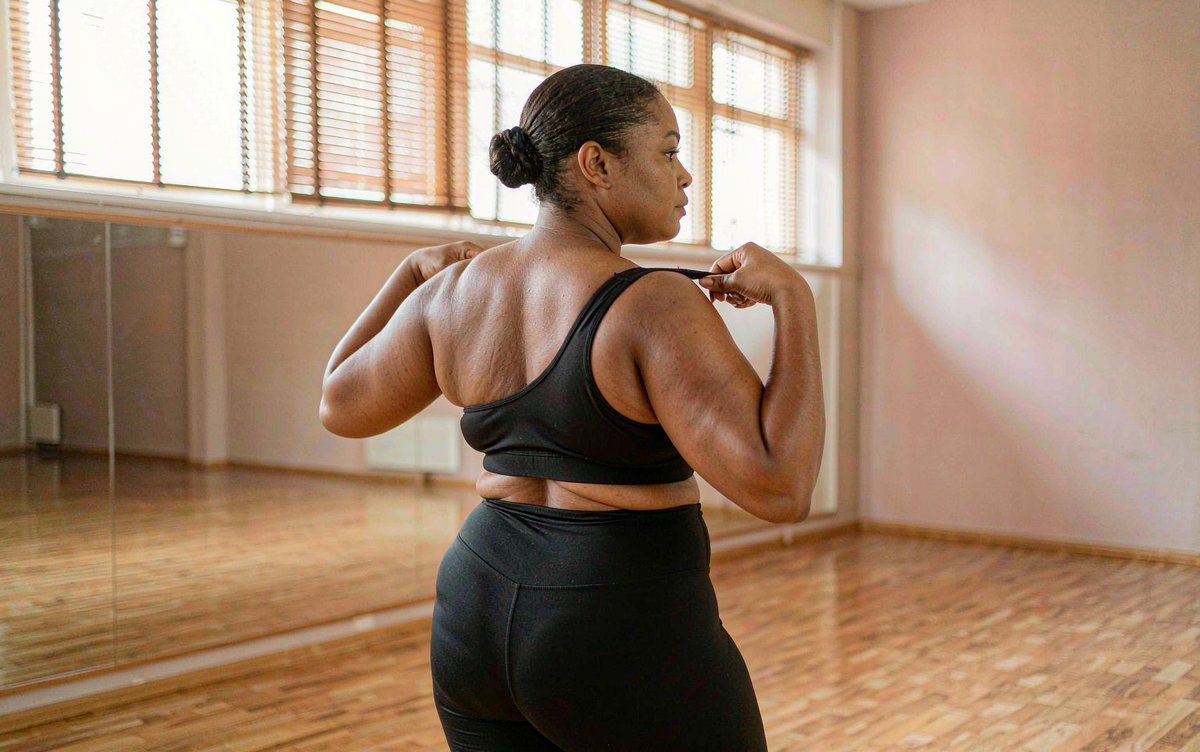
Checking the underbust band before a session — band and bust are measured separately. (AI-generated image)
Why a Plus-Size Bra Cannot Be Scaled Up Proportionally
One size label can hide several changes at once: a wider band, a different bust-to-underbust difference, a deeper cup and a different load path through the straps. Scale all of those by the same factor and you enlarge parts that should have stayed stable — and keep construction details that no longer work at the new size.
Separate bust, underbust and cup difference first
In most systems the band number relates to underbust circumference, and the difference between bust and underbust points to the cup. But measuring methods, rounding rules and letter systems vary between brands, so sizes are not automatically interchangeable across labels. Nike, for example, publishes its own measuring instructions and combines letter sizes with a cup range. This guide will not re-derive any market's sizing system — treat US, EU and Australia as target scenarios and confirm each brand's own chart separately.
What needs re-checking, not just enlarging
| Component | Why a straight scale-up is not enough |
|---|---|
| Cup | Cup volume and bust-to-underbust difference do not increase linearly with band size |
| Band & side wing | Must stay stable at a larger circumference — widening the length alone does not hold position |
| Straps | Width, position and adjustment range change how load and pressure are spread |
| Back & closure | Hook rows, zipper or pullover construction affect donning, stability and load |
| Elastic components | Recovery and tension have to match the new size, not simply be made longer |
Public bra-fitting guidance makes the same point: grading is not uniform scaling, and plus-size work needs attention to cup-to-band ratio, side-wing stability, strap width, elastic behaviour and closure configuration. That is a principle, not a permission to publish specific dimensions for a specific size.
Build the Bust-and-Underbust Matrix
This is the main deliverable. Stop thinking of the range as a linear chain (S, M, L, XL…) and lay it out as a grid. Put band / underbust on the vertical axis and bust difference (or cup) on the horizontal axis. Each cell records three things: do we supply it, have we verified it, and which base sample or comparison sample does it use.
| Band ↓ / Cup difference → | Smaller | Medium | Larger | Largest |
|---|---|---|---|---|
| Band A | Supplied / to verify | Supplied / to verify | Supplied / to verify | Supplied / to verify |
| Band B | Supplied / to verify | Base sample candidate | Supplied / to verify | Supplied / to verify |
| Band C | Supplied / to verify | Supplied / to verify | Supplied / to verify | Supplied / to verify |
| Band D | Supplied / to verify | Supplied / to verify | Supplied / to verify | Supplied / to verify |
There are deliberately no numbers in that table. Fill it with your own target body data and your own sizing system. And "base sample candidate" does not have to be the middle cell — the corner combinations usually carry the most structural stress and often deserve the earliest sample. Manufacturing guidance suggests adding more fit samples in the regions where proportions change most; use that idea to choose which cells to verify, not a fixed sampling rule.
Illustrative example (not measured data)
Here is how a brand might use the grid — this is a worked scenario to show the logic, not test results from any product. Say your planned range is four bands and four cup differences, sixteen cells in total. You cannot sample all sixteen before the first buy. You pick the middle cell (Band B, medium cup difference) as the base sample, then add two corner samples: Band A with the smallest cup difference, because a short band with relatively more cup volume stresses the side wing and needs fewer hook rows; and Band D with the largest cup difference, because that is the heaviest load path. Suppose the Band D corner shows the front of the strap sliding during arm movement. The useful conclusion is not "the cup is wrong" — it is that the strap attachment point sits too far outboard for that band width, so the fix is to move the attachment inward or widen the strap and retest that single variable. That fix does not automatically apply back to Band A. Each cell you add costs a sample and a wearer round, which is exactly why you verify the risky corners first instead of building the whole grid blind.
Do not treat sister sizes as automatic conversion
Sister sizes describe an approximate cup-volume relationship between different band and cup combinations. That is a useful communication hint. It is not proof of the same fit, and it mainly applies to letter-cup systems — not to every A-to-DD or S-to-XL product. Do not use it to skip verification of an adjacent band, copy a sample conclusion from one cell to another, or promise a size exchange before the project has tested it.
Validate Straps, Band, Closure and Internal Parts
Fit feedback that only says "it fits" or "it doesn't" is hard to act on. Break the bra into components and verify each one across the sizes you plan to supply.
| Component | What to specify | What to observe |
|---|---|---|
| Cup / cup structure | Cup difference it applies to, sizes covered | Coverage, containment, side silhouette |
| Band & side wing | Band width, height, number of material layers | Stability, rolling, local pressure |
| Straps | Width, length range, adjustment method, attachment point | Shoulder pressure, slipping, adjustment remaining |
| Back & closure | Hook rows, position, or other closure type | Donning, load distribution, stability |
| Internal support | Pad or lining presence, part numbers, structure version | Position, shape, size match |
Public plus-size product ranges often highlight multi-row hooks, adjustable straps and wider, more comfortable straps as useful directions. Those are directions to discuss, not a spec to copy — the final choice comes from your target wearer, your support goal and the sample result. For how to decide the pad structure itself, see our removable vs. fixed pads guide; this article only covers the part-number and consistency side.
Keep "same part" and "same verification" separate. Ten sizes may use the same strap or hook part number, and still need the position, length and load checked in each target range. A shared part number is not evidence that the fit was approved everywhere.
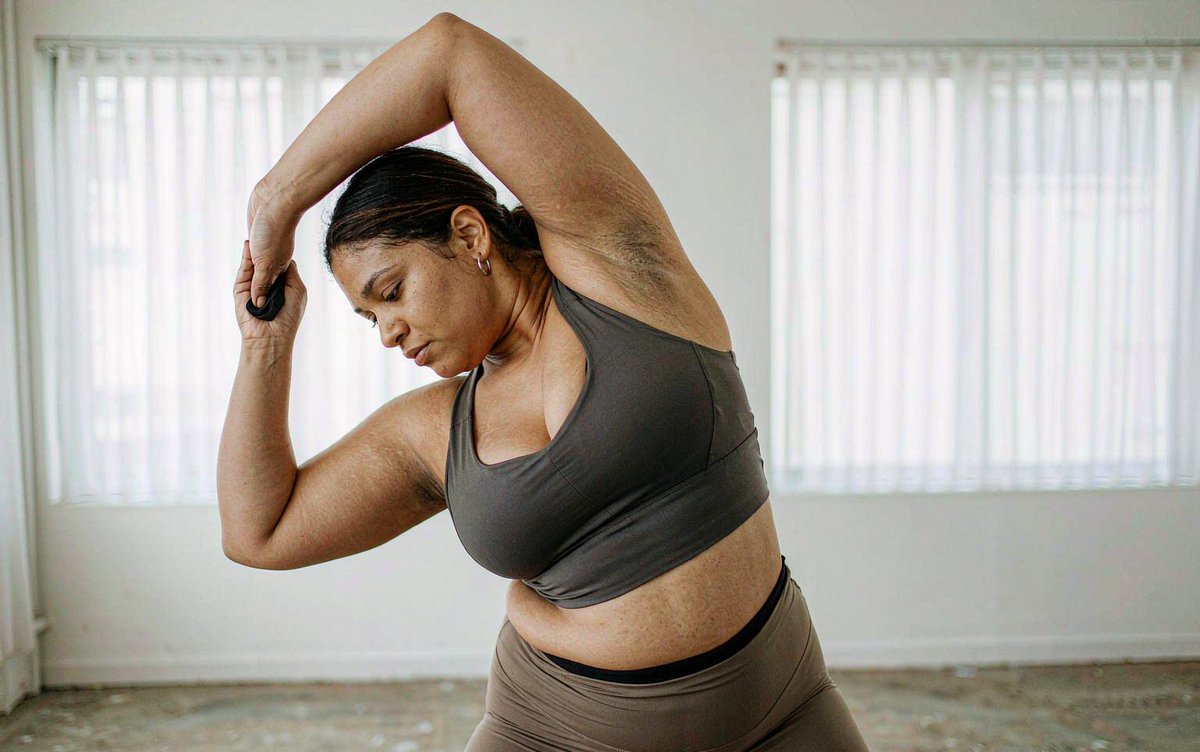
In movement, watch the band, side wing and strap — not just how the bra looks standing still. (AI-generated image)
Plan Fit Samples and Wearer Feedback
You cannot sample every cell on day one, and you should not pretend a handful of samples is statistically representative. The point is to get useful information from a limited set.
| Stage | Purpose | What the brand decides |
|---|---|---|
| Base comparison | Is the core proportion workable? | Which band and cup-difference representatives to sample |
| Corner check | Where does the structure break at the range edge? | Which extreme combinations are inside the planned range |
| Component retest | Compare a strap, wing or closure change | Which single variable to isolate |
| Correction review | Did the change break an already-approved size? | Whether the retest range needs to expand |
For each wearer session, record the relevant measurements and the consent scope, the sample size and version, the component configuration, and what happens when the wearer stands, stretches, does the target training movement and takes the bra off. Note where they feel pressure, sliding, containment problems or dig-in. Then record the proposed change and the retest result.
Measurement conditions matter as much as the numbers. Under Armour, for instance, states that its measuring guidance uses an unpadded bra. Write down whether the measurement was taken with no padding, with a pad, or over another layer — and do not assume one brand's condition applies to yours. Set the number of wearers by size range, product risk and who is available to test under consent. Do not write "enough to represent all plus-size customers."
Carry the Matrix into Bulk Production
The grid is only useful if it survives into the production file. For every supplied size, keep a record that connects:
- The band, bust difference, cup and component part numbers assigned to that size;
- Key measurement points and their tolerances;
- The approved sample version, approval date and which sizes it covers;
- Change history — especially for cup, strap, side wing and closure;
- Wash or stretch verification records, where the product calls for them.
One small detail that causes real confusion: state whether a circumference is measured flat or full-round, and whether it is taken under tension. Without that note, the factory and the brand can read the same number in two different ways. If you are choosing which manufacturer can run an extended size range at all, our plus-size activewear manufacturer guide handles the selection side; this guide stays with the size-combination and verification work.
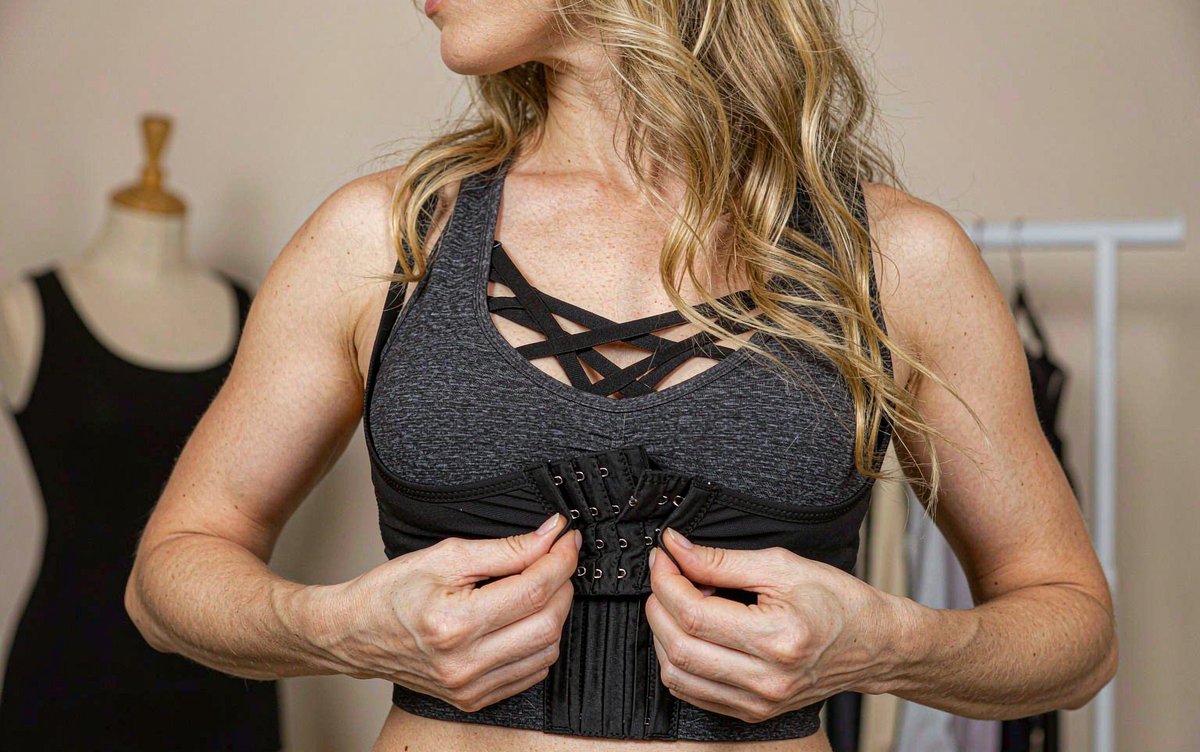
The closure and band carry the load in larger sizes — verify hook rows and band stability separately. (AI-generated image)
FAQ: Developing Plus-Size Sports Bras
Can a plus-size sports bra be made by grading up from a smaller base size?
Grading can be a starting point, not a default answer. Extended ranges usually need the cup, band, side wing, straps and closure re-checked, and whether to start from a larger base sample depends on how the proportions shift and what the samples show.
Are sister sizes enough to plan the size range?
No. They help explain cup-volume relationships, but similar volume does not guarantee the same fit, and the concept does not apply to every letter or S-to-XL system. Use them for communication, not as a sampling shortcut.
Should every bust and underbust combination be sampled?
Not necessarily. Pick representative base cells and the risky corners first, then add samples where the observed deviations suggest they are needed. That is a development approach, not a fixed sample-count rule.
Do US, EU and Australian plus-size brands use the same sizing system?
Do not assume so. Ask the brand for its own size chart, measuring rules and the mapping to each target market. A manufacturer should not infer that mapping on its own.
Where to Start
Pick one product and one target size range. Build the two-axis matrix, mark what you already supply and what has actually been verified, then choose a small set of base and corner samples. Record each wearer session with sample version and conditions, and carry the result back into the size-to-component file. The goal is not a long document — it is being able to say, for any combination you sell, which parts it uses, what was verified, and what is still open.
If you are planning an extended size run and want to talk through which combinations to sample first, share your intended range, support level and pad construction. We develop plus-size sports bras on a made-to-order basis and can help turn the matrix into a sample plan.