Home / All / Sourcing Guides / Golf Apparel Manufacturer for Brands: Performance Polos and Beyond
Golf Apparel Manufacturer for Brands: Performance Polos and Beyond
Nov 18,2026
Sourcing guide · Golf apparel development
A good golf apparel manufacturer should be able to turn a brand's playing brief into an approved garment, not just sew a polo with a logo. Start with the golfer and the sales channel. Then check the collar and placket, room through the swing, hem coverage, fabric behavior after washing, and whether the factory can repeat the approved sample. A polo can look excellent on a hanger and still pull across the shoulders or lose its shape after a few washes.
There is room for a broader range, too: skorts, trousers and light layers often share a customer but do not share one fit test. The smartest first collection is usually a few clearly specified styles, with each claim and cost attached to a sample the brand has actually reviewed.
1. Decide which golf customer the line is for
On-course, practice range or golf-inspired everyday wear?
These are overlapping customers, but they make different purchasing decisions. A club shop may care about a polished collar, reliable reorders and decoration consistency. A DTC brand may be testing a slimmer fit or a more relaxed silhouette. A resort range may need easy-care polos and matching bottoms that look coherent in photographs and on the sales floor. Write the intended setting and customer into the first brief, then ask whether any specific venue or retailer has a dress policy. There is no single global “golf dress code” to copy into a tech pack.
The market data can explain why the category merits attention without pretending it forecasts your orders. The National Golf Foundation reports 29.1 million on-course players and 19 million exclusively off-course players in the United States in 2025. It also reports 8.1 million female on-course players; that last group is part of the on-course total, not an additional category. These are U.S. participation estimates, not global apparel buyers, unit sales or evidence that a particular polo will sell. See NGF's definitions and figures.
U.S. golf participation reported by NGF for 2025
On-course
29.1m
Off-course only
19.0m
Women on-course
8.1m
Source: National Golf Foundation, Golf Industry Facts. “Women on-course” is a subset of the 29.1m on-course group and must not be added to the other bars. The shared scale compares people, not garment demand or purchase intent.
What should the first product brief say?
Define men's, women's or unisex sizing; the climate and activity; whether the polo is worn tucked or untucked; the preferred collar shape; sleeve length; logo location; target retail position; and the first color and size range. Add reference photos for silhouette, but mark which elements you want developed rather than asking a factory to copy another brand's garment. If a club or retailer has its own requirements, provide them in writing.
Start with the custom golf polo range for brands to identify a silhouette or collar direction, then describe what needs to change for your customer. The listed styles are references, not proof of performance for a new fabric.
My view: the most expensive sentence in an early golf-apparel brief is “make it premium.” It tells a supplier nothing about how the collar should stand, where the hem should land or which defect would make the sample unacceptable.
2. Make the performance polo work as a garment
Collar, placket and hem: small parts with a big visual effect
A golf polo needs a neat neckline after wear and laundering. Choose a self-fabric, rib or woven collar deliberately. Specify the collar stand and edge, placket length and reinforcement, button or zip trim, and how the neckline behaves when open. A long back hem may help a tucked-in style stay put; a shorter, balanced hem may suit an untucked retail fit. Neither choice is automatically right for every brand.
Compare real retail examples as design references rather than factory credentials. The Nike Tour polo uses a three-button placket, fold-over collar and stretch knit. FootJoy's TourLisle polo describes an extended back shirt tail and reinforced hem. Their published features show two ways brands handle movement and a finished appearance; neither brand is presented as a Call The STYLE customer. Your sample still needs its own fit and wash review.
Does the fit allow a swing without sacrificing the shape?
Check the polo on the intended size range, not just a flat measurement table. Have a wearer raise both arms, rotate through a controlled swing motion, bend to pick up a ball and walk. Watch the shoulder, chest, sleeve opening, placket and hem. Does the shirt ride up? Does the collar twist? Does a chest logo distort? A sample can measure correctly and still feel restrictive when the wearer rotates.
For a golf polo manufacturer, useful comments are specific: “The M pulls at the back shoulder during rotation; keep the chest circumference and review the back width and sleeve attachment.” “Make it more flexible” leaves too much to guess.
Piqué, smooth knit or another fabric?
Start with the look and use, then compare candidate fabrics in the same intended garment. Piqué can create a classic textured appearance; a smoother knit can produce a cleaner technical surface; blends and finishes change the hand feel, stretch, drying and care behavior. Fiber content alone cannot certify moisture performance. Ask the mill or supplier for the fabric code, composition, GSM, construction, stretch/recovery information and approved color. Compare the collar and body fabric together so one does not distort the other after washing.
If the fabric must be custom developed, agree the yarn, knit, finish, color and testing brief with a performance activewear fabric sourcing team before treating a swatch as approved. For a deeper comparison of fiber choices, see the nylon versus polyester activewear guide. Neither fiber name alone establishes a finished polo's performance.
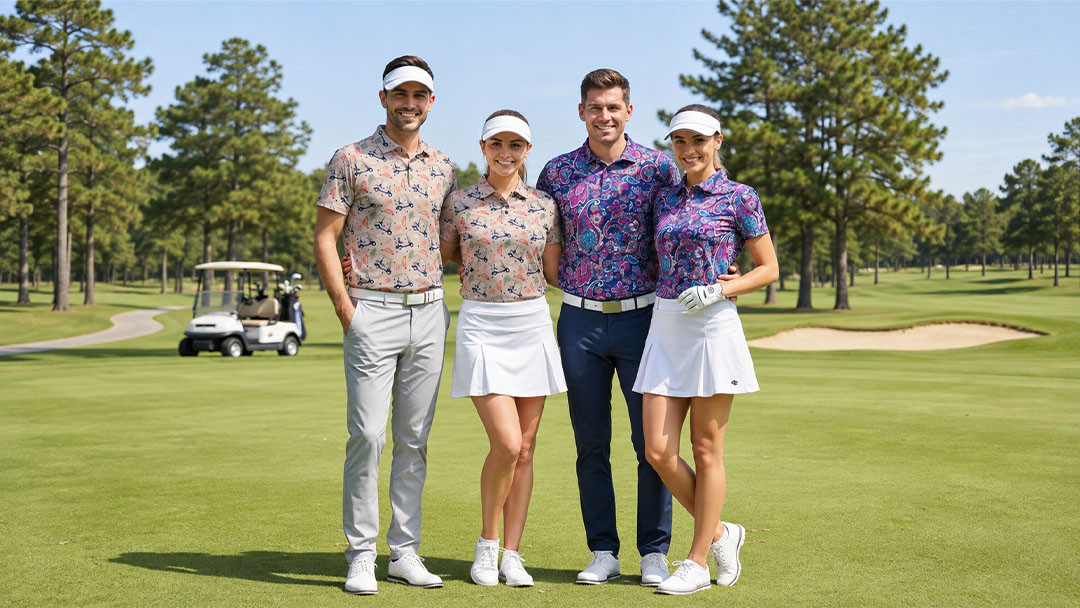
Golf apparel collections often span men’s polos and trousers as well as women’s polos and skirts. Each style needs its own fit and construction brief.
3. Build the rest of the range around distinct use cases
Skorts and dresses need their own movement checks
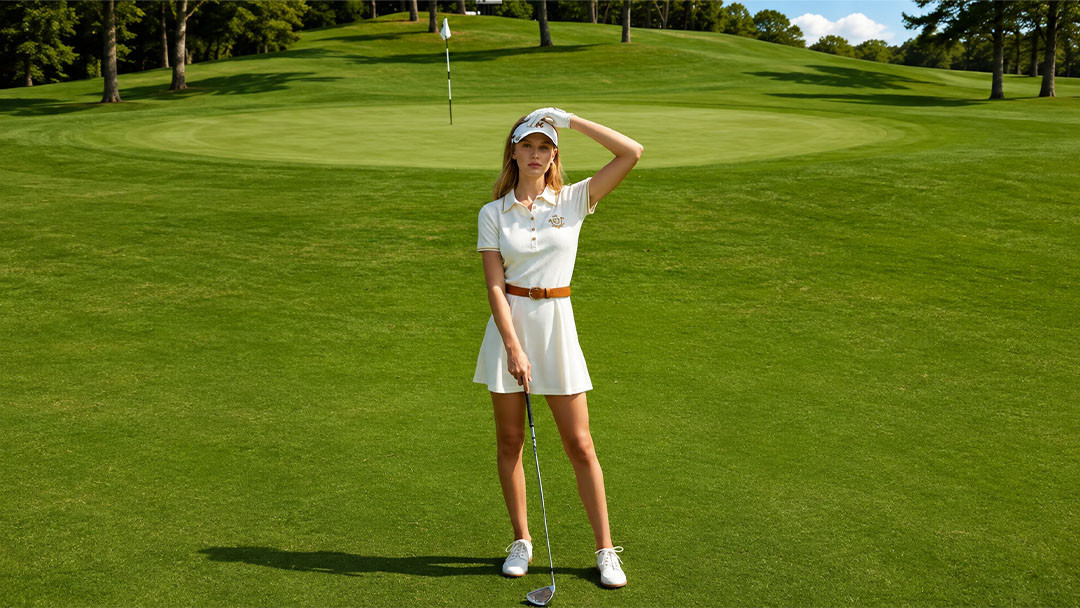
A brand might use the same color and trim story for a polo and skort. That does not make the skort a simple add-on. Review the liner, rise, waistband, pocket access, hem coverage and how the garment moves while bending and walking. If a design crosses into tennis, the pocket brief may change: tennis buyers may need convenient ball storage, while golf buyers may prioritize a cleaner silhouette or a different pocket placement. Decide from the customer brief instead of assuming the same pocket works for both sports.
Call The STYLE's custom tennis skirts and skorts range provides construction references for liners, pockets and waistbands. If the intended buyer is a golf brand, test any adapted skort against that buyer's coverage, pocket and retail requirements instead of assuming a tennis design transfers unchanged.
What changes when the range adds a quarter zip or trousers?
A light quarter zip adds zipper, collar and sleeve questions. Check the zipper against skin, the standing collar in motion, cuff position and whether the hem stays balanced over a base layer. The published golf quarter-zip product is a style reference. Verify any sun-protection claim on the exact selected fabric before using it in marketing.
Trousers add a different set of decisions: waistband stability during a swing, pocket shape, seat and knee movement, and the post-wash appearance of a tailored leg. Do not assume the polo fabric, fit model or acceptance sheet covers a bottom. If the brand launches only one extra style, choose the one its customer is most likely to buy with the polo, then sample it properly.
4. Test the claims before printing them on a hangtag
Fabric identity and an appropriate liquid-moisture test, such as AATCC TM195, with actual results.
Wear review for comfort in the intended fit and climate.
Drying
Defined drying-time method, such as AATCC TM199, with conditions and reported time.
Review the garment's lining, collar and layered areas separately.
UV protection
Evidence for the specified fabric/color and the intended claim, such as AATCC TM183 data.
Confirm coverage, fabric substitutions and local labeling rules.
Fit and durability
Approved measurements, wash procedure and relevant surface or seam tests agreed by buyer and factory.
Check collar, placket, hem, logo, shade and movement after care.
The methods above are examples to discuss with the mill or laboratory. They do not mean Call The STYLE has tested a particular garment to those methods, and they do not establish universal pass thresholds.
How would a useful A/B sample comparison work?
Here is a proposed test protocol, not a completed experiment. Make the same approved polo pattern in two candidate fabrics, A and B, matched as closely as practical to the same target color. Keep collar construction, decoration, size and care procedure the same so the fabric is the main variable. Use consenting wearers in at least the sizes the brand has selected for sample review. Photograph the collar and hem before and after an agreed care cycle, record the garment measurements, and note movement comments during the same arm-raise and rotation sequence. If a lab report is requested, send the actual fabric versions to the lab and record the method and results next to the sample IDs.
Suggested A/B development log; enter results only after testing
Check
Record for A and B
Decision if one fails
Swing movement
Size, wearer, shoulder/chest tension, sleeve and hem movement.
Revise pattern or fabric and refit.
Collar and placket
Appearance before/after the specified wash cycle; twisting or puckering.
Review interfacing, trim, fabric pairing or construction.
Surface and color
Shade, logo appearance and any agreed surface-change assessment.
Change material, artwork or care requirement; retest.
Lab claims
Sample code, lab, method version, conditions and actual report value.
Remove or revise unsupported claim.
Set the pass criteria before looking at results. Otherwise it is tempting to call whichever fabric looks nicer “the winner.” A small wearer panel helps catch problems; it cannot prove a universal comfort or performance result. An activewear sample-making and prototyping process should keep each fabric code, pattern version, wear comment and correction attached to the same sample record.
A clean look on the course is only the starting point. For women’s golf apparel, brands should also review coverage, movement and fit during sample approval.
5. Turn the approved golf design into repeatable production
What must the tech pack control?
Put the intended wearer, technical flats, body and garment size charts, points of measure, collar and placket construction, sleeve and hem dimensions, fabric codes, trims, artwork placement, care and packaging in a versioned tech pack. Give the supplier a list of critical measurements and tolerances to agree, rather than borrowing numbers from a generic online template. For a golf skort or quarter zip, add the product-specific liner, pocket, zipper and layer details.
At fit-sample approval, note what changed and which version was accepted. At pre-production approval, check the garment made with the intended bulk fabric, color, logo and trims. If the mill changes fabric or the decorator changes the logo process later, reopen the affected approval checks. This is how a factory reproduces a good sample rather than merely remembering it. Use the factory-ready activewear tech pack checklist to close gaps before the first sample.
What should a buyer put in the golf apparel specification?
This is a field list for a real purchase brief, not a universal set of measurements. Enter values from your own product brief and approved sample. If a value or claim is still under development, mark it “to confirm” and name who will approve it.
Factory-ready specification fields for a polo and companion styles
Field
What the brand supplies or approves
How to verify
Wearer and use
Market, sales channel, intended activity, target body and size range, tucked or untucked wear.
Buyer brief and representative wearer fitting.
Polo construction
Collar type and stand, placket length, button/zip trim, sleeve opening, front/back hem, seam and logo placement.
Technical flat, measurement sheet and approved physical sample.
Fabric and color
Supplier code, composition, knit, GSM, stretch/recovery, finish, color reference and permitted substitution.
Approved swatch, bulk-intent sample and agreed test evidence.
Skort or trouser
Waistband, liner if used, pocket purpose and opening, rise, length, coverage and movement requirements.
Separate size-set and activity-specific wear review.
Layer and trims
Quarter-zip collar, zipper, cuff, layering ease, labels, embroidery or transfer method.
Trim/BOM approval, fit and wash review.
Claims and care
Exact wording proposed for moisture, drying or UV; target market; washing and appearance requirements.
Relevant report for the exact material plus approved care review.
Written quote, pre-production sample and bulk-release record.
How should a buyer plan a first order?
Call The STYLE's published MOQ calculator gives a standard starting point of 100 pieces per style and color, with sizes mixed within that color. A polo and skort in one color each would therefore be 200 garments; two colors of each would be 400. This is order arithmetic, not demand evidence or a promise that every custom material can be bought at that minimum. Ask separately about fabric, special trims, embroidery and packaging minimums.
Quote-comparison example: Supplier A prices a polo in a stock polyester knit with a standard collar. Supplier B prices a custom-color blend, woven collar and embroidery. The lower unit price does not identify the better supplier until the fabric, construction, testing, sampling, quantities and delivery terms are made comparable. This is an illustrative buying scenario, not a reported Call The STYLE customer order.
6. Choose a golf apparel manufacturer by the evidence it can show
Questions to ask before approving the supplier
Ask who develops the pattern and size set, which mill supplies the approved fabric, how the factory tracks a color or trim substitution, what is checked during production, and how a reorder identifies the approved sample. Request a measurement sheet, sample-comment record and a clear description of how problems are closed. If a supplier claims UPF, moisture performance or pilling resistance, ask for the relevant material report instead of accepting a product-page adjective.
Published golf polo and tennis styles demonstrate possible product directions, but a buyer still needs a quote and approved sample for the exact range being developed. Use the activewear fit-sample approval checklist to record open comments and identify the version that may enter bulk. The best manufacturing partner is the one whose documentation lets your next order match the product you actually signed off.
What makes an inquiry actionable?
For a private label golf wear range, send one page per style: target customer and country, reference sketches, fit intent, fabric preference, required claims, sizes, first colors, logo method and placement, quantities by style/color, target delivery window and any retailer requirements. Ask for sample cost and revision process, separate material minimums, estimated bulk lead time, and who supplies any independent lab reports. A request reading “golf polo, premium quality, best price” will produce quotes that are hard to compare.
Developing a golf apparel collection?
Send your polo or range brief, intended market, fabric and trim preferences, first colors and quantity per style/color. Call The STYLE can review the sample scope and quote the made-to-order version you actually want to test.
The NGF figures describe U.S. participation in 2025; the women's figure is included within the on-course total. They are market context, not apparel-sales data or a forecast. Nike and FootJoy product pages are independent design examples, not Call The STYLE customers or performance proof for our garments. The A/B table is a proposed sample-development protocol without results. AATCC method descriptions identify what can be measured; no test outcome or certification is asserted for a product in this article. The specification table is a buyer worksheet, with product-specific values deliberately left for approval. No named Call The STYLE customer case, internal wear-test result or laboratory report has been supplied for publication. Any MOQ, lab claim, fabric performance or delivery date needs confirmation for the exact order.
What is different about manufacturing a golf polo?
Besides fabric and branding, pay close attention to collar and placket appearance, shoulder and sleeve movement, hem position, post-wash shape and the intended retail or club setting. Approve the finished garment on the target wearer, not only a fabric swatch.
Can one polo be sold for both golf and tennis?
It can be developed for both if the intended customers, fit, movement and any retailer or venue requirements are checked. Shared styling does not mean every sportswear bottom or dress can use the same pocket or fit specification.
Does polyester automatically make a polo moisture-wicking?
No. Fiber content alone is not a test result. Specify the finished fabric and request appropriate moisture data if the claim matters, then review comfort and construction on the actual sample.
Can a brand put UPF 50+ on any golf quarter zip?
No. Verify the exact fabric and color against an appropriate UV-transmission test and the labeling rules for the destination market. Do not carry a claim over to a substituted fabric without review.
What should be tested before a custom golf polo enters bulk production?
Check garment measurements and size-set fit, swing-related movement, collar and placket appearance, logo placement, and the agreed post-wash result. Add the relevant laboratory evidence for any performance claim. Close open sample comments and identify the approved revision.
What is the minimum order for a polo and skort?
Call The STYLE's published standard starting point is 100 pieces per garment style and color, so one polo and one skort in one color each plan at 200 garments. Confirm the actual quotation and any separate fabric, trim or decoration minimums.