Nylon vs Polyester for Activewear: How Brands Should Choose
A brand may ask for “the best fabric for leggings,” but nylon versus polyester is only the first decision. Two fabrics can use similar fiber percentages and still feel, stretch, recover, pill, dry, and wear very differently.
That is because brands buy a finished fabric, not a fiber name. Yarn structure, knit construction, GSM, elastane content, dyeing, finishing, and testing all influence how the final garment performs.
Neither nylon nor polyester is universally better for activewear.
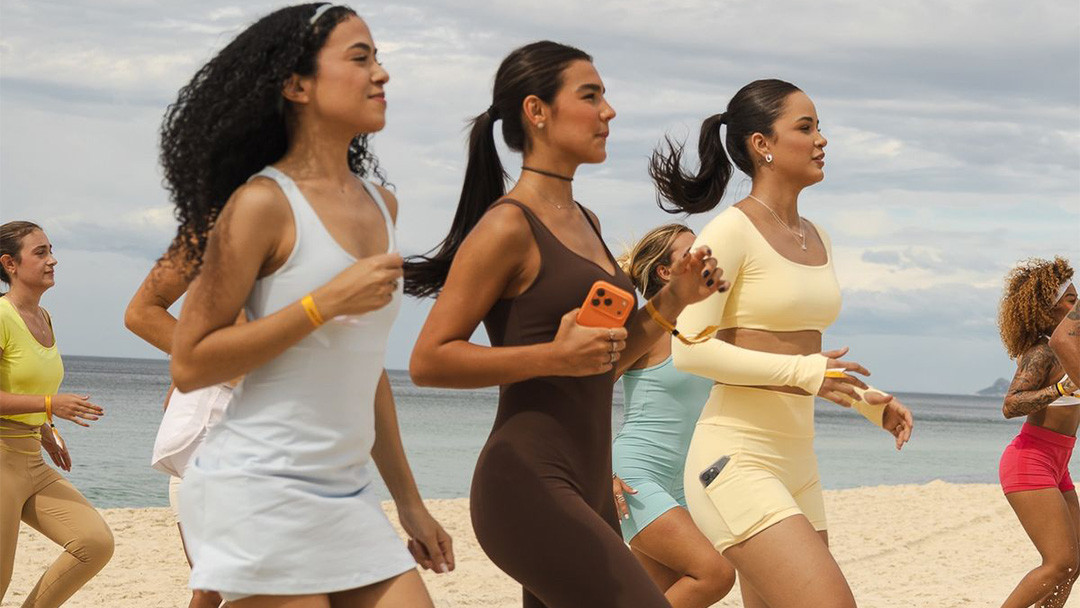
Nylon-based fabrics are often selected when brands prioritize a smooth or soft hand feel, premium next-to-skin comfort, and strong performance in fitted products such as leggings and sports bras.
Polyester-based fabrics are widely used for running tops, training apparel, printed sportswear, and price-sensitive volume programs. They can also be engineered for leggings, bras, and premium activewear.
The final decision should be based on the exact finished fabric: its construction, GSM, elastane content, stretch and recovery, color performance, moisture-management behavior, abrasion resistance, cost, MOQ, and test results.
1. Nylon vs Polyester for Activewear: Fast Comparison
| Buying factor | Nylon-based activewear fabric | Polyester-based activewear fabric |
|---|---|---|
| Hand feel | Often chosen for smooth, soft, premium next-to-skin applications. | Can range from crisp to very soft depending on yarn, knit and finishing. |
| Typical activewear use | Common in leggings, yoga sets, fitted shorts and sports bras. | Common in running tops, training wear, teamwear, shorts and printed products. |
| Abrasion | Can perform strongly, but finished-fabric testing is still required. | Can also provide strong abrasion performance depending on construction. |
| Moisture management | Depends on yarn, knit structure and finishing. | Frequently engineered for moisture-management programs, but performance must still be tested. |
| Color and printing | Suitable for a broad range of dyed activewear colors. | Very common in bright-color and printed performance programs. |
| Cost | Often positioned at a higher material cost in comparable activewear programs. | Often attractive where cost control and scalable production are important. |
| Best decision method | Compare actual fabric swatches, TDS data, bulk MOQ, price and relevant laboratory results. | |
This table describes common sourcing patterns rather than guaranteed fiber-level properties. Always compare the exact fabrics offered by the mill or manufacturer.
2. Fiber Content Alone Does Not Predict Performance
A composition label tells you what fibers are present. It does not completely describe how the fabric will perform.
Consider two fabrics that are both labeled:
One may feel dense, firm and highly compressive. Another may feel smooth, light and noticeably softer.
The difference can come from:
- Yarn denier and filament structure
- Yarn texturing
- Knit construction
- Fabric density
- GSM
- Elastane type and percentage
- Heat setting
- Brushing or peach finishing
- Moisture-management finishing
- Anti-pilling finishing
- Dyeing and post-treatment
Why GSM Matters
GSM means grams per square meter and is commonly used to describe fabric mass per unit area. It is an important specification because two fabrics with the same composition can have very different weights and constructions.
For example, a brand may compare:
- 220 GSM lightweight training fabric
- 280 GSM medium-weight legging fabric
- 320 GSM dense compression fabric
Those examples do not represent universal category limits. They simply show why composition should be reviewed together with weight and construction.
ASTM D3776/D3776M provides standardized methods for measuring fabric mass per unit area.
3. Hand Feel and Next-to-Skin Comfort
Hand feel is often one of the first differences a buyer notices when comparing nylon and polyester swatches.
In many activewear programs, nylon-based fabrics are selected when the product brief asks for a smooth, soft, refined or slightly cool next-to-skin sensation.
That does not mean nylon is automatically softer.
A finely textured polyester yarn with the right knit and finishing can feel softer than a coarse or poorly finished nylon fabric. Brushing, yarn count, density and surface finishing can substantially change what the buyer feels.
If hand feel is commercially important, approve a physical swatch rather than relying only on composition and photographs.
4. Abrasion, Durability and Pilling
Activewear can experience repeated friction at the thighs, seat, underarms, backpack contact points and equipment-contact areas.
Instead of asking whether “nylon is stronger than polyester,” ask a more useful question:
ASTM D4966 is a Martindale method used to determine abrasion resistance of textile fabrics. Pilling and surface change may be evaluated separately using suitable methods such as ASTM D4970 where applicable.
The important point for a buyer is that an abrasion result belongs to a specific finished fabric construction. It should not be copied from a generic claim about the fiber.
When Abrasion Matters More
- Training leggings exposed to gym equipment
- Running shorts with high inner-thigh friction
- Outdoor sportswear
- Backpack-contact panels
- High-use uniforms and teamwear
5. Moisture Management: Do Not Treat “Polyester” as a Test Result
Polyester is widely associated with moisture-management sportswear, but the word “polyester” on a fiber-content label does not prove that a fabric will wick or dry quickly.
Moisture movement is influenced by:
- Yarn shape and texturing
- Capillary pathways in the knit
- Fabric thickness
- Surface treatment
- Hydrophilic finishing
- Garment fit
- Environmental conditions
AATCC publishes specific test methods for evaluating moisture behavior. For example, AATCC TM217-2025 evaluates vertical and horizontal liquid spreading in textile fabrics, while AATCC TM199 evaluates drying time under defined laboratory conditions.
If quick drying is important, request the exact fabric code, relevant test method and actual report result.
Questions to Ask
- Is the moisture-management property inherent to the fabric structure or created by a finish?
- Which test method was used?
- Does the report apply to this exact fabric code?
- Was the sample tested before or after washing?
- Does the finish have a stated durability requirement?
6. Stretch and Recovery Depend Heavily on Elastane
Comparing nylon with polyester without discussing elastane can be misleading for fitted activewear.
Leggings, sports bras and compression products often rely on elastane to achieve the required stretch and recovery.
A buyer should therefore compare:
- Elastane percentage
- Lengthwise stretch
- Crosswise stretch
- Recovery after extension
- Compression level
- Growth after wear
- Performance after laundering
7. Color, Dyeing and Surface Appearance
Color is another area where generic fiber comparisons can become oversimplified.
Brands should look at the actual dyeing process, target shade and end use rather than assuming that one fiber will automatically solve every color requirement.
Important checks include:
- Pantone or physical color standard
- Lab dip approval
- Shade consistency between dye lots
- Colorfastness requirements
- Light versus dark color performance
- Print method
- Surface shine
- Color change after laundering
Bright fashion colors, deep blacks and light-colored leggings should all be reviewed on the actual selected fabric.
8. Nylon vs Polyester by Activewear Product Category
| Product | Common starting point | What matters more than fiber alone |
|---|---|---|
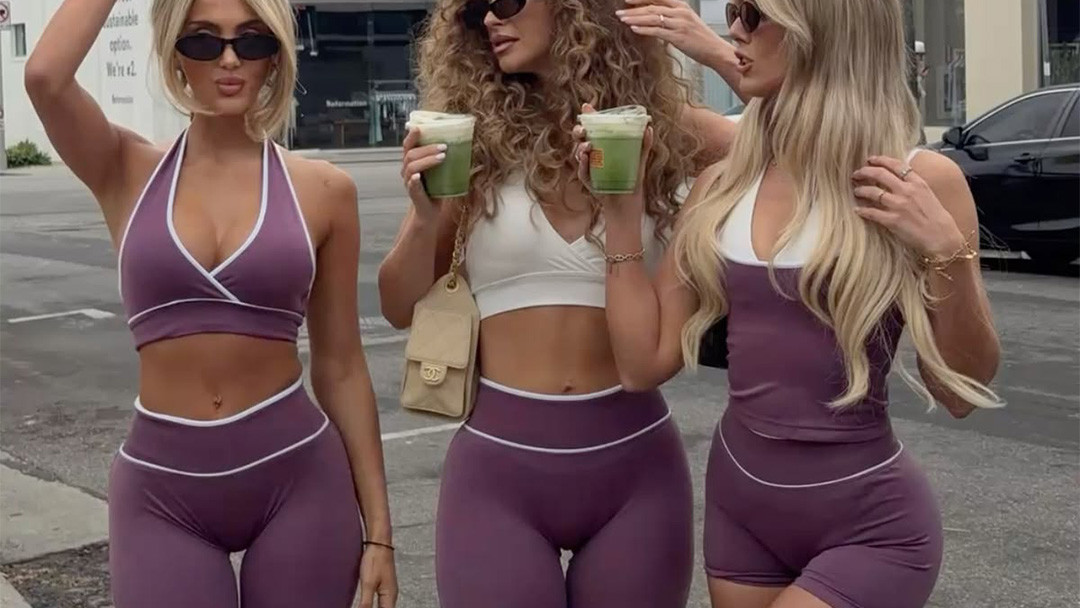
| Yoga leggings | Nylon-spandex is very common; polyester-spandex is also widely used. | Opacity, stretch, recovery, compression, pilling, hand feel and waistband stability. |
| Compression leggings | Either fiber can work in a properly engineered high-elastane construction. | Stretch curve, recovery, GSM, knit density and fit. |
| Sports bras | Nylon-spandex and polyester-spandex are both viable. | Support level, lining, elastic recovery, moisture behavior and surface comfort. |
| Running tops | Polyester is a very common sourcing choice. | Fabric weight, airflow, moisture-management data, drying performance and anti-chafe construction. |
| Training T-shirts | Polyester is widely used for scalable performance programs. | Wicking, drying, pilling, odor-management specification and print durability. |
| Running shorts | Polyester and nylon woven fabrics are both used. | Abrasion, stretch, water-repellent finish, liner construction and drying time. |
| Tennis and golf apparel | Both fibers can be appropriate. | Drape, color, stretch, moisture management, wrinkle recovery and garment structure. |
| Fashion-led athleisure | Nylon is frequently selected for premium fitted products; polyester can offer additional price and print options. | Target look, hand feel, surface effect, color program and price architecture. |
“Common starting point” reflects typical sourcing use, not a rule that excludes the other fiber.
9. What Should Brands Actually Test?
A fabric specification becomes more useful when the performance requirement is connected to the product.
| Product requirement | What to evaluate |
|---|---|
| Squat-proof leggings | Opacity at intended stretch, fabric recovery and fit trial |
| High-friction training leggings | Abrasion and pilling performance |
| Running tops | Moisture movement, drying behavior and garment comfort |
| Compression products | Stretch, recovery and growth after repeated extension |
| Bright or dark color programs | Colorfastness and shade consistency |
| Brushed yoga fabrics | Pilling, surface appearance and wash durability |
| Printed activewear | Print adhesion, color change and wash durability |
| Retail repeat orders | Bulk-to-bulk shade, weight, width and hand-feel consistency |
Do not add a test method simply because it sounds technical. First define the performance requirement, then agree the appropriate method, acceptance level and testing responsibility with the mill, factory, buyer manual or accredited laboratory.
10. How to Request Nylon and Polyester Swatches
A request such as “send me your best nylon and polyester” gives the sourcing team very little direction.
A better fabric brief connects the material to the garment.
Please propose:
1. Nylon-spandex option
2. Polyester-spandex option
Target requirements:
- Approximately 280–320 GSM
- Four-way stretch
- Matte surface
- Medium-to-high compression
- Suitable opacity for deep squat movement
- Strong stretch recovery
- Black plus light-color availability
- Exact composition
- Measured GSM
- Usable fabric width
- Stretch and recovery data, if available
- Stock colors
- Custom-color MOQ
- Price range
- Lead time
- TDS
- Relevant test reports
This allows the factory to compare fabrics against the same product brief instead of sending unrelated swatches.
11. 15 Questions to Ask Your Fabric Mill or Manufacturer
- What is the exact fiber composition?
- What is the measured GSM?
- What is the usable width?
- What is the knit or woven construction?
- What are the lengthwise and crosswise stretch percentages?
- What recovery information is available?
- Is moisture management created by yarn structure, fabric construction or finishing?
- Does the functional finish change after repeated washing?
- What pilling data is available?
- What abrasion data is available?
- Which colors are available from stock?
- What is the MOQ for custom dyeing?
- Will the sample and bulk use the same fabric construction and mill?
- Can you provide a TDS?
- Which laboratory reports apply to this exact fabric code?
12. Cost and MOQ Can Change the “Best” Fabric
A brand may prefer the feel of one fabric but discover that the commercial structure does not match the launch plan.
Important commercial variables include:
- Price per kilogram or yard
- Minimum fabric order
- Minimum quantity per custom color
- Availability of stock colors
- Lab-dip charges
- Custom finishing MOQ
- Lead time
- Repeat-order availability
- Shade consistency
For a new brand testing six colors at low volume, a technically good stock fabric may create a better commercial outcome than a custom fabric with a lower unit cost but a much larger dyeing commitment.
For a mature brand producing a proven style at scale, the economics may be completely different.
13. How to Compare Two Fabric Options Properly
When possible, compare two fabrics under the same garment brief instead of asking whether nylon or polyester is generally “better.”
| Specification | Fabric N | Fabric P |
|---|---|---|
| Fiber | Nylon / elastane | Polyester / elastane |
| Exact composition | Enter actual TDS result | Enter actual TDS result |
| Measured GSM | Enter actual data | Enter actual data |
| Stretch | Enter actual report | Enter actual report |
| Recovery | Enter actual report | Enter actual report |
| Abrasion / pilling | Enter actual test data | Enter actual test data |
| Moisture / drying | Enter actual test data | Enter actual test data |
| MOQ per color | Enter supplier MOQ | Enter supplier MOQ |
| Material price | Enter current quotation | Enter current quotation |
A first-party comparison like this is much more useful than claiming that every nylon fabric is softer or every polyester fabric dries faster.
14. Nylon vs Polyester Decision Checklist
Before approving the fabric, confirm:
- The fabric is being evaluated for a defined garment and activity.
- You have the exact fiber composition.
- You know the fabric GSM and construction.
- You have reviewed a physical swatch.
- The stretch and recovery suit the intended fit.
- Opacity has been checked at realistic garment extension.
- Pilling and abrasion requirements have been defined where relevant.
- Moisture claims are supported by actual fabric information or testing.
- The approved color is based on a physical standard or lab dip.
- The custom-color MOQ fits your buying plan.
- The sample and bulk fabric will come from the approved construction.
- You understand the repeat-order lead time.
- Relevant test reports reference the exact fabric code.
Frequently Asked Questions
Is nylon or polyester better for activewear?
Neither is universally better. Nylon is often selected for fitted activewear where a smooth hand feel and premium next-to-skin experience are important. Polyester is widely used across running, training, printed sportswear and scalable performance programs. The finished fabric construction and test results matter more than the fiber name alone.
Is nylon better than polyester for leggings?
Nylon-spandex is very common in yoga and premium legging programs, but polyester-spandex can also produce high-quality leggings. Compare opacity, GSM, stretch, recovery, compression, pilling, hand feel and cost before making the final decision.
Is polyester automatically moisture-wicking?
No. Polyester can be engineered into fabrics with strong moisture-management performance, but the fiber name alone does not prove wicking or drying performance. Ask for information or testing on the exact finished fabric.
Which fabric is better for running clothes?
Polyester is widely used in running tops and lightweight performance apparel, while both polyester and nylon are used in running shorts and outer layers. Fabric weight, moisture behavior, drying, abrasion, stretch and garment construction should determine the final choice.
What does GSM mean in activewear fabric?
GSM means grams per square meter and describes fabric mass per unit area. It should be considered together with composition and construction because two fabrics with the same fiber percentages can have different weights, densities and performance characteristics.
What percentage of spandex is best for activewear?
There is no universal best percentage. The required elastane content depends on the garment, knit construction, fit, stretch target and compression level. A higher elastane percentage does not automatically mean that a fabric will have better recovery or produce a better-fitting garment.
What should a brand request before approving activewear fabric?
Request the exact composition, GSM, usable width, construction, stretch information, color options, MOQ, price, lead time, TDS and any relevant testing for the specific fabric code. A physical swatch and garment sample should also be reviewed before bulk approval.
Final Recommendation
If your product needs a smooth, premium hand feel and close-to-body fit, a nylon-spandex fabric is often a sensible place to start.
If the project prioritizes scalable performance programs, bright colors, printing, running or training applications, or tighter material cost control, a polyester-spandex option is worth testing.
But neither answer should end the sourcing process.
Compare the exact fabric codes at similar GSM and product requirements. Review physical swatches. Check stretch and recovery. Ask how moisture claims were tested. Confirm color MOQ, price and lead time. Then make the garment sample.
That process will tell you much more than the words “nylon” or “polyester” on a composition label.
Not Sure Which Fabric Fits Your Activewear Collection?
Send us your product reference, target fabric feel, order quantity, colors, target market and price range. Our development team can propose suitable nylon-spandex and polyester-spandex options for sampling and comparison.
Request Fabric OptionsTesting References
-
ASTM International — D3776/D3776M, Standard Test Methods for Mass Per Unit Area (Weight) of Fabric.
ASTM D3776/D3776M -
ASTM International — D4966, Standard Test Method for Abrasion Resistance of Textile Fabrics using the Martindale abrasion tester.
ASTM D4966 -
AATCC — TM217-2025, Liquid Moisture Management: Vertical and Horizontal Wicking – Image Analysis.
AATCC TM217 -
AATCC — TM199, Drying Time of Textiles: Moisture Analyzer Method.
AATCC TM199