Garment Defects in Activewear: 10 Quality Issues Brands Should Investigate
A quality complaint tells you what the customer experienced. It does not automatically tell you why it happened.
If leggings become sheer, a seam opens, a waistband bags out or two garments labeled the same size fit differently, the useful next step is not to guess who caused the problem. It is to identify the affected product, compare it with the approved specification and sample, collect the right evidence, and then decide what needs to change before the next production run.
Which manufacturing-related issues can lead to activewear fit and quality complaints?
Common complaint categories include inconsistent garment measurements, movement-related fit problems, opacity changes under stretch, seam or stitch failure, poor stretch recovery, color variation, pilling, trim or branding failure, post-wash distortion, and labeling or packing errors.
But a customer complaint is a symptom, not a root-cause diagnosis. Before changing a pattern, fabric or production process, compare the affected garment with the approved sample, measurement specification, fabric code, color standard, construction details and production records.
A documented corrective-action plan is more useful than assuming every complaint is caused by workmanship alone.
1. A Complaint Is a Symptom, Not a Root Cause
“The leggings are too loose” and “the seam opened” are useful observations. They are not complete technical conclusions.
One visible symptom can have several possible causes.
For example, a waistband that feels loose could relate to:
- Finished waistband measurement
- Pattern negative ease
- Fabric stretch and recovery
- Elastic specification
- Construction method
- Size grading
- Post-wash dimensional change
- Differences between the approved sample and bulk fabric
The goal of a complaint investigation is therefore not to find the fastest explanation. It is to narrow down which explanation is supported by evidence.
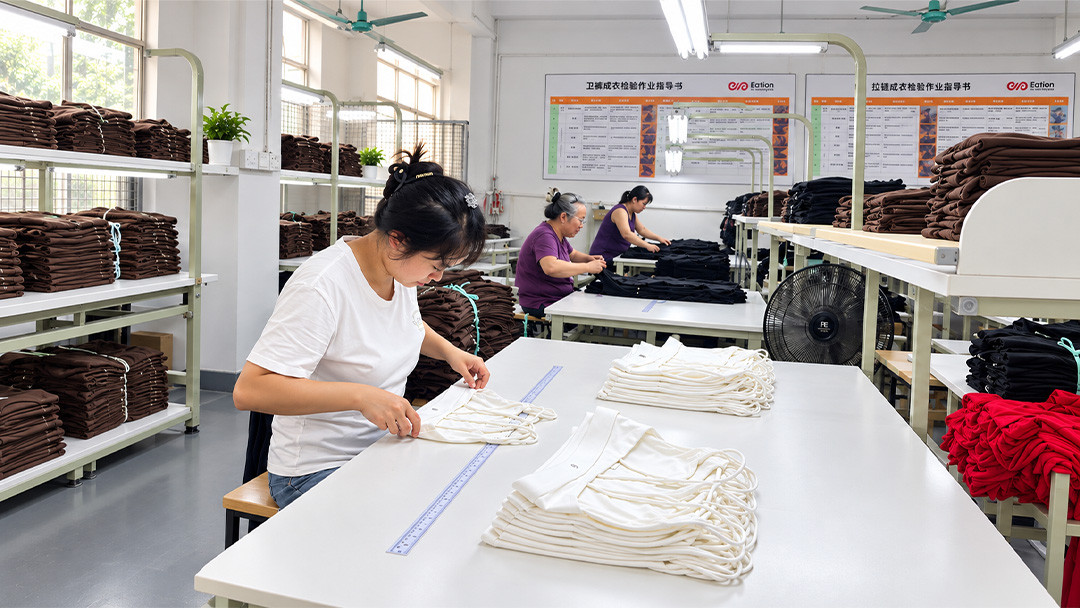
2. Build the Evidence Record Before You Change the Product
A useful investigation record should connect the complaint to the actual production version.
| Evidence Field | What to Record | Why It Matters |
|---|---|---|
| Style & Revision | Style number, Tech Pack revision, approved sample revision | Confirms which specification controlled the order. |
| Size | Label size and measured garment size | Helps separate fit expectation from measurement inconsistency. |
| Color | Exact colorway and approved color reference | Important for opacity, shade, dye and appearance complaints. |
| Fabric | Exact fabric code, composition, GSM and lot where available | Prevents conclusions based only on generic fiber names. |
| Quantity Affected | One unit, multiple units, one size, one color or multiple cartons | Helps determine whether the issue is isolated or systematic. |
| Photos / Video | Overall garment plus close-up of the actual failure | Provides context that a written complaint may miss. |
| Measurements | Relevant POMs against approved tolerance | Tests whether the garment matches the written specification. |
| Use / Wash Condition | When the problem appeared and how the garment was used or washed | Important for recovery, pilling, shrinkage and branding complaints. |
3. A Factory Study Shows Why Your Own Defect Data Matters
Defect patterns can be highly specific to the factory, style, operation and production period.
A 2023 study investigated sewing defects in one export-oriented knit garment operation in Bangladesh across five common garment styles. In that specific dataset, open seams represented 50% of recorded defects, skipped stitches 29%, and label mistakes 7%.
Example Defect Distribution From One 2023 Knit-Garment Study
Source: Moin, Hossain & Baral, Textile & Leather Review, 2023. These percentages describe one factory-level study covering five common knit-garment styles. They are not a global ranking of apparel defects.
Do not copy another factory's “Top 10 defect list” and assume it predicts your own returns. Build a defect log from your actual products, then use Pareto or root-cause analysis to identify which problems deserve the most attention in your own supply chain.
4. Root-Cause Matrix: What Should a Brand Check First?
| Complaint | Do Not Assume | Check First | Evidence to Keep |
|---|---|---|---|
| Same size fits differently | The sewing team automatically made the garment wrong | Critical POMs, tolerance, pattern and sample revision | Measurement report and approved sample |
| Leggings become sheer | The fabric is automatically defective | Fabric code, color, garment stretch and fit | Movement photos and production-intent fabric |
| Seam opens | The operator alone caused the failure | Seam type, thread, stitch, fabric stretch and failure location | Close-up photos and construction specification |
| Waistband bags out | The elastane percentage is “too low” | Finished measurement, fabric recovery, elastic and pattern ease | Fabric data and fit-review record |
| Color varies | All shade differences come from dyeing error | Dye lot, panel grouping, approved standard and lighting | Lab dip / standard and lot record |
| Logo peels | The print method is always unsuitable | Production fabric, cure / application condition, stretch and wash | Artwork, application record and wash evidence |
| Garment shrinks | The material is automatically “cheap” | Wash procedure and before / after measurements | Dimensional-change record |
| Barcode or label is wrong | Visual sewing inspection alone should catch it | SKU file, label file, scanning and packing control | Barcode report and carton record |
5. Issue 1 — Inconsistent Measurements and Sizing
One of the most commercially damaging complaints is simple: customers buy the same labeled size and receive noticeably different fits.
Do not compare only one returned garment with one approved sample. If the concern appears systematic, compare a representative set by size, color and production lot.
6. Issue 2 — Fit Problems During Movement
Activewear can measure within tolerance and still fail in use.
Complaints may include:
- Waistband rolling or sliding
- Front-rise tension
- Insufficient back coverage
- Sports-bra underband movement
- Shorts riding up
- Restricted shoulder or hip movement
7. Issue 3 — Opacity Changes Under Stretch
A legging or short may look opaque while standing and become noticeably more transparent during a squat or deep stretch.
That symptom can involve several variables:
- Fabric density
- Fabric color
- Garment size and negative ease
- Pattern dimensions
- Stretch level in the critical area
- Lighting conditions
8. Issue 4 — Seam and Stitch Failure
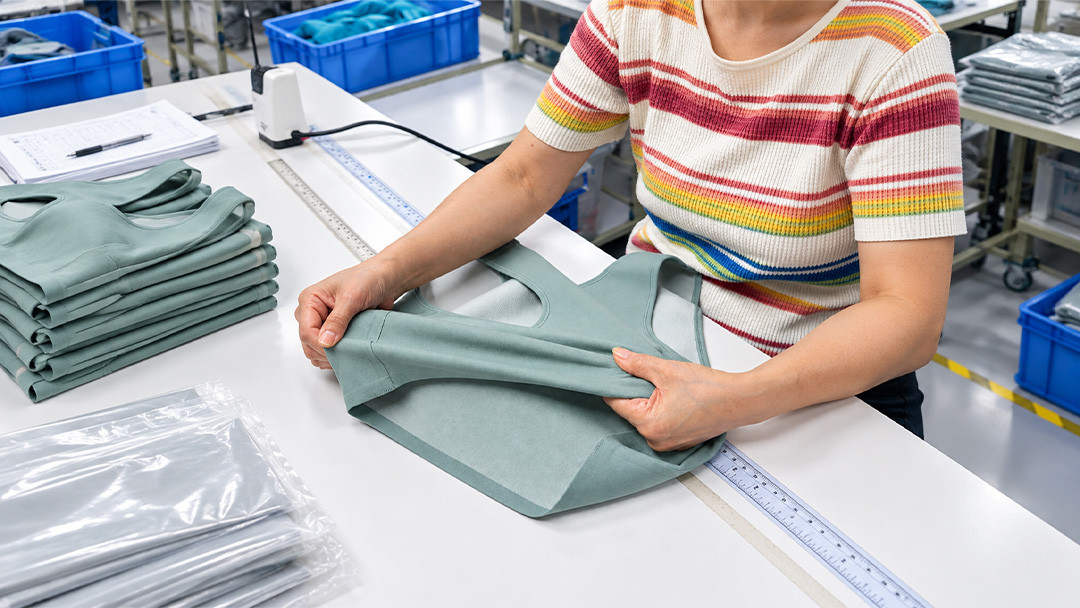
“The seam opened” is still not a full diagnosis.
The first question is where and how it failed.
A seam can also fail because the garment is being stretched beyond what the construction was designed to handle. That is why seam complaints should be reviewed together with garment fit and fabric behavior.
9. Issue 5 — Poor Stretch Recovery and Bagging
Knee bagging, seat looseness and a waistband that loses shape are often described as “bad spandex.” That conclusion is usually too broad.
10. Issue 6 — Shade and Color Problems
Color complaints need to be separated into different problem types.
These are not the same issue:
- Dye-lot shade variation
- Panel-to-panel shade mismatch
- Color transfer
- Crocking
- Wash fading
- Incorrect approved shade
11. Issue 7 — Pilling and Surface Wear
Pilling can be influenced by fiber, yarn structure, knit construction, surface finishing, laundering, garment fit and repeated friction.
That means “the customer saw pills” is not enough to identify one root cause.
12. Issue 8 — Trim, Logo and Branding Failure
A product can pass garment measurements and still create complaints because a zipper, elastic, print or label fails.
13. Issue 9 — Post-Wash Shrinkage, Twisting or Distortion
Wash complaints should be investigated with before-and-after evidence rather than memory.
Useful review points include:
- Overall garment length
- Waist or underband measurement
- Body width
- Leg or sleeve length
- Seam twisting
- Puckering
- Elastic behavior
- Logo appearance
14. Issue 10 — Labeling, SKU and Packing Errors
Not every quality complaint is about fabric or sewing.
Commercial errors can include:
- Wrong size label
- Incorrect care label
- Missing hangtag
- Wrong barcode
- Incorrect color / size assortment
- Wrong polybag sticker
- Incorrect carton quantity

15. Which Problems Should Be Caught Before Bulk?
Some complaints should be prevented during product development rather than left for final inspection.
| Issue | Best Control Stage | Why |
|---|---|---|
| Fit and movement | Fit sample / PPS | Final inspection cannot redesign an approved pattern. |
| Opacity | Fabric + fit approval | Must be reviewed on the intended color and garment stretch. |
| Stretch recovery | Fabric approval + sample | Performance depends on fabric and fit interaction. |
| Logo placement | Sample approval | Bulk inspection can identify deviation but should not establish the target. |
| Seam workmanship | Inline + final inspection | Execution can vary during bulk sewing. |
| Labels and packing | Pre-production + final packing check | Correct files must be approved first, then verified in execution. |
16. Final Inspection Is Important—but It Cannot Fix a Bad Specification
Final inspection is useful for checking whether the bulk order matches the agreed standard.
It should not be treated as the first time the brand defines:
- Correct fit
- Measurement targets
- Opacity requirement
- Approved fabric
- Construction
- Logo placement
- Packaging specification
Where an agreed acceptance-sampling plan is used, the sampling level, defect classifications and acceptance criteria should be documented.
ISO 2859-1:2026 defines AQL-indexed sampling schemes for inspection by attributes. An AQL index should not be presented as a simple statement that a fixed percentage of defective garments is automatically acceptable, and passing a sample inspection does not mean every unit is defect-free.
17. Turn the Complaint Into a Corrective Action
The investigation is incomplete until the next order has a clearer control.
18. What Should the Corrective-Action Record Include?
| Field | Example of What to Record |
|---|---|
| Complaint | Waistband loses shape after repeated wear |
| Affected Product | Style, color, size and production lot |
| Evidence | Returned unit, measurements, photos, sample comparison |
| Verified Root Cause | Enter only after review; do not fill this field with an assumption |
| Corrective Action | Pattern, fabric, elastic, seam, process or inspection change |
| Responsible Owner | Brand, factory, fabric supplier, trim supplier or shared responsibility |
| Verification | Revised sample, test result or production check |
| Status | Open / Review / Closed |
19. Questions to Ask Your Activewear Manufacturer
- Which approved sample and Tech Pack revision controlled this bulk order?
- Does the complaint affect one unit, one lot, one color or multiple production groups?
- Which critical measurements were checked during production?
- Can we compare the affected garment against the approved sample?
- Did the sample and bulk use the same production-intent fabric construction?
- Which fabric lot was used?
- Was this problem visible during inline inspection?
- What seam or construction specification applies at the failure point?
- Were trims and branding taken from the approved component specification?
- Which inspection or testing record is relevant to this complaint?
- What evidence supports the proposed root cause?
- What will change before the next order?
- How will the corrective action be verified?
- Does the change require another physical sample or PPS?
- Who will approve the revised requirement before production restarts?
Frequently Asked Questions
What is a garment defect?
A garment defect is a condition in the finished product that does not meet the agreed specification, workmanship standard, approved sample, functional requirement or labeling and packing requirement. Whether a condition is classified as a defect depends on the buyer's defined standard and the product.
What are common activewear quality complaints?
Common complaint categories include measurement inconsistency, poor movement fit, opacity under stretch, seam failure, weak stretch recovery, color variation, pilling, trim or branding failure, post-wash distortion and labeling or packing errors. These are categories to investigate, not an industry-wide ranking.
Can a customer photo prove the root cause of a garment defect?
Usually not by itself. A photo can document the symptom, but root-cause review may also require the actual garment, measurements, fabric and color information, approved sample, production lot, construction specification and use or wash conditions.
Why can two garments in the same size fit differently?
Possible causes include measurement variation, pattern revision, cutting, sewing allowance, elastic tension, fabric relaxation, shrinkage or differences in stretch and recovery. Compare several pieces against the approved measurement specification before deciding which factor caused the complaint.
Are see-through leggings always caused by poor fabric quality?
No. Opacity under stretch can be affected by fabric density, color, garment measurements, negative ease, body fit and the amount of extension in the critical area. Review the exact production fabric and color under realistic garment movement.
Does AQL 2.5 mean 2.5% defective garments are allowed?
No. AQL is an index used within an agreed acceptance-sampling plan. The sampling scheme, inspection level, lot size, defect classification and acceptance or rejection numbers must be defined. Passing a sampled inspection also does not mean every unit in the lot is defect-free.
Should every complaint result in a product specification change?
No. First determine whether the issue comes from the specification, product development, material, execution, individual damage, use conditions or another factor. Change the controlling specification only when evidence supports the correction.
What records should a brand keep after a quality complaint?
Keep the complaint description, affected style, color and size, production lot where available, photos, measurements, approved sample reference, current specification, relevant test or inspection records, root-cause decision, corrective action and verification result.
Final Recommendation
The useful question is not simply, “What defect is this?”
Ask:
- What exactly did the customer experience?
- Which product version is affected?
- Does the garment match the approved specification?
- What evidence supports the suspected cause?
- What needs to change before the next order?
- How will that change be verified?
Activewear Fit Sample Approval Checklist
How to Reduce Pilling in Activewear
Nylon vs Polyester for Activewear: How Brands Should Choose
Reviewing an Activewear Quality Issue Before Your Next Production Run?
Send the style number, complaint photos, current Tech Pack, measurement specification, approved sample reference, fabric information and the affected size or color details. Our team can review which product-development and production checks should be confirmed before the next order.
Discuss Your Quality ReviewTechnical References
- Moin, C. J., Hossain, K. R. & Baral, L. M. (2023). Investigating Root Causes of Sewing Defects Using TQM Tools for Quality Improvement in the Knit Garment Industry. Textile & Leather Review, 6, 417–433. The study covered one export-oriented knit-garment operation and five common garment styles; its defect percentages should not be generalized as a global apparel ranking.
- ISO 2859-1:2026 — Sampling procedures for inspection by attributes — Part 1: Sampling schemes indexed by acceptance quality limit (AQL) for lot-by-lot inspection.