Home / All / Buyer Guides / Activewear Manufacturer for Boutique Studio Brands: Low MOQ and Premium Positioning
Activewear Manufacturer for Boutique Studio Brands: Low MOQ and Premium Positioning
Nov 17,2026
Sourcing guide · Boutique & studio brands
A boutique studio brand can start small and still make a product that feels considered. The trick is to keep the first range tight, spend your sampling budget on the fit and fabric customers will actually wear, and choose an activewear manufacturer that can make the approved version again. A low minimum order quantity helps with the first purchase order. It does not, by itself, make the leggings feel better or the second order match the first.
That distinction matters if your members already trust you with their workouts. They may forgive a limited color selection. They are less likely to forgive a waistband that rolls in class, a pale legging that turns sheer in daylight, or a logo that feels stiff against the skin.
1. Decide what “premium” means to your studio customer
“Premium” is a positioning word until a wearer can point to something specific. For a Pilates studio, it might be a smooth waistband that stays put through roll-downs and side bends. For a strength studio, it may be coverage under deep movement and a bra that feels secure without digging in. For a recovery-focused yoga brand, it might be soft hand feel, easy layering and a calm color palette. These are different product briefs, even if all three brands sell leggings.
Write down three customer moments before you talk fabric: what the member does in class, where the garment rubs or stretches, and what she notices when taking it home. Turn each moment into an approval check. “Feels expensive” is hard to sample against; “no waistband roll during a 30-minute class in the target size” gives your team something to observe. Your own pass criteria should come from your intended use, not a supplier's universal promise.
Sweaty Betty says its first boutique opened in Notting Hill in 1998. That is a real example of an activewear business with a clearly identified customer and retail setting. It is not evidence that every studio label can follow the same path. The useful lesson for a smaller brand is to start with the people you can actually speak to, rather than designing a generic “premium” line for everyone.
2. Do the style-and-color math before calling an order “small”
Say the factory confirms a starting minimum of 100 pieces per style and color. That is the published starting point for Call The STYLE's low-MOQ activewear program; confirm fabric, trims and color requirements for your actual order. One legging in black plus one matching sports bra in black means two style-color combinations, or 200 garments. Put both styles into a second color and you have four combinations, or 400 garments. Sizes can be mixed only within the arrangement the factory confirms.
Illustrative opening order at 100 pieces per style and color
Legging + bra, 1 color
200
Legging + bra, 2 colors
400
Legging + bra, 4 colors
800
Units, not predicted sales or a quoted price. Each additional shared color adds 200 garments in this example. Multiply the confirmed unit price for each style by its quantity; then add sampling, labeling, freight, duties and any material minimum.
Here is where founders get caught: “Only two colors” sounds restrained until it doubles the first commitment. I would rather approve one excellent core set and know exactly how members respond than pay for a second shade because it looked good on a mood board. If your studio already has a paid reservation list for that shade, that changes the decision. Count deposits or purchases separately from compliments in class.
The existing low-MOQ yoga manufacturer guide goes deeper on supplier models. For this brief, the key question is what your specific combination of styles, colors, fabric and logo will require.
3. Compare premium fabrics on finished garments, not adjectives
Ask the factory for two or three candidate fabric codes that fit the same product brief. Record composition, knit structure, weight in GSM, finish, color availability, stretch and recovery expectations, and whether the same material can be sourced for a repeat order. A “75/25 nylon-spandex” label is a starting point, not a verdict on opacity, feel or pilling. Two fabrics with that composition can behave differently after knitting and finishing.
Fabric approval card for a studio legging: fields to complete with the supplier
Field
Ask for
Check on the actual sample
Material identity
Supplier fabric code, composition, knit, finish, GSM and color reference
Record the code on the approved garment and the reorder specification.
Movement & coverage
Intended activity, size range and stretch/recovery requirements
Squat, bend and move in target sizes and the lightest planned color under agreed lighting.
Wear & wash
Agreed wash instructions and relevant pilling or colorfastness evidence
Review the finished sample after the agreed wash and wear protocol; document any change.
Repeatability
Mill availability, dye-lot policy and substitution approval
Know who must approve a changed fabric or shade before the next run.
If someone says a fabric “passes pilling,” ask for the fabric code, method, conditions and result. ISO 12945-2:2020, for example, describes a modified Martindale method for evaluating fabric pilling, fuzzing and matting. Naming the method does not establish that your fabric passed any threshold. Our activewear pilling guide explains what to request from the fabric supplier.
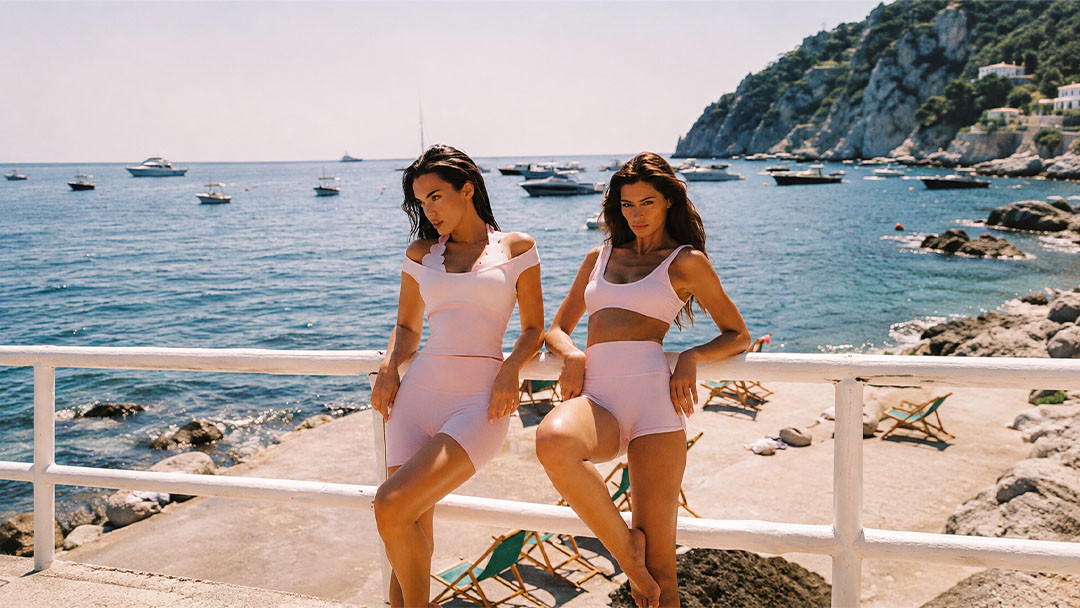
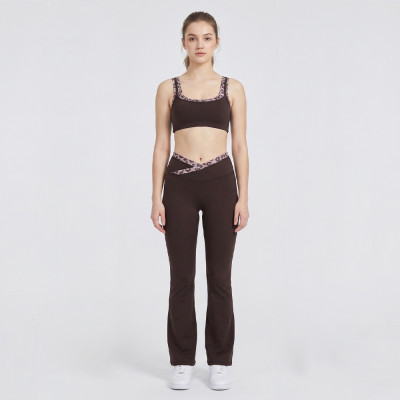
A consistent color palette can connect different pieces in a small collection, even when the silhouettes change.
4. Make the brand visible through fit, then choose the logo
A studio brand's identity can live in the cut: a slightly longer bra, a waistband that sits comfortably in forward folds, a seam line members recognize, or one carefully chosen color. A large chest logo will not rescue a garment that feels like every other blank. Once the garment is right, choose branding that survives its movement and care routine.
Ask your private label activewear supplier to show the same logo artwork in two suitable methods on the actual fabric. Compare edge quality, hand feel, stretch and appearance after the wash protocol you plan to use. A raised silicone transfer may suit one waistband; it may feel too bulky on a thin bra panel. Embroidery can suit a heavier layer but distort a light stretch knit. There is no universally “premium” application.
Before bulk, approve the size and placement in millimeters, color, artwork file, label content and one finished sample. The private label activewear customization options show the available direction; our logo and packaging guide covers methods in more detail. Ask for the method that works on your chosen fabric, with an agreed review after wear and washing.
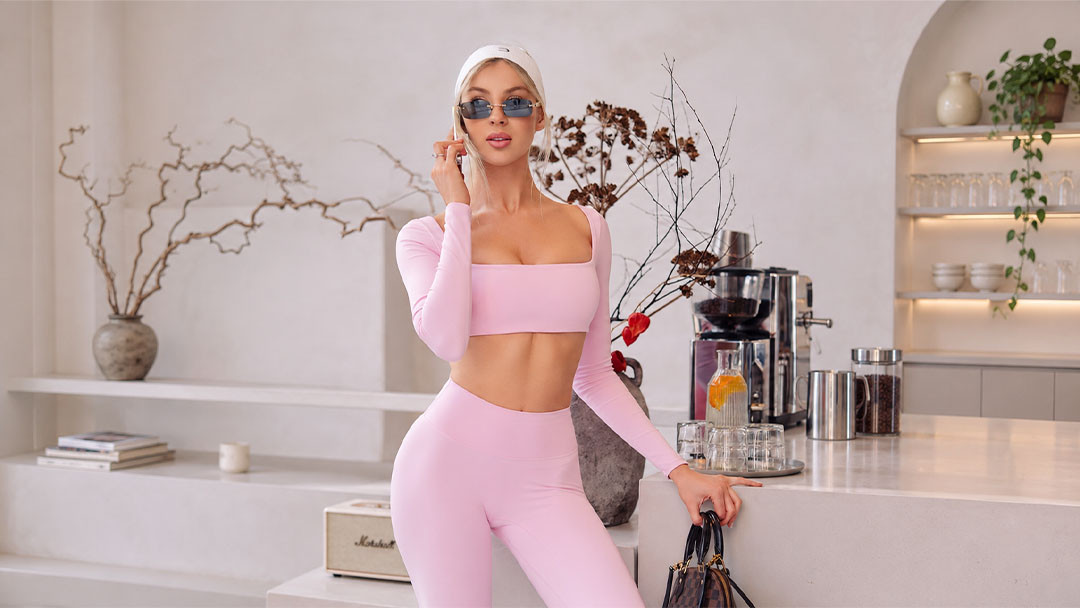
Show how a coordinated outfit can be styled beyond class; assess its movement, coverage and comfort on an actual wearer.
5. Decide whether to start from an existing pattern or build your own
There are two sensible routes. A mature private label or ODM pattern can get you to a fit review quickly; you customize the approved fabric, color, logo, labels and perhaps a limited construction detail. OEM development from your tech pack gives more control over fit and design, but expect more sample decisions. Ask who owns or may reuse the pattern and artwork, especially if exclusivity matters to your studio brand.
Do not treat “catalog style” as a substitute for your own approval. Put the sample on your target wearer and see what happens in class. If the bra shifts during transitions, revise it. If a waistband is comfortable standing up but rolls while seated, revise it. A sample round should have a decision attached: accept, change, or stop.
Studio collection specification: complete these fields before bulk approval
Field
Record for each style
Approval evidence
Style & color
Style code, version, color reference and quantity for each color and size.
Approved order breakdown and dated color standard.
Fabric
Actual supplier code, composition, knit, GSM, finish and allowed tolerance.
Production-intent swatch and test results where agreed.
Fit & construction
Point-of-measure diagrams, size grading, seam and waistband details.
Fitted sample, measurement record and approved corrections.
Branding
Logo artwork, method, color, dimensions and placement.
Finished application on the approved garment.
Retail handoff
Size and care labels, hangtag, fold, unit packaging and carton marks.
Approved packed unit and packing instructions.
This is a specification template, not a claim that every style has already passed these checks. Put the actual measurements, material codes and tolerances from your approved samples into the purchase-order version.
For a starting range, custom yoga leggings and pants and custom sports bras can serve as construction references. Ask the factory to quote the changes you need rather than assuming the displayed item is your finished product.
6. Run a small, honest wear test before you approve bulk
Here is an experiment a studio could actually carry out. It is a proposed test protocol, not a completed Call The STYLE experiment. Make two production-intent samples with one agreed design and two fabric choices. Recruit around eight to twelve members who fit the target customer, including at least two relevant sizes. Have each person wear a sample through the same type of session, note the sample and size, and use the same short questions immediately afterward. If practical, repeat after the agreed wash cycles.
Proposed A/B wear-test log: record the observations, not a sales claim
Measure
How to record it
Decision it supports
Waistband movement
Count wearers who adjust it during class; note size and activity.
Revise fit, elastic or construction if complaints cluster.
Coverage
Check in agreed lighting during the movement and color planned for sale.
Approve, change fabric/fit or remove a light shade.
Skin feel & seams
Ask where rubbing, pressure or irritation appears; note a location.
Change a panel, seam or logo position.
Preference & intent
Ask which sample the member prefers, then whether they would buy at the actual proposed price.
Compare interest with a reservation or paid order later.
Do not turn eight opinions into “90% of customers prefer fabric A.” This small test is for finding failures and learning what to change. A genuine offer at your intended price provides a stronger commercial signal than an abstract “Would you buy it?” question. Record the price, size availability and timing alongside the response so you can interpret it later.
7. Compare factories on the second order as well as the first
Give each shortlisted boutique activewear manufacturer the same one-page brief: two styles, color plan, size range, fabric requirements, logo artwork, intended market and delivery target. Ask for separate lines for sampling and revisions, garment unit cost, fabric and trim minimums, labels, packaging, inspection, freight terms, and reorder conditions. A simple quote with an attractive unit price is not yet a comparable quote.
Ask who controls the pattern and graded size specification, how the approved fabric is identified, whether a different dye lot needs approval, and what happens when a popular size needs replenishing. If the supplier can reproduce the sample only by searching through old chat messages, you have a repeatability problem. Request a dated specification and a signed-off sample reference.
Send this with your inquiry:
“We run a Pilates studio and plan a first drop of a legging and matching bra in one color. Our target customer wears them in 45-minute reformer sessions. Please quote your minimum per style/color, sample and revision costs, two suitable repeatable fabrics, logo options, packed-unit requirements, and the lead time for both an initial run and an unchanged reorder. We will provide sizes, target price and delivery destination.”
That brief is easier for an activewear factory supplier to price and easier for you to compare. It also gives the factory permission to flag a mismatch: perhaps the requested color has a mill minimum that the garment MOQ does not cover.
8. Plan the next drop while the first one is still selling
Studio owners see demand up close, which is an advantage if they record it. Track sold units, returns, repeat purchases and size requests by style, color and size. Note whether members mention the same fit issue more than once. Keep the complaint and the reorder decision separate: a bestselling black legging might need an unchanged repeat, while a waistband change deserves a new sample and version number.
In a first-person account published by Shopify, SET Active founder Lindsey Carter describes placing a second order before the first drop sold out. Her experience is one brand's story, not a rule to reorder blindly. For a small studio, the actionable question is when the confirmed production-plus-shipping time will overtake remaining sellable stock at the current rate. Ask the factory to verify material availability and actual dates before promising members a restock.
My view: the most valuable low-MOQ supplier is one that can tell you what changed between sample one, the approved first run and the reorder. That is how a small studio can grow without losing the fit customers came back for.
Send Call The STYLE your intended styles, quantity per color, target activity, preferred fabric feel and the fit question your first sample needs to answer. We can discuss a made-to-order sampling and production brief.
The 100-piece starting MOQ is stated on Call The STYLE's low-MOQ service page; order feasibility depends on the confirmed style, fabric, color and trims. The 200/400/800-unit chart is arithmetic based on that starting minimum, not a sales forecast or actual customer order. The wear-test table is a proposed method without collected results. The Sweaty Betty boutique date, SET Active founder account and ISO test description are linked to their published sources. Neither brand is presented as a Call The STYLE customer.
Frequently asked questions
Can a studio brand order just 100 leggings?
A 100-piece starting minimum per style and color may be possible for a confirmed design. Ask whether the selected fabric, dye, logo and trim have their own minimums and whether sizes can be mixed within that quantity. A matching bra is a separate style.
Is a heavier GSM automatically more premium?
No. GSM tells you fabric weight per square meter. Softness, recovery, coverage, pilling and comfort also depend on yarn, knit, finish and fit. Compare finished samples in the activity and color you intend to sell.
Should we start with private label or a fully custom pattern?
Start from a suitable existing pattern when speed and a proven construction matter most, then approve fit and the requested changes. Develop your own pattern when a specific silhouette or fit is central to the brand. Clarify pattern ownership and any exclusivity before committing.
Which logo method looks premium on leggings?
The one that looks and feels right on your actual fabric after movement and washing. Ask for samples of suitable stretch-compatible methods in the planned size and placement. Test a raised transfer for bulk and seam discomfort before approving it.
How many colors should the first drop have?
There is no universal number. At a 100-piece style-color minimum, adding one color to both a legging and bra adds 200 garments. Start with the colors your audience and cash plan can support, then confirm whether fabric availability changes the calculation.
What do we need before asking for a factory quote?
Share a product sketch or reference, intended activity, style and color quantities, size range, target market, fabric preferences, logo artwork, packaging needs and delivery destination. State which fit or material decision the first sample must settle.