
Call The STYLE Live at the 140th Canton Fair: Activewear Buyer Meetings
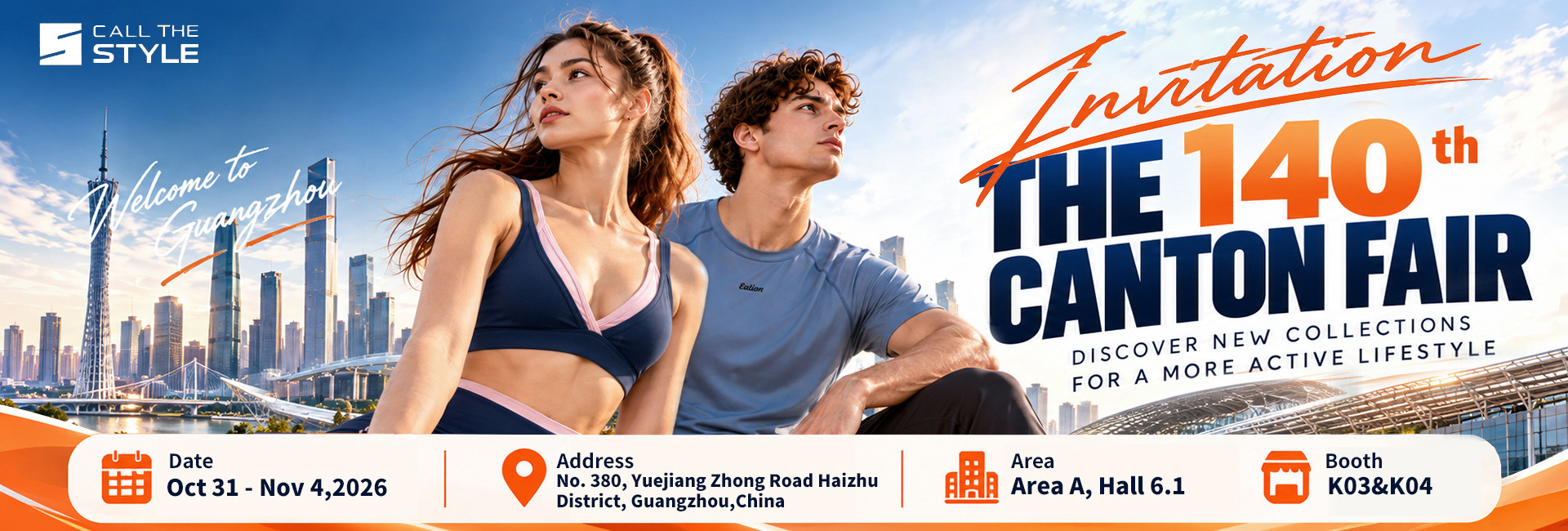
Call The STYLE is currently at Phase 3 of the 140th Canton Fair in Guangzhou, meeting activewear and sportswear buyers at Area A, Hall 6.1, Booth K03 & K04.
The useful part of an apparel trade-show meeting is not simply seeing more garments on racks. Buyers can handle a sample, compare construction and fabrics, point to the details they want changed, and turn a general sourcing conversation into a clearer product-development brief.
Where can activewear buyers meet Call The STYLE at the 140th Canton Fair?
Call The STYLE is exhibiting during Phase 3 of the 140th Canton Fair at Area A, Hall 6.1, Booth K03 & K04 in Guangzhou, China, from October 31 to November 4, 2026.
Buyers can review activewear and sportswear samples and discuss fabrics, fit, construction, colors, private label branding, sample development, OEM/ODM requirements, quality control and bulk-production planning directly with our team.
Live from the 140th Canton Fair
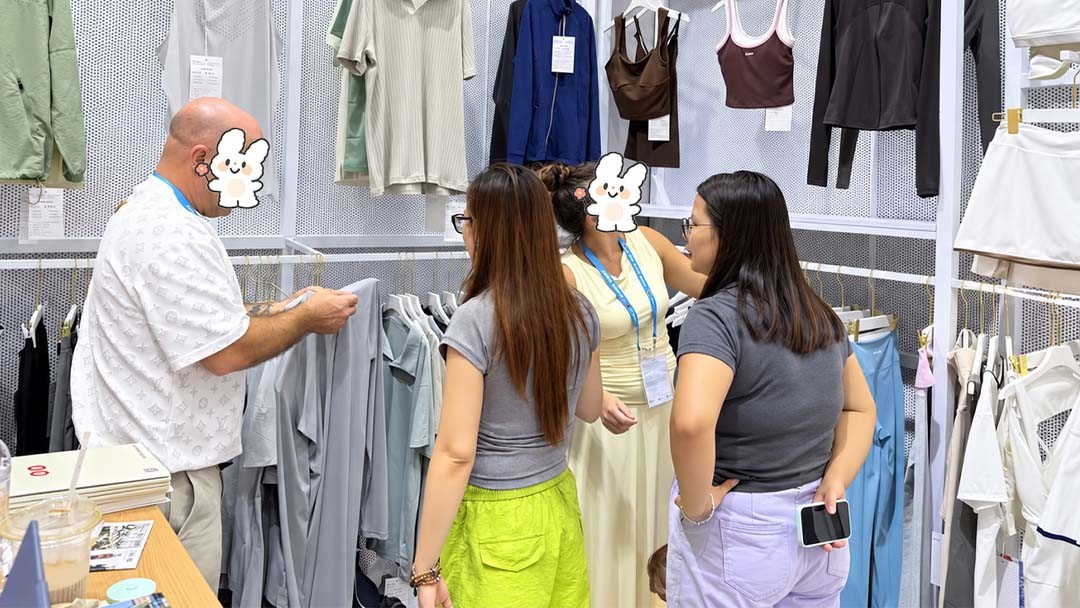
This page is an on-site update, not another pre-show invitation. Our team is already meeting buyers and discussing activewear projects at the booth.
Phase 3 of the 140th Canton Fair focuses heavily on consumer products and apparel. Official categories include Sports & Casual Wear, Men's and Women's Clothing, Underwear, Textile Raw Materials & Fabrics, Shoes, Bags and other apparel-related sectors.
Hall 6.1 in Area A is officially included within the Sports & Casual Wear section, making it particularly relevant for sportswear brands, sourcing managers and private-label buyers comparing apparel suppliers in Guangzhou.
What Buyers Are Reviewing at Our Booth
The products displayed at the booth give buyers something physical to work from.
Instead of discussing an abstract product idea, a buyer can pick up a garment and ask:
- Can we change the fabric?
- Can the GSM or handfeel be adjusted?
- Can the waistband, neckline or garment length change?
- Can we develop our own Pantone color?
- Can the fit be adapted for our target customer?
- Can we add our own logo, labels and packaging?
- Does this style require a new pattern?
- What needs to be confirmed before the first sample?
Those questions are much more useful than asking only for a catalogue price because each change may affect material sourcing, pattern work, sample development and the final production specification.
What Can Buyers Discuss Face to Face?
From “I Like This Style” to a Factory-Ready Product Brief
One of the easiest ways for a development project to become confusing is to start with a reference product but never define which parts are being copied, changed or completely redesigned.
Compare these two instructions:
“We like this sports bra. Can you make something similar?”
More useful:
“Keep the square neckline and fitted silhouette. We want a softer matte nylon-spandex fabric, slightly more body length, our own color and a small heat-transfer logo at center back. Please confirm whether the existing pattern can be adjusted or whether a new pattern is required.”
The second version gives the manufacturer a much clearer starting point.
| What the Buyer Can Bring | What It Helps Confirm |
|---|---|
| Tech Pack | Measurements, construction, materials, artwork, labels and specifications already defined by the brand. |
| Reference Garment | Fit, handfeel, proportions, construction and product features that are difficult to explain only through email. |
| Sketch / Reference Images | Design direction when the project has not yet reached a full technical-document stage. |
| Fabric Reference | Target composition, GSM, stretch, recovery and surface feel. |
| Color Reference | Pantone, physical swatch or other target color information. |
| Logo File | Logo dimensions, placement and possible application method. |
| Target Quantity | Helps determine the practical sampling and production route. |
| Launch Window | Provides context for development, approvals, bulk production and shipping planning. |
Physical Samples Make Early Development Conversations Easier
Email works well when the product is already clearly specified.
Early-stage product development is different.
When a buyer and manufacturer can look at the same garment together, it becomes easier to:
- compare fabric handfeel;
- stretch the material and review recovery;
- inspect seam placement;
- compare two product constructions;
- point directly to a fit or proportion change;
- compare several styles or colors at the same time;
- and identify which decisions still need to be documented after the show.
A booth meeting should not replace written specifications. Its value is that it makes the next written development step more precise.
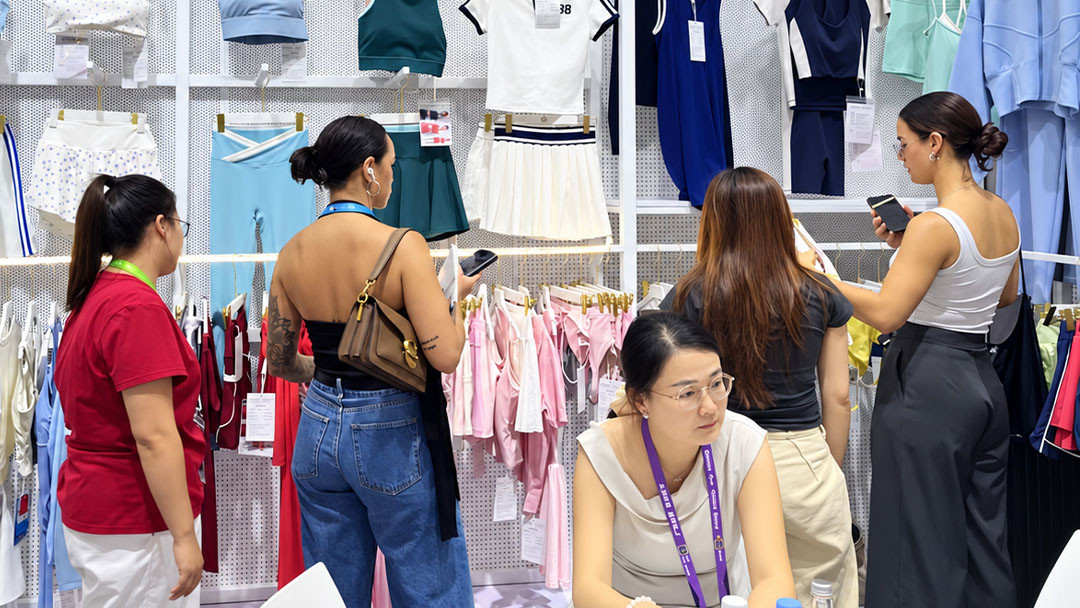
What Happens After the Trade-Show Conversation?
A useful meeting should finish with a clearer next step—not only a business card exchange.
The Booth Sample Is Not Automatically Your Production Standard
A garment displayed at an exhibition is useful for discussing style, material and construction direction.
But once a brand changes the fabric, measurements, color, pattern, logo or construction, that customized garment needs its own approval process.
Before bulk production, the brand should confirm the actual development sample against:
- approved garment measurements;
- actual body fit;
- movement and coverage;
- production-intent fabric;
- approved color;
- construction;
- logos and artwork;
- labels and trims;
- and packaging requirements.
Quality Questions Worth Asking Before You Place the Order
A trade fair naturally puts a lot of attention on design, fabric and price. Quality-control expectations should also be discussed before production begins.
Useful questions include:
- Which physical sample will control bulk production?
- Which measurement specification and revision will be used?
- How are garment measurements checked?
- How are production problems recorded and corrected?
- How are fabric and color approvals transferred into bulk production?
- What workmanship requirements apply to the product?
- What inspection plan applies before shipment?
- How are labels, barcodes and packaging requirements checked?
Private Label or Full Custom Development?
Not every buyer needs the same development route.
If the brand wants to start from an existing silhouette and mainly change colors, branding, labels or selected details, a private-label or product-platform route may be more efficient.
If the brand has its own measurements, construction, proprietary silhouette or detailed Tech Pack, a deeper OEM development route may be more appropriate.
The right choice depends on how much of the product is already defined—not on which service name sounds more premium.
Why Phase 3 Matters for Activewear Buyers
The official Canton Fair schedule places Sports & Casual Wear in Phase 3 alongside Men's and Women's Clothing, Underwear, Textile Raw Materials & Fabrics, Shoes, Fashion Accessories and other apparel-related categories.
Hall 6.1 in Area A is listed within the Sports & Casual Wear exhibition section.
For a sourcing team, that makes Phase 3 useful because garments, fabrics and related apparel products can be compared during the same sourcing trip.
Date: October 31 – November 4, 2026
Official business hours: 9:30 – 18:00
Call The STYLE: Area A, Hall 6.1
Booth: K03 & K04
Frequently Asked Questions
Where is Call The STYLE at the 140th Canton Fair?
Call The STYLE is exhibiting during Phase 3 at Area A, Hall 6.1, Booth K03 & K04 at the China Import and Export Fair Complex in Guangzhou.
When is Phase 3 of the 140th Canton Fair?
Phase 3 runs from October 31 to November 4, 2026. The official Canton Fair schedule lists business hours from 9:30 to 18:00.
Is activewear included in Canton Fair Phase 3?
Yes. The official Phase 3 categories include Sports & Casual Wear, and Hall 6.1 in Area A is listed as part of that exhibition section.
What products can buyers review at the Call The STYLE booth?
Buyers can review activewear and sportswear directions including training wear, yoga wear, sports bras, bottoms, tops and court-wear styles, then discuss which products are relevant to their own development plans.
Can I bring my own Tech Pack or reference garment?
Yes. A Tech Pack, sketch, reference image or physical garment makes the meeting more specific because the development team can separate the specifications that are already defined from the details that still require development.
Can a product shown at the booth be customized?
Depending on the product and development route, a style may be adapted through fabric, color, measurements, branding, labels, trims and other requirements. Changes should be confirmed through sample development before bulk production.
Can Call The STYLE develop an entirely new activewear design?
Yes. A custom project can begin from a Tech Pack, sketch, reference garment or clearly defined product brief. More original designs may require new pattern development, material sourcing and several sample-review steps before bulk approval.
What should happen after a Canton Fair meeting?
The next step should usually be a written product brief, Tech Pack review or sample-development plan that records the agreed direction and clearly identifies any specifications that still need confirmation.
Related Reading for Activewear Buyers
Activewear Fit Sample Approval Checklist: 25 Points to Check Before Bulk Production
Already Read Our Canton Fair Invitation?
Before the show, we published a separate page explaining the exhibition dates, booth location and how buyers could prepare for a meeting.
This live update serves a different purpose: it shows the sourcing conversations now taking place on site and explains how product review at the booth can move into a structured development process.
Meet Call The STYLE Before the Fair Closes
If you are currently in Guangzhou sourcing activewear, yoga wear, sportswear or court wear, bring the questions that are difficult to solve from a quotation alone.
A Tech Pack, reference product, fabric swatch or even a clearly defined product idea can give us a practical starting point for discussing what should happen next.
Have an Activewear Project to Discuss?
Visit Booth K03 & K04 during the fair, or send us your Tech Pack, reference images, target fabric, branding requirements and estimated quantity online. We can review which parts of the project are already ready for sampling and what still needs to be developed.
Discuss Your Activewear ProjectEvent Information Source
Phase dates, official business hours, exhibition scale, Phase 3 categories and exhibition-section information are based on information published by the official China Import and Export Fair (Canton Fair) organizer.


- *Title
- *Content