Top 10 Criteria for Choosing a Reliable Active Jacket Manufacturer
A form-fitting zip-up jacket (like a track jacket) is an everyday item for activewear brands. Customers want it to hug their body but still allow them to stretch and sweat comfortably. From a manufacturing standpoint, combining highly elastic fabric with hard plastic or metal zippers creates a lot of tension.
You don't need a factory that talks about "revolutionary technology"; you need a factory that does the basic math on fabric shrinkage and seam allowances. At Call The Style, we rely on standard, proven sewing methods to make these jackets work. Here are the 10 practical details you should look for when auditing a supplier.
1. Zipper Buckling: Fixing the "Bacon" Ripple
The Common Problem: Wavy Front Lines
The most obvious sign of a poorly made jacket is a front zipper that ripples like bacon. This happens because the feed dogs on the sewing machine stretch the elastic fabric as it sews, but the zipper tape has zero stretch. When the jacket comes off the machine, the fabric shrinks back, but the zipper stays long, causing it to bunch up.
The Factory Solution: Fusible Edge Tape
We fix this in the prep stage. Workers iron a narrow strip of non-stretch Fusible Interfacing Tape along the raw edge of the fabric where the zipper will go. This temporarily kills the stretch in that specific half-inch seam allowance. When the needle hits it, the fabric and the zipper act as one solid piece, resulting in a dead-straight front line.
2. Collar Construction: Stopping the Flop
The Common Problem: A Weak Neckline
Stand-up collars look great on the design sketch. But if the factory just folds the spandex fabric over and sews it, the collar will flop down and wrinkle around the neck after the first wash because the fabric is too soft to support its own weight.
The Factory Solution: Internal Fusing
A stand collar needs a skeleton. We apply a layer of medium-weight Fusible Interfacing to the inside of the collar stand before stitching. This gives the collar enough physical stiffness to stand upright, while the outer fabric remains soft against the skin.
3. The Zipper Garage (Chin Guard)
The Common Problem: Scratching the Skin
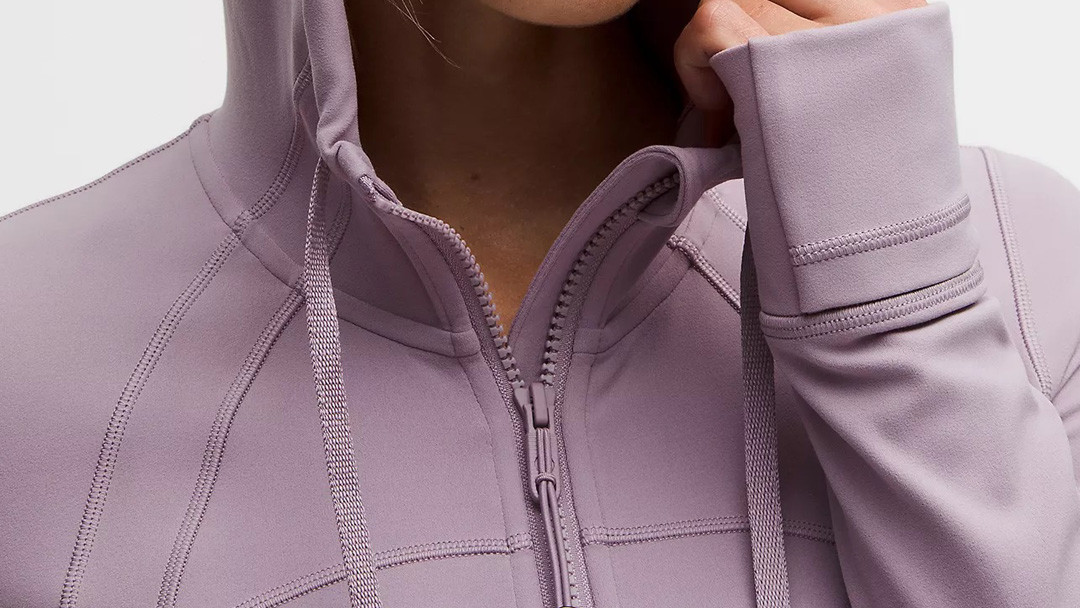
Active jackets are often zipped all the way up to the chin during a morning run. If the top of the zipper is exposed, the metal or plastic slider will constantly rub against the wearer's neck, causing irritation.
The Factory Solution: A Simple Fabric Flap
This is a basic functional requirement. We sew a small, folded piece of fabric at the top of the collar, commonly called a Zipper Garage. When the jacket is fully zipped, the slider parks underneath this flap, keeping the cold hardware away from the chin.
4. Arm Mobility: The Ride-Up Effect
The Common Problem: Exposing the Waist
If you use a standard, casual t-shirt pattern for a tight workout jacket, the armhole will be too low. The moment the wearer lifts their arms to stretch, the entire jacket is pulled up, exposing their stomach.
The Factory Solution: Gussets and Raglan Cuts
We adjust the pattern for movement. We raise the armhole and often use a Raglan Sleeve (where the seam runs to the collarbone) or sew a Diamond Gusset under the armpit. This adds just enough fabric at the hinge of the shoulder so the arm can move independently from the body of the jacket.
5. Thumbhole Stress Points
The Common Problem: Splitting Seams at the Wrist
Thumbholes take a lot of physical abuse. A lazy factory will just leave a gap in the sleeve seam to act as a thumbhole. After a few weeks of being pulled over the hand, the stitching at the ends of that gap will simply tear apart.
The Factory Solution: Bar-Tacking
Any opening that takes tension needs reinforcement. We finish the edges of the thumbhole with binding tape, and more importantly, we sew a dense Bar-Tack (a tight zigzag stitch) at the top and bottom corners of the slit. This acts as a physical lock so the seam cannot split further.
6. Choosing the Right Zipper Weight
The Common Problem: Sagging Fronts
Sometimes brands ask for thick, heavy metal zippers because they look industrial. But if you put a heavy #5 brass zipper on a lightweight 220 GSM nylon jacket, gravity takes over. The zipper sags heavily, pulling the neckline down uncomfortably.
The Factory Solution: Nylon Coil
For high-stretch jackets, we advise using #3 or #5 Nylon Coil Zippers. The plastic coil is lightweight and actually bends and flexes with the fabric. We also stick to auto-lock sliders, which have a small pin inside that stops the zipper from unzipping on its own when the wearer is jogging.
7. Keeping Pockets Flat
The Common Problem: Bulky Hips
Tight jackets are supposed to show the waistline. If the factory makes the inside of the pockets out of the same thick outer fabric, it creates four layers of fabric sitting right on the hips, making the garment look lumpy and wide.
The Factory Solution: Mesh Bags and Hidden Zippers
We cut the bulk out of the inside. The internal pocket bags are sewn using a thin, durable Warp-Knit Mesh. On the outside, instead of adding bulky patch pockets, we insert invisible zippers directly into the vertical contour seams (princess seams). The pockets are there, but you don't see or feel the bulk.
8. Flat Seams for Skin Comfort
The Common Problem: Raised Inside Seams
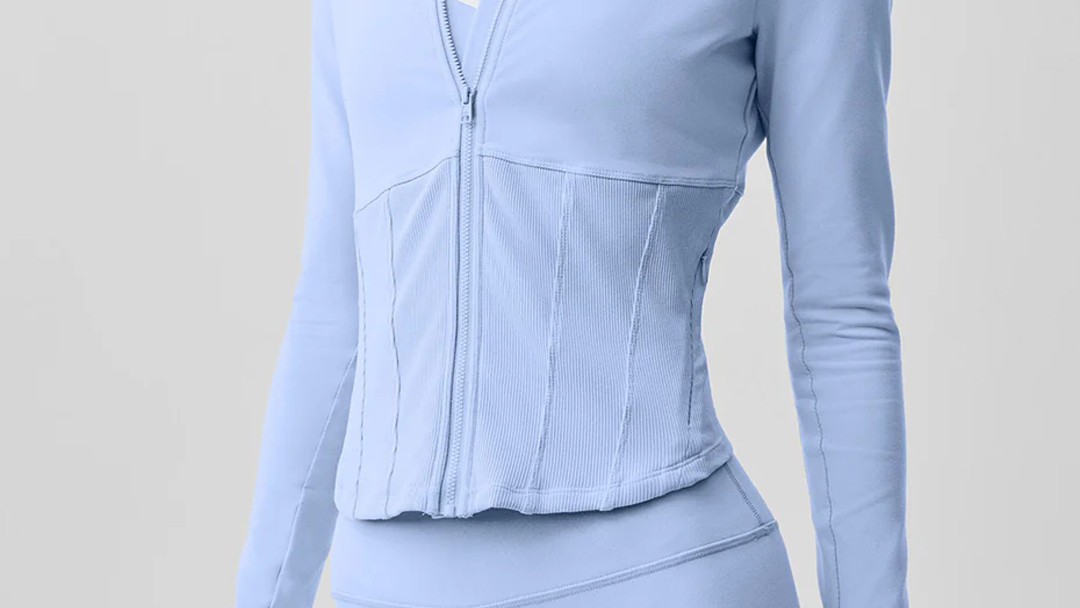
Active jackets use multiple vertical panels to wrap around the body's curves. If a factory uses a basic overlock machine, it leaves a thick ridge of fabric on the inside. When the jacket is worn tight over a sports bra, those ridges press into the skin and leave uncomfortable red marks.
The Factory Solution: 4-Needle Flatlock Stitching
We use the same heavy-duty machines used for making leggings. We join these contour panels using 4-Needle 6-Thread Flatlock machines. This method sews the two pieces of fabric edge-to-edge. There is no bulky seam allowance hanging on the inside, making the jacket smooth against the skin. (Read more about our sewing methods in our Yoga Pants Guide.)
9. Color Matching (DTM)
The Common Problem: Off-Color Zippers
Zippers are made of plastic and polyester tape, while the jacket is made of nylon/spandex. Because different materials absorb dye differently, if you just order "navy blue" for both, they will look slightly different under daylight. A blue jacket with a purple-tinted zipper looks like a mistake.
The Factory Solution: Lab Dips under D65 Light
We don't guess with colors. We require our zipper and thread suppliers to provide DTM (Dyed-to-Match) samples. Before sewing a bulk order, we compare the zipper tape and the main fabric in a light box under standard D65 daylight bulbs. If it doesn't match perfectly, we send it back for re-dyeing. (See our inspection rules in our Quality Control Breakdown.)
10. Heat Shrinkage in the Pressing Room
The Common Problem: Ironing the Jacket Out of Shape
Spandex is basically a rubber band; it reacts badly to high, direct heat. A major issue in cheap factories happens at the very end of production. Untrained workers iron the finished jackets with heavy, hot irons to remove wrinkles. This sudden heat causes the spandex to shrink instantly, warping the jacket out of its intended measurements right before it gets bagged.
The Factory Solution: Hover Steaming
We enforce strict temperature controls in the finishing room. Our workers use Low-Temperature Steamers. Instead of pressing a hot iron directly onto the delicate fabric, they hover the steam head over the jacket to relax the wrinkles without melting or shrinking the spandex fibers. (Avoid material damage with our Tech Pack Mistake Guide.)
Manufacture Solid Active Jackets
Stop dealing with wavy zippers, bad seams, and mismatched hardware. Partner with Call The Style for zip-up activewear that is built correctly from the ground up.
START YOUR PROJECTFrequently Asked Questions (FAQ)
Q: Why does the front zipper on my active jacket look wavy?
A: This happens when the machine stretches the elastic fabric, but the zipper tape remains rigid. We fix this by applying non-stretch fusible tape to the fabric edge before sewing, keeping the seam stable.
Q: How do you make the collar stand up straight on a soft jacket?
A: Soft fabric needs an internal skeleton. We iron a layer of medium-weight interfacing inside the collar stand to give it enough structure to stay upright after washing.
Q: How do you avoid bulky pockets on tight-fitting jackets?
A: Instead of using thick outer fabric, we make the internal pocket bags out of thin mesh. We also hide the pocket openings in the vertical body seams using invisible zippers.
Q: Why do the thumbholes on the sleeves rip so easily?
A: A simple slit takes too much tension. A reliable factory will wrap the edges of the thumbhole in binding tape and sew dense bar-tack stitches at the corners to physically lock the seam from tearing.