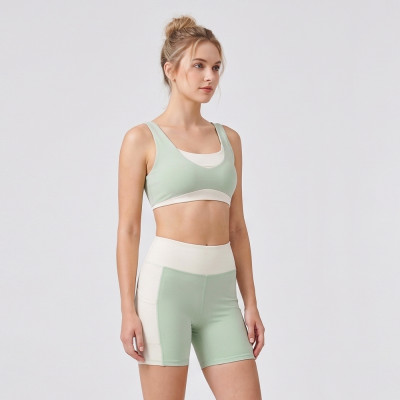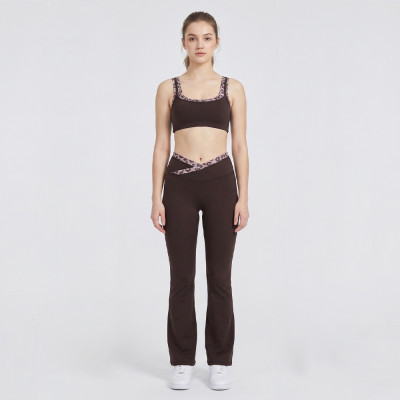
How to Create an Activewear Reorder Specification
A reorder should start with the last approved production standard, not a message saying "same as last time." Before the next activewear run, confirm the fabric, color, pattern, measurements, construction, branding and quality requirements that the manufacturer must follow.
The first production run gives a brand something valuable: a physical product and a set of decisions that have already been reviewed. But those decisions are only useful for the next run if the records are complete, current and accessible.
This guide shows what an activewear brand should document, what needs to be rechecked, and how to manage changes without starting product development from scratch.
What should a brand document before reordering an activewear style?
A reliable activewear reorder specification should identify the previously approved product revision, physical sample reference, fabric code and composition, color standard, pattern version, size measurements and tolerances, construction, trims, artwork, labels, packaging and inspection requirements.
It should also record any changes, required re-approvals, responsible approvers, planned quantity and target delivery date. A new fabric or dye lot may still need verification even when the design remains unchanged.
1. Why Activewear Reorders Can Drift From the First Run
A brand may receive its first order, approve the quality, sell the collection and return a few months later asking for exactly the same leggings.
The sketch hasn't changed. The color name is still "Black." The composition is still 75% nylon and 25% spandex.
So why might the next run feel or fit differently?
Because those details alone do not fully define the finished garment.
A variation is not automatically proof that a factory made a mistake. First establish what was approved, what actually changed, and whether the difference exceeds an agreed requirement.
2. Start With the Last Approved Production Standard
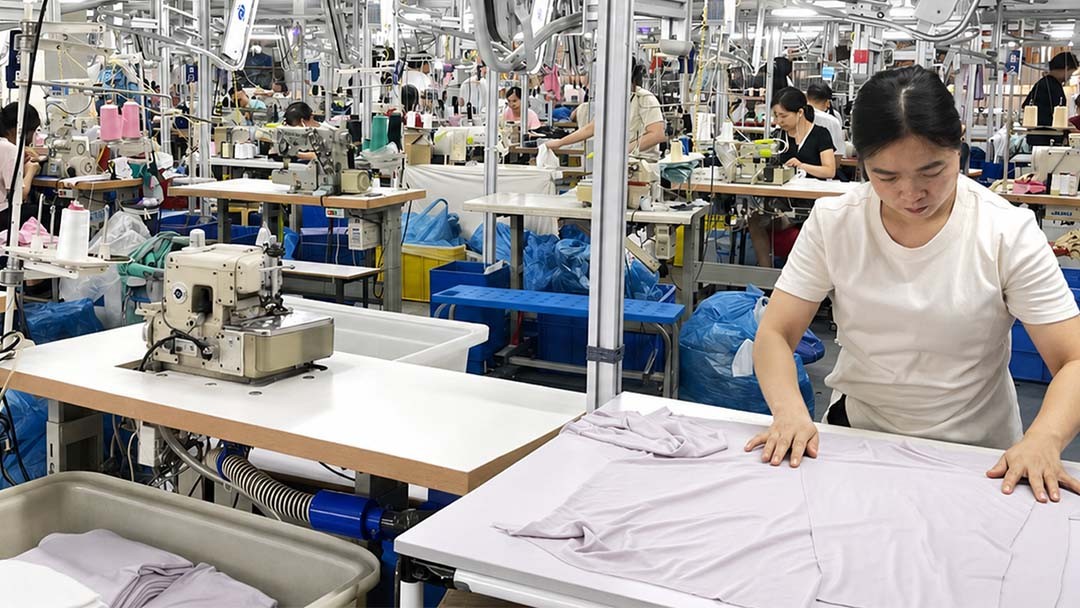
Before discussing price or delivery, ask a simple question: which exact version of this product was approved for the previous run?
The answer should not depend on someone remembering a conversation from six months ago.
What Counts as an Approved Production Reference?
A controlled production reference normally combines written specifications with physical evidence.
| Reference | What It Controls | What the Buyer Should Confirm |
|---|---|---|
| Style and Revision ID | Product identity and version | Correct style, colorway and revision number |
| Tech Pack | Construction, BOM, measurements and artwork | Latest approved file, not a draft |
| Approved Physical Sample | Fit, appearance and finished construction | Sample ID, date and written approval |
| Approved Fabric | Material composition, structure and finish | Actual supplier reference and fabric code |
| Approved Color Standard | Target color appearance | Physical shade or approved color reference |
| Quality Requirements | Inspection and performance criteria | Method, tolerance, acceptance criteria and revision |
Some teams call an approved reference a "golden sample." That term is useful only when the company has formally identified, approved and controlled that sample.
A showroom sample, a sales sample and a signed-off production reference are not automatically interchangeable.
3. Build an Activewear Reorder Specification Sheet
A useful reorder specification is short enough to review, but detailed enough that the factory does not have to guess.
The first page should identify the order and the approved references. Supporting documents can hold the full measurements, BOM, artwork and testing details.
Recommended Reorder Specification Fields
| Field | Information to Record |
|---|---|
| Brand and Style | Brand name, style number, garment category |
| Previous Order | Previous PO number, production lot, shipment reference |
| Approved Revision | Tech Pack revision, pattern revision, approval date |
| Physical Reference | Approved sample ID and storage location |
| Fabric | Supplier, fabric code, composition, GSM, knit and finish |
| Color | Colorway code, approved standard, new dye-lot reference |
| Measurements | Approved POM chart, grading and tolerances |
| Construction | Stitch type, seam placement, panels and elastic details |
| Branding | Artwork version, size, placement and application method |
| Labels and Packing | Care label, barcode, hangtag, polybag and carton details |
| Quality Controls | Inspection plan, defect criteria and required testing |
| Order Quantity | Units by style, color and size |
| Timing | Required approvals, planned production and delivery dates |
| Change Register | Changes, rationale, evidence, approver and status |
The aim is not to create another document that nobody reads. It is to give the brand, merchandiser, fabric supplier, pattern team, production team and quality team the same controlled reference.
4. Lock Fabric and Color References Before Reordering
Fabric is often the first point worth checking.
If the original fabric is still available, confirm the exact code and relevant manufacturing details. If it is unavailable, do not approve a replacement only because the supplier says it is "the same material."
Fabric Continuity Checklist
- Same approved fabric code and supplier reference?
- Same stated composition and relevant yarn details?
- Same knitting construction and surface finish?
- Same agreed GSM range?
- Same required stretch and recovery performance?
- Same opacity and handfeel expectations?
- Same required wash and colorfastness evidence?
- Any new material or process requiring approval?
The exact checks depend on the garment. Leggings may need closer attention to opacity, recovery and seat coverage. A sports bra may require specific checks of underband performance, support and elastic recovery.
Why Color Names Are Not Enough
"Espresso Brown" is a marketing name, not a complete production color standard.
For a repeat color, retain the approved physical reference and identify the new dye lot. If shade variation is commercially important, agree the light source, comparison method, assessment conditions and acceptance decision.
A Pantone reference can establish the design target, but a physical approved standard and production-lot verification may still be needed for the actual textile.

5. Check Whether the Measurements Still Match
A repeat order can carry the correct style number and still have a measurement problem if the wrong pattern, size chart or revision is used.
Start with the approved points of measurement (POMs). Use the same garment condition and measurement procedure as the reference specification.
For fitted activewear, also review actual body fit and movement. A garment that falls within a measurement tolerance can still behave differently if the fabric's stretch and recovery have changed.
Worked Example: A Reorder Measurement Outside Tolerance
The following is a hypothetical worked example showing how a buyer can evaluate a repeat order. It is not a Call The STYLE production result.
| Measurement | Example Value |
|---|---|
| Garment and Size | Women's leggings, size M |
| Approved Waist POM | 64.0 cm |
| Example Approved Tolerance | ±1.0 cm |
| Permitted Range | 63.0–65.0 cm |
| Previous Reference Reading | 64.2 cm |
| New Reorder Reading | 65.4 cm |
| Deviation from Target | +1.4 cm |
| Deviation Beyond Upper Limit | +0.4 cm |
| Decision | HOLD — investigate and recheck |
Illustrative example only. The ±1 cm tolerance and readings are hypothetical. Actual garment tolerances must come from the approved product specification.
This chart shows why a written tolerance matters. Both readings may look close on paper, but only one sits inside the example's permitted range.
Before concluding that the new run is defective, confirm the measurement method, garment relaxation or conditioning, pattern revision, operator technique, sample identification and any other relevant factors.
The result should trigger an investigation and an approval decision—not an unsupported claim that the entire production lot has failed.
6. Compare Fabric Weight Without Relying on GSM Alone
GSM is useful because it provides a measurable description of fabric mass per square meter. It is not a complete description of fabric quality or performance.
A reordered fabric may be within the approved GSM range but differ in yarn, knit structure, stretch recovery or surface finishing.
Worked Fabric Weight Example
| Parameter | Hypothetical Result |
|---|---|
| Approved Target | 280 GSM |
| Example Tolerance | ±5% |
| Calculated Range | 266–294 GSM |
| New Material Reading | 274 GSM |
| Deviation from Target | −6 GSM (approximately −2.14%) |
| GSM Decision Only | Within the example's weight range |
| Overall Fabric Approval | Still requires other applicable checks |
If a brand's original fabric was approved for soft handfeel, four-way stretch, compression and squat opacity, those qualities should remain part of the reorder review.
7. Which Tests Should Be Repeated?
Not every repeat order automatically requires every laboratory test to be performed again.
The appropriate plan depends on whether the material, process, supplier, color, product construction or commercial requirement has changed, as well as the buyer's testing and contractual rules.
| Risk or Question | Possible Evidence | Approval Consideration |
|---|---|---|
| New dye lot | Shade review; agreed colorfastness tests if required | Match approved color and applicable performance criteria |
| New finished fabric | Composition, GSM, construction, stretch and recovery review | Assess material equivalence, not just fiber percentages |
| Wash-related dimensional change | Appropriate fabric or garment laundering test | Use relevant method, sample condition and agreed limits |
| Surface pilling | Agreed pilling test method and condition | Compare the actual finished fabric with the required rating |
| Logo or print change | Application trial and relevant wash or stretch review | Check placement, appearance and durability |
| Pattern change | Measurement and fit approval | Confirm the affected sizes and intended movement |
For example, AATCC TM8 evaluates color transfer caused by rubbing, while AATCC TM61 addresses accelerated colorfastness to laundering.
AATCC TM135-2025 addresses dimensional changes in fabrics after home laundering. AATCC TM150-2025 is a garment-level method, but the published scope notes that it may not be applicable to certain stretch-fabric garments.
For highly elastic leggings or sports bras, the buyer and testing laboratory should agree an appropriate method rather than assuming every standard applies to every garment.
8. Use a Reorder Change-Control Log
Here is where a lot of preventable confusion begins.
A buyer requests a small improvement. The merchandiser tells the sample room. A revised sample is made. The brand approves it in a message. But the original pattern or artwork still reaches the bulk production team.
The problem is not necessarily the original request. It is the missing link between the decision and the production instruction.
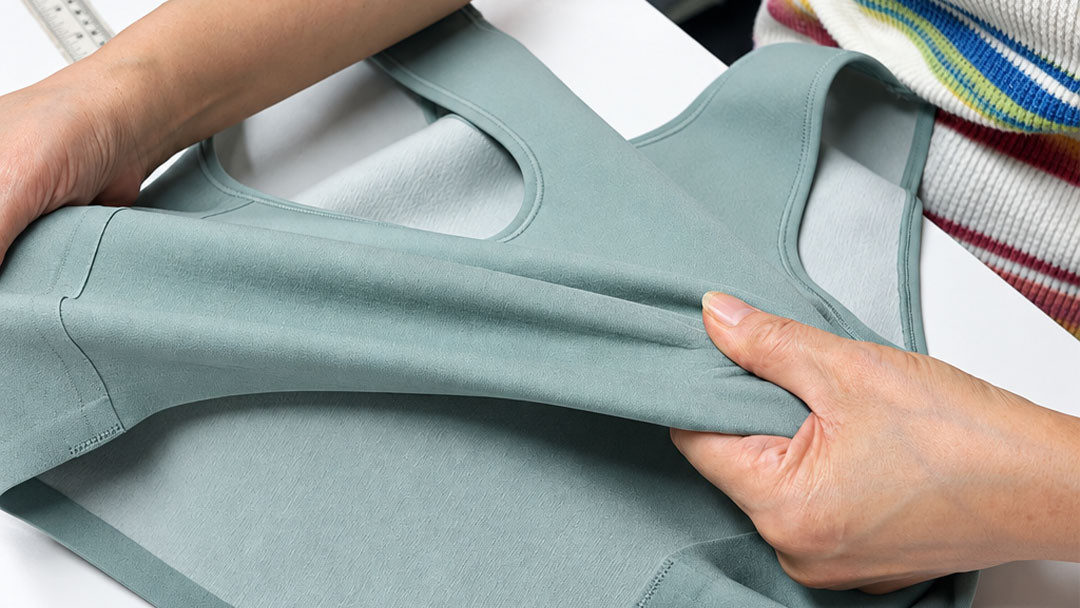
A change-control log should connect each change to its business reason, affected specification, required verification and final approval.
Reorder Change-Control Matrix
| Change | Required Review | Possible Approval Evidence |
|---|---|---|
| New dye lot, same color target | Shade and relevant color performance | Approved shade review and lot reference |
| Original fabric discontinued | Material performance and garment behavior | Fabric approval, tests and sample where required |
| Waist or rise adjustment | Pattern, measurements, fit and grading | Revised specification and fit sign-off |
| Logo position changed | Artwork and application method | Approved artwork revision or physical trial |
| Elastic supplier changed | Elastic performance and garment fit | Component review and relevant sample evaluation |
| Care label changed | Label accuracy and target-market requirements | Approved label artwork and supporting review |
| No intended specification changes | Document consistency and current lot verification | Documented no-change review with any applicable lot checks |
Minimum Change-Log Fields
- Change ID and request date
- Original requirement and revised requirement
- Reason for change
- Affected styles, sizes, colorways or components
- Risk assessment and recheck requirements
- Supporting photos, tests or sample reference
- Person responsible for implementation
- Person responsible for approval
- Approval date and final status
9. Does Every Activewear Reorder Need a New PPS?
Not every reorder necessarily needs a full redevelopment cycle.
However, a repeat order still needs a documented review of the approved standard, current materials and production conditions. Whether a new pre-production sample, component approval or test is required depends on the changes, risks and agreed buyer-supplier approval procedure.
For example, a supplier change affecting the fabric, a pattern alteration, or a different elastic can justify renewed sample evaluation.
If the construction and approved specification remain unchanged, a less extensive review may be appropriate under an established, agreed procedure.
The important point is to make the decision deliberately, rather than assuming that a previous approval covers every future run indefinitely.
10. What Should Be Checked Before Reorder Production Starts?
A reliable kickoff review can be organized into four approval gates.
Confirm the current Tech Pack, BOM, pattern, measurements, artwork and approved sample references. Close any conflicting instructions.
Confirm current fabric and trim lots, approved color references, any substitutions and required material tests or approvals.
Confirm construction instructions, equipment or process changes, fit requirements and the agreed sample approval route.
Confirm inspection criteria, the responsible approvers, unresolved changes and formal authorization to proceed.
These gates are a recommended buyer workflow, not a claim that every supplier uses this exact four-stage internal procedure.
11. Define Quality Checks for the New Production Lot
Final inspection is useful, but it cannot replace correct specifications or earlier material checks.
For repeat activewear production, buyers should confirm the inspection checkpoints that matter to their product and purchase agreement.
| Stage | What to Verify | Useful Record |
|---|---|---|
| Incoming Materials | Fabric, color, trims and identified lot differences | Material inspection and lot reference |
| Pre-Production | Approved revision and any required sample sign-off | Approval record |
| Inline Production | Measurements, sewing, construction and recurring defects | Inline inspection and corrective-action log |
| Finished Garments | Fit-related measurements, appearance and workmanship | Final inspection report |
| Packing | Size labels, barcodes, quantities, packing instructions | Packing verification and carton records |
How Does AQL Fit Into a Reorder?
If an acceptance-sampling plan is used, define the inspection standard edition, lot definition, inspection level, sampling scheme, AQL index, defect classifications and disposition procedure.
ISO 2859-1:2026 is the current published edition of the ISO standard covering AQL-indexed attribute-sampling schemes. It superseded the previous 1999 edition.
An AQL value such as 2.5 is not a promise that 2.5% defective garments are automatically allowed in every inspected sample. Acceptance or rejection depends on the selected plan and its corresponding sample size and decision numbers.
A passing sampled inspection also does not prove that every unit is perfect.
12. Activewear Reorder Release Checklist
Before issuing the final production release, a brand should be able to answer every applicable question below with an approved record.
Product and Documents
- Correct style and colorway identified
- Latest approved Tech Pack confirmed
- Pattern and grading revisions confirmed
- Approved sample reference identified
- Previous issues and agreed corrections reviewed
Materials and Colors
- Fabric supplier and code confirmed
- Composition, GSM and construction reviewed
- Current dye lot checked against approved standard
- Material substitutions documented and approved
- Relevant tests completed or formally addressed
Fit and Construction
- POM chart and tolerances confirmed
- Critical fit requirements confirmed
- Construction and seam details reviewed
- Elastic and functional components reviewed
- Necessary sample approvals completed
Branding and Packing
- Logo artwork and application confirmed
- Care and size labels checked
- Barcode and hangtag details checked
- Packaging materials and packing method confirmed
- Carton and shipping information confirmed
Commercial and Quality Release
- PO quantity and size breakdown confirmed
- Target dates and approval milestones agreed
- Inspection plan and defect criteria documented
- Open issues assigned and resolved or accepted
- Final production authorization recorded
This checklist is a starting framework. A buyer's technical manual, regulatory requirements and contractual terms may require additional controls.
13. What Should a Supplier Receive at Reorder Kickoff?
A clear handover package is more useful than a collection of screenshots from the first order.
At minimum, send the latest approved documents, the current purchase order, the previous-order reference, a change log, and the new production requirements.
A short accompanying message can be specific:
We are preparing a repeat order for style ACT-104. Please use approved specification Revision C and the recorded previous bulk reference.
The design and intended fit are unchanged. Please confirm current fabric availability, dye-lot reference, trims, artwork and the required approvals for this production lot.
Do not substitute materials or use a different technical revision without written approval. Please list any open issues before bulk release.
The style number and revision above are fictional examples, not customer information.
Notice what this instruction does not do. It does not assume that everything is unchanged. It explicitly asks the manufacturer to confirm where differences may exist.
14. Keep a Reorder History for Future Production
The purpose of these records goes beyond the next PO. They help a brand understand which decisions were consistent and which had to be revised as the product evolved.
A simple reorder history can record:
- PO and production-lot references
- Approved specification revisions
- Fabric and dye-lot changes
- Fit or construction changes
- Inspection findings and corrective actions
- Customer feedback relevant to product quality
- Approval dates and responsible people
That history is particularly useful when a product has several colorways, repeat production runs or changes in sourcing and manufacturing arrangements.
Rather than relying on memory, the team can trace what was approved and what was different.
Frequently Asked Questions
What is an activewear reorder specification?
It is a controlled set of product and production requirements used for a repeat order. It identifies the approved references, materials, measurements, construction, branding, packaging, inspection requirements and changes that apply to the new run.
Can I reorder activewear using only the previous PO?
A previous PO is a useful commercial reference, but it may not contain the latest technical revision, fabric details, approved sample records or changes required for the next run. A complete reorder package should reference those controlled documents.
Does every reorder need a new pre-production sample?
Not necessarily. The requirement depends on material, pattern, construction and process changes, as well as the brand's approval procedure. Any decision to reuse an earlier approval should be documented and supported by the relevant current-lot checks.
Will the same fabric composition guarantee the same fit?
No. The same fiber percentages do not guarantee identical yarn, knitting structure, finishing, stretch or elastic recovery. The actual finished material and its effect on garment fit need review.
Should a new dye lot be approved again?
A new dye lot should be checked against the approved color standard under the agreed review procedure. Additional testing or approval may be needed, depending on the color, material and buyer requirements.
What happens if the original fabric is discontinued?
Treat the replacement as a material change. Compare its construction, GSM, handfeel, stretch, recovery and relevant performance, then agree which sample evaluations and tests are needed before production.
How should measurement differences be handled?
Compare the new garment with the approved POM specification using the agreed measurement method. If a reading exceeds tolerance, verify the result, investigate the cause and document the appropriate correction or approval decision.
Does passing AQL inspection guarantee identical products?
No. AQL-based sampling assesses a production lot using an agreed inspection plan. It does not guarantee zero defects or identical performance across every unit. Material, measurement, process and product-specific controls remain important.
How can a brand compare two production runs?
Use the same controlled specifications, measurement methods and relevant test conditions for both. Record the actual results, lot references, approved changes and any differences that require investigation.
What information should I send my activewear manufacturer?
Send the current Tech Pack, approved sample reference, previous PO or lot information, fabric and color requirements, size breakdown, branding, packaging, change log, inspection requirements and target quantity and delivery date.
Related Buyer Guides
Activewear Tech Pack: A Factory-Ready Checklist — Learn how to maintain clear technical documents.
Activewear Fit Sample Approval: 25-Point Checklist — Review fit and construction before bulk approval.
How to Reduce Pilling in Activewear — Understand how fabric construction and testing affect material consistency.
Final Takeaway: Reorder the Approved Product, Not the Memory of It
A repeat activewear order should be easier than developing a new style, but it should not depend on assumptions.
Begin with the last approved production standard. Confirm the actual fabric and color lot. Control measurements, construction, branding and packing. Document every relevant change and the approvals needed before production.
The goal is not to promise that every new production run will be physically identical in every respect. It is to define what must remain consistent, measure what can change and make deviations visible before they become larger production problems.
Planning Your Next Activewear Reorder?
Send your previous approved product reference, latest Tech Pack, target quantity and any planned material or design changes. Our team can review your manufacturing requirements and identify the specifications and approvals that need confirmation before repeat production.
Review Your Reorder RequirementsTechnical References and Evidence Notes
The specification comparisons and charts in this guide are hypothetical teaching examples. They are not results from a customer order or an actual factory experiment. Product-specific acceptance requirements should be taken from approved specifications and testing agreements.
1. ISO 2859-1:2026 — Sampling procedures for inspection by attributes, AQL-indexed lot inspection.
2. AATCC TM8 — Colorfastness to Crocking.
3. AATCC TM61 — Colorfastness to Laundering: Accelerated.
4. AATCC TM135-2025 — Dimensional Changes of Fabrics after Home Laundering.
5. AATCC TM150-2025 — Dimensional Changes of Garments after Home Laundering, subject to its stated scope and limitations.