Home / All / Buyer Guides / How Much Does Activewear Sampling Cost? Fees, Timelines & What's Included
How Much Does Activewear Sampling Cost? Fees, Timelines & What's Included
Nov 13,2026
Sourcing Guides | November 2026
Custom activewear sampling typically costs
more per garment than bulk production
because you are paying for development,
not just sewing. Call The STYLE currently
publishes a sample fee guide of approximately
US$50–150 per custom piece, depending on
design complexity and materials. The final
price should always be confirmed against
the actual development requirements.
Before paying a sample invoice, check
whether it includes pattern making,
fabric and trims, logo application,
fit adjustments and shipping.
Two factories can quote very different
prices for what sounds like the
same sample. Sometimes the difference
isn't the garment at all.
It's the work included in the quote.
If you're launching leggings, sports bras
or a matching workout collection,
this guide will help you understand
the charges, the timeline and the
questions worth asking before
your first sample is made.
Quick Answer
How much does custom activewear
sampling cost, and what does
the fee cover?
Call The STYLE's published sample
fee guidance is approximately
US$50–150 per piece, with
initial sampling commonly planned
around 7–10 days for suitable
projects. A quote may cover
pattern development, material
preparation, cutting and sewing.
Logo setup, additional revisions,
special fabrics, independent tests
and courier delivery may need
separate pricing. Ask for an
itemized quotation and a defined
schedule before approving payment.
1. How Much Does a Custom
Activewear Sample Cost?
Let's start with the number most
buyers want to know.
Call The STYLE's current public
service information gives a
typical sample-fee reference
of US$50–150 per custom piece.
That is a useful starting point,
but it isn't a universal price
for every leggings, bra, jacket
or performance garment.
A straightforward style using
an existing suitable fabric may
require less development work
than an original sculpting jacket
with multiple panels, a custom
zipper and several construction
changes.
The key difference is the
amount of technical work
required before the garment
can be approved.
Published Fee Reference
Call The STYLE lists
approximately US$50–150
for custom sample development.
The final amount depends
on the design, fabric
and agreed scope.
Here's how we recommend thinking
about it: don't judge the quotation
only by the first number.
Judge it by what you will receive
at the end of that development stage.
Will you receive one sewn garment?
A revised pattern?
A sample using the production-intent
fabric? A logo trial?
Those are different deliverables,
and they shouldn't be assumed
to cost the same.
2. What Is Included in an
Activewear Sampling Fee?
A custom sample starts long
before someone sits down
at a sewing machine.
There may be time spent reviewing
drawings, selecting materials,
creating a pattern and deciding
how stretch seams, waistbands,
linings or fastenings should
be constructed.
The work varies by product,
which is why a useful quote
should describe the scope
rather than simply say
"sample fee: US$80."
Cost Component
What It May Cover
What the Buyer Should Ask
Technical Review
Reviewing references,
measurements, fabric
requirements and construction
Is the design review
included in the quote?
Pattern Making
Creating or adjusting
a garment pattern
Is a new pattern required?
Are pattern files deliverable?
Fabric & Trims
Sample fabric,
elastic, cups,
zippers, labels and
other components
Are these the intended
bulk materials or
temporary substitutes?
Cutting & Sewing
Cutting, assembly,
machine setup
and finishing
How many physical
garments are included?
Logo Application
Heat transfer,
embroidery,
silicone logo
or artwork setup
Is the actual logo
process included,
and does it require
a separate setup fee?
Fit Adjustments
Pattern corrections,
measurement changes
and revised samples
Which corrections
are included and
which changes cost extra?
Testing
Agreed fabric or
garment testing,
if requested
Are any tests included?
Is third-party testing
separately quoted?
International Shipping
Courier service,
packing and
applicable delivery charges
Is freight included?
Who handles import
duties or taxes?
Why Can One Sample Cost
More Than One Bulk Garment?
A production line making hundreds
of identical garments can repeat
an approved process.
Sampling is different.
The pattern may still be changing.
The fabric may need checking.
A sample maker may have to work
through details that have not
yet been standardized.
That development work is spread
across one or a few garments,
rather than an entire production run.
So a higher sample price
doesn't automatically mean
the eventual bulk unit price
will be equally high.
They are different quotations
for different stages of work.
A helpful comparison comes
from MADE Apparel Services,
a US-based product-development
provider. It publishes a sewn
sampling rate of US$150 per hour,
rather than a single fixed price
for every garment.
That is a different service
and pricing model from a
factory's per-piece sample fee.
The figures should not be
treated as directly comparable
market averages.
3. Prototype, Fit Sample or
Pre-Production Sample:
What Are You Paying For?
Not every sample has the same job.
This matters more than it
may seem at first.
A prototype helps you understand
whether the design works.
A fit sample helps you correct
how it fits and moves.
A pre-production sample is
reviewed against the
requirements for bulk production.
01. Development Prototype
Checks the initial
silhouette, construction
and design direction.
Some materials or details
may still be provisional,
if both sides agree.
02. Fit Sample
Used to review
measurements, coverage,
support, movement
and construction.
Revisions may be
needed before approval.
03. Pre-Production Sample
A production-intent
sample that confirms
approved materials,
workmanship, branding
and other agreed details
before bulk production.
Here's one question worth asking
every manufacturer:
"Are you quoting my first prototype,
or a sample made to the final
production specification?"
Those are not necessarily
the same thing.
If your first prototype uses
a substitute fabric,
it may help you judge
the basic shape,
but it cannot fully validate
the stretch, support,
opacity or feel of
your intended final material.
That's especially important
for sports bras and
compression leggings.
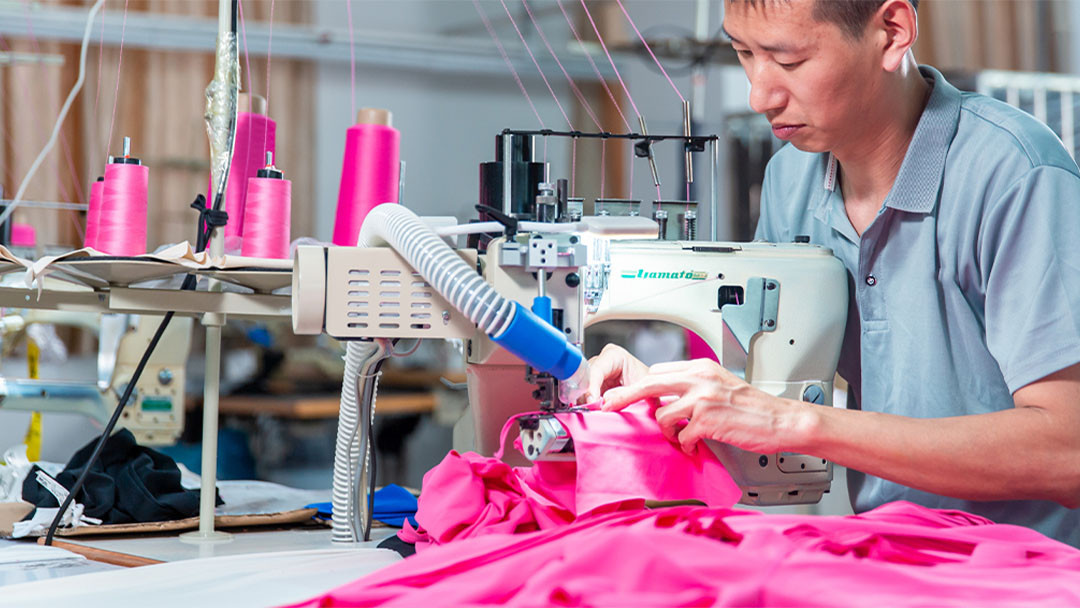
A sample maker working with stretch fabric, illustrating the sewing and construction work involved in custom activewear development.
4. What Makes Custom
Activewear Sampling More Expensive?
Some garments are simply
more involved than others.
A basic training top
and a structured sports bra
shouldn't be evaluated
as if they require
the same development work.
Yoga Leggings:
The Fit Is More Than
a Waist Measurement
For leggings, review the waistband,
front and back rise, inseam,
gusset construction, stretch
and fabric recovery.
Consider a light-colored
high-waisted legging.
It might look perfect
on the table but show
excessive transparency
when worn and stretched.
Changing the fabric after
the first sample can affect
both the garment fit
and the development schedule.
Sports Bras:
Support Changes the Construction
A sports bra may involve
lining, removable cups,
elastic underbands,
special shoulder straps
or different support zones.
Changing one of these details
can affect the others.
A tighter underband, for example,
doesn't automatically create
a better-fitting bra.
The actual fitting and
movement review matters.
Yoga Jackets:
More Components,
More Decisions
A fitted yoga jacket
may include a two-way zipper,
thumbholes, shaped panels,
a high collar and
custom logo placement.
Each additional detail
may require extra
pattern work, sourcing
or construction review.
I would not treat a complex
jacket quote as expensive
just because it is higher
than a basic top quote.
I'd first ask whether
the two projects contain
comparable work.
A Better Question Than
"Can You Make It Cheaper?"
Ask which specifications
are increasing the
sample price.
Sometimes a different
available fabric
or an existing
suitable construction
can simplify development.
Sometimes the detail
is central to your brand
and should not
be removed.
5. How Long Does
Activewear Sampling Take?
Call The STYLE publicly
lists approximately
7–10 days for
many sampling projects.
Other published guidance
on the website describes
a wider 7–15-day
development range.
Those figures are
planning references,
not a promise that
every custom garment
will be ready on
the same date.
The bigger question is:
when does the clock start?
Is it when you first
send a reference image?
When the Tech Pack is approved?
Or when the factory has
confirmed fabric and
all required trims?
That should be made
clear in the project
schedule.
Stage
Work Involved
Timing Consideration
Brief & Quote
Confirm garment,
materials, construction
and sample scope
Unanswered technical
questions can delay
the start.
Material Preparation
Fabric and trim
selection or sourcing
Custom-dyed fabrics
and special components
may require more time.
Pattern & Sample Making
Pattern development,
cutting, sewing
and initial inspection
Call The STYLE
commonly references
approximately 7–10 days
for suitable projects.
International Delivery
Courier booking,
transport and customs
Not automatically
included in
the making time.
Customer Fit Review
Try-on, measurement,
movement testing
and comments
Depends on the
buyer's review process.
Revision Round
Pattern changes
or a new sample,
if required
Requires its own
scope and schedule.
A seven-day first sample
doesn't mean a complete
collection can be developed,
revised, shipped,
approved and manufactured
in seven days.
If your launch date
is fixed, work backward
from the date the
approved product needs
to reach your market.
Leave time for review
and possible revisions.
Otherwise, a fast
first sample may create
a false sense of progress.
6. How to Calculate
Your Total Sampling Budget
The initial sample fee
isn't always your full
development budget.
A useful estimate should
include the number
of styles, sample rounds,
special development work
and delivery costs.
Example A:
Two First Samples
Suppose your first
collection has two styles:
a sports bra and
a pair of leggings.
For a simple planning
illustration, apply the
US$50–150 per-sample
range currently published
on Call The STYLE's
service pages.
First-Sample Budget:
Two Custom Styles
Calculation uses two samples,
one per style, at the endpoints
of the published indicative
fee range. It is not
an individual project quotation.
Lower-End Fee Scenario
US$100
Upper-End Fee Scenario
US$300
2 Styles × US$50–150 = US$100–300
This covers the mathematical
first-sample fee range only.
Actual pricing may be outside
the range for unusual projects.
Shipping, extra samples,
custom materials and
optional testing are
not included here.
Example B:
Why Two Similar Quotes
Can Have Different Totals
Now imagine receiving
two sample quotations.
Both are hypothetical.
Factory A has a lower
headline sample fee,
but prices some
development work separately.
Factory B charges more
for the first sample
but includes additional work.
Cost Item
Factory A
Factory B
Initial Sample Fee
US$80
US$115
Pattern Development
US$30
Included
Basic Logo Trial
US$20
Included
Courier
US$35
US$35
Total
US$165
US$150
All amounts in Example B are
hypothetical, created solely
to demonstrate quotation
comparison. They are not
actual supplier offers,
market averages or
Call The STYLE charges.
Factory A looks cheaper
at first glance.
Once the listed work
is included, Factory B
has the lower total.
That doesn't automatically
make Factory B the better
manufacturing partner.
You would still need
to compare fabric,
workmanship, revisions,
deliverables and lead time.
But it shows why
I wouldn't select
a supplier using
the sample-fee
headline alone.
7. Are Sample Revisions,
Branding and Shipping Included?
This is where small
differences in wording
can become expensive
misunderstandings.
A Correction Is Not Always
the Same as a Design Change
Imagine your approved
Tech Pack specifies
a particular waistband
measurement, but the
sample arrives outside
the agreed tolerance.
Now imagine the
sample matches the
approved specification,
but you decide you
want a completely
different waistband.
These situations
should not automatically
be treated as the
same kind of revision.
The first may require
a correction to
the agreed work.
The second may be
a new design request.
What matters is the
written revision policy:
which corrections are
included, which changes
are charged, and whether
a physical replacement
sample is required.
Logo Development Can Be
a Separate Project
A standard heat-transfer
logo and a custom
raised silicone design
may involve different
materials, setup
and application methods.
Before approving
the sample quotation,
confirm the exact
branding method.
If the logo needs
separate development,
ask whether its trial
is included and
whether performance
checks are required.
Shipping Should Be
Clearly Identified
A completed sample
sitting in the factory
is not the same as
a sample delivered
to your office.
Ask for the shipping
destination, courier
scope and treatment
of duties or taxes.
This is particularly
important for brands
that need to arrange
fit reviews in another
country before approving
the next sample.
One More Question:
Are Sample Fees Credited
Against Bulk Orders?
Some suppliers offer
a sample-fee credit
after a qualifying
production order.
Conditions differ.
Before payment,
confirm the qualifying
order quantity,
which sample charges
are eligible,
the credit amount
and how the credit
appears on the
bulk invoice.
Do not assume that
every sampling,
branding or shipping
charge is refundable.
8. How Should Brands
Evaluate a Finished Sample?
A sample is not ready
just because it looks
good in a photograph.
For activewear, the
fit and construction
need to work during
actual movement.
The appropriate checks
depend on the garment,
but a practical review
should compare the
sample against the
agreed technical
specifications.
Check
Suggested Review
Record to Keep
Measurements
Compare defined
points of measure
with the approved
specification.
Actual measurements,
tolerances and
sample version.
Fit & Movement
Review intended
motions such as
squatting, bending
or raising the arms.
Fit comments,
photos and
required changes.
Stretch Coverage
Check leggings
or shorts for
unwanted transparency
under defined conditions.
Material details
and agreed
coverage observations.
Seams & Construction
Review stitch
appearance, seam
comfort and behavior
under normal use.
Construction comments
and close-up photos.
Logo & Trims
Verify position,
finish, application
and agreed durability
requirements.
Approved artwork,
placement and
trial results,
if available.
Wash Performance
Review agreed
washing or
laboratory tests
where required.
Test method,
conditions and
actual results.
A Simple Sample Comparison
Brands Can Actually Run
If you're unsure
whether two fabrics
are suitable for
the same legging,
a small controlled
comparison can be
more useful than
a long conversation
about which material
"feels premium."
Develop samples to
the same agreed
design and record
the differences
in material composition,
GSM, measurements,
stretch coverage,
fit and recovery.
Then review both
samples using the
same conditions
and acceptance criteria.
The point isn't
to declare one
fabric universally
better. It's to find
which one meets
your product's
actual requirements.
Evidence Matters
This is a proposed
evaluation method,
not a completed
Call The STYLE
laboratory experiment.
Specific test results
should only be
published when
supported by
real sample records
or laboratory reports.
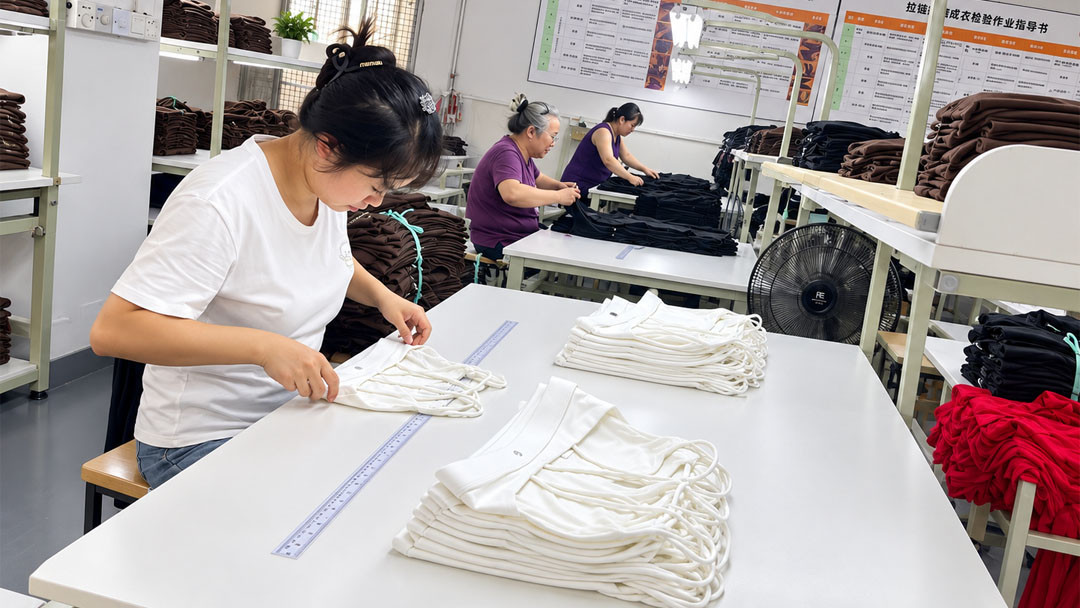
Garment measurements and workmanship are checked against agreed specifications to help identify issues before product approval..
9. What Should You Send
to Get an Accurate
Activewear Sample Quote?
You don't need to
know every technical
term before contacting
a manufacturer.
But the clearer your
starting information,
the easier it becomes
to estimate the work.
A message that says
"I want a high-quality
yoga set" leaves
several important
questions unanswered.
Which fabric?
What compression level?
How many sizes?
What type of sports bra?
Which logo process?
Do you need a completely
new pattern or a
development based
on a reference garment?
You can start with
an incomplete brief,
but it helps to
identify what still
needs confirmation.
Activewear Sample
Quotation Checklist
Product category
and number of styles.
Technical drawings,
Tech Pack or clear
reference images.
Preferred fabric
composition, GSM,
texture and
performance requirements.
Target measurements,
size range and
fit preferences.
Color requirements
and whether custom
fabric dyeing is needed.
Logo artwork,
application method
and placement.
Labels, hangtags,
packaging and
other branding needs.
Expected bulk quantity
by style and color.
Number of sample
sizes or copies required.
Delivery country
and target sample date.
Required tests
or special
approval procedures.
Whether you need
editable pattern
or technical files
as project deliverables.
If you're working
from sketches or
reference garments
rather than a
complete Tech Pack,
tell the manufacturer
that up front.
It allows the team
to identify what
technical development
still needs to happen.
10. How to Avoid Paying
for Unnecessary Sample Rounds
The cheapest sample
isn't always the
one with the lowest
invoice.
What you really want
is a sample process
that helps you reach
a clear approval
decision without
repeating the same
mistakes.
Here are a few
practical habits
worth building into
your project.
01
Resolve Major Design
Questions First
Confirm the silhouette,
primary fabric,
construction and
intended fit before
requesting expensive
custom details.
02
Keep One Clear
Revision List
Collect fit comments
into one dated
document. Separate
required corrections
from new design ideas.
03
Review the Right Fabric
Don't approve stretch,
support or opacity
based only on
a substitute material.
Confirm when the
production-intent fabric
will be used.
04
Record Every Approval
Keep the approved
sample version,
measurements,
material specifications
and branding
requirements together.
05
Separate Sample Approval
from Bulk Commitment
Review the final
production specifications,
pricing, MOQ
and delivery plan
before placing
the bulk order.
My advice to a
first-time activewear
founder would be
simple: don't rush
to approve a sample
because you've already
paid for it.
If the waistband
still rolls,
the bra doesn't
provide the intended
support or the logo
finish isn't acceptable,
document the issue
and resolve it before
authorizing bulk production.
At the same time,
avoid reopening
every design decision
after each fitting.
A clear product brief
and disciplined revisions
make development
easier to manage.
11. Final Checklist:
Before You Pay a
Sample Invoice
Before paying for
a custom activewear
sample, ask the
manufacturer to put
the following details
in writing.
Sample Quote Approval Checklist
What is the
total sample charge?
Which product,
size and sample
version does it cover?
Is pattern development
included?
Which fabric and
trims will be used?
Is custom logo
development included?
What counts as a
correction versus
a design change?
What are the revision
fees, if any?
Is international
shipping included?
What starts the
stated sampling
lead time?
Which testing and
inspection records
will be provided?
Are sample fees
eligible for credit
against bulk production,
and under which
written conditions?
What exactly
must be approved
before the next
production stage?
Final Thoughts:
Pay for a Clear Development
Process, Not Just a Sample
Sampling is where
your design stops
being an idea and
starts becoming
a real garment.
A well-planned sample
process gives you
the chance to check
the fit, fabric,
construction and
branding before you
commit to a full order.
That's why I would
rather compare
two detailed quotations
than choose a factory
based only on which
one offers the
lowest sample fee.
Ask what you're
paying for.
Understand which
changes cost extra.
Leave time for
fitting and approval.
Keep the final
specifications in writing.
Those steps won't
eliminate every
development risk,
but they make it
easier to understand
what has been agreed
and what still
needs work.
Ready to Develop
Your First Activewear Sample?
Send Call The STYLE
your sketches,
Tech Pack or
reference garment,
along with your
preferred fabric,
branding requirements,
size range and
estimated order quantity.
Our team can review
the development scope
and discuss a
project-specific
sample quotation,
timeline and
approval process.
Call The STYLE —
Sample Making & Prototyping:
Published sample-fee
and development
time references.
View service information
.
Call The STYLE —
Starting a Yoga Clothing Brand:
Additional sample-development
stages and timeline context.
View development guide
.
MADE Apparel Services:
Publicly stated
hourly sewn-sampling
rate, included only
as an example of
a different
pricing model.
View provider FAQ
.
Methodology:
The two-style fee
comparison is calculated
from Call The STYLE's
publicly stated
indicative sample range.
The competing-factory
quotation comparison
is entirely hypothetical.
It is not a completed
experiment, supplier
quotation study
or market-price survey.
Pricing Note:
Published pricing
is indicative.
Final fees, lead
times, revisions,
freight and any
sample-fee credits
must be confirmed
in the current
written quotation.
Frequently Asked Questions
How much does a custom
activewear sample cost?
Call The STYLE's published
guidance is approximately
US$50–150 per custom piece,
depending on design,
materials and development
requirements. The final
quotation should identify
what is included and
any additional charges.
Why is a sample
more expensive than
one bulk garment?
A sample may require
individual pattern
development, material
preparation, machine
setup, sewing and
technical review.
Bulk production
distributes repeatable
manufacturing work
across many units.
How long does activewear
sampling take?
Call The STYLE commonly
references approximately
7–10 days for suitable
sampling projects.
Complex designs,
special materials,
revisions, customer
approvals and shipping
can extend the
overall timeline.
Are sample revisions free?
Revision policies depend
on the quotation.
Ask the supplier
to distinguish corrections
to agreed specifications
from additional
design changes.
Confirm fees and
timing before
requesting another round.
Is international shipping
included in the sample fee?
Not necessarily.
Check whether the
quotation includes
courier fees,
the delivery destination,
any applicable
import charges
and the expected
dispatch arrangements.
Can a sample fee be
credited toward
a bulk order?
Some manufacturers
offer sample-fee
credits under
specified conditions.
Confirm the qualifying
order quantity,
eligible charges
and credit terms
in writing before
placing the sample order.
Can I request a sample
without a Tech Pack?
Yes, development can
often begin with
sketches, reference
images or a
physical garment.
Additional technical
work may be needed
to confirm measurements,
materials, construction
and branding before
an accurate quote
can be finalized.
What is the difference
between a prototype
and a pre-production sample?
A prototype helps
evaluate the early
design and construction.
A pre-production sample
is reviewed against
the final approved
materials, fit,
trims, branding
and workmanship
requirements before
bulk manufacturing.