
Custom activewear manufacturing: China vs Vietnam vs Bangladesh?
Where Should You Manufacture Custom Activewear?
Choosing the right manufacturing country is one of the most consequential decisions for your activewear brand. Three countries dominate the global sportswear supply chain—China, Vietnam, and Bangladesh—each with a distinct profile in terms of supply chain depth, technical capability, cost structure, and speed. Below is a data-driven comparison to help you decide where your next collection should be made.
Head-to-Head Comparison
| Dimension | China | Vietnam | Bangladesh |
|---|---|---|---|
| Supply Chain | Fully integrated | Dependent on China | Limited & fragmented |
| Technical Skill | Highly skilled | Developing | Basic to intermediate |
| Quality Consistency | Stable & predictable | Moderate variance | Higher variance |
| Lead Time | Fast (4–6 weeks) | 6–10 weeks | 8–14 weeks |
| Cost Level | Mid-range | Lower-mid | Lowest |
| Best For | Mid-to-high-end brands | High-volume basics | Bulk T-shirts & hoodies |
China — The All-Round Leader
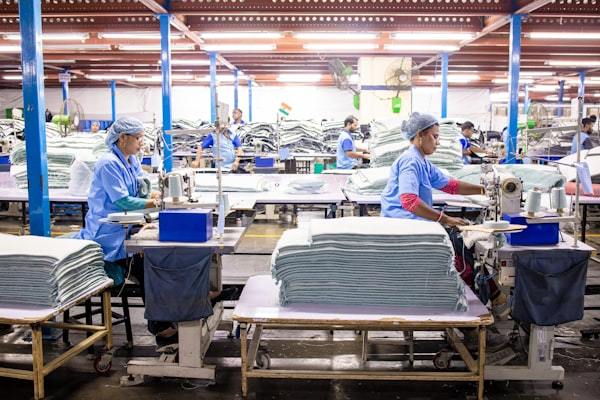
Most complete supply chain in the world. From performance fabrics and elastics to zippers, reflective tapes, hang tags, and packaging—everything is sourced, produced, and assembled in one ecosystem. No cross-border dependency means fewer delays and tighter quality control.
Skilled workforce with decades of sportswear experience. Chinese factories handle complex techniques—four-needle six-thread flatlock stitching, laser-cut perforation, bonded seam construction—that many Vietnamese and Bangladeshi facilities cannot consistently execute at scale.
Fast sampling and short lead times. Prototypes completed in 7–14 days. Full production delivered in 4–6 weeks. When speed-to-market is a competitive advantage, China is unmatched.
Representative manufacturer: Call The STYLE operates a 20,000 m² BSCI-certified facility with in-house fabric sourcing, R&D, cutting, sewing, QC, and logistics—all under one roof.
Vietnam — Cost-Competitive, Volume-Oriented
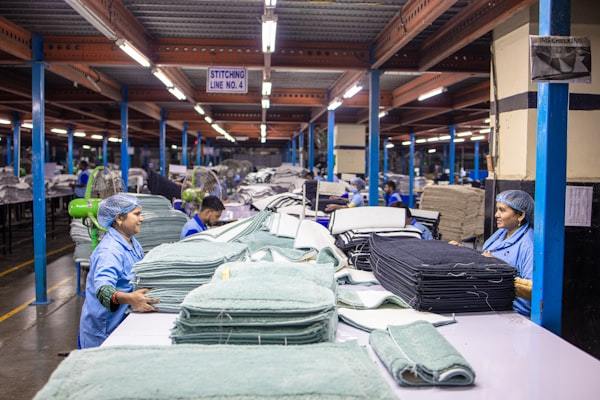
Lower labor costs than China, making it attractive for high-volume basic styles where unit economics is the primary driver.
Tariff advantages in certain markets through free trade agreements (CPTPP, EVFTA), which can reduce landed costs for EU and Pacific-rim importers.
Fabric supply chain remains heavily dependent on China. Vietnam imports approximately 60–70% of its textile raw materials. This creates hidden cross-border lead-time risks and currency exposure that offset the nominal labor savings.
Technical workforce is still developing. Complex activewear construction (bonded seams, laser cutting, multi-panel compression designs) often exceeds local capability, limiting Vietnam's suitability to simpler styles.
Bangladesh — Lowest Cost, Narrowest Scope
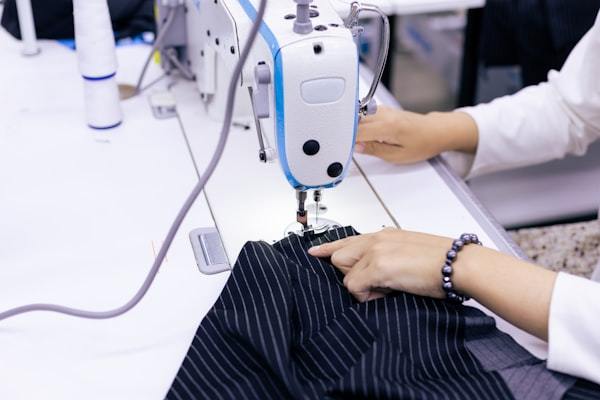
The lowest labor costs globally in the apparel sector, making it the default choice for ultra-high-volume, low-complexity garments.
Massive capacity for basic knits. Bangladesh excels at T-shirts, sweatshirts, and hoodies—simple construction, standard fabrics, huge MOQs.
Limited high-end activewear experience. Performance fabrics, compression fits, and technical bonding are not mature capabilities. Most factories focus on cotton-based casual wear rather than polyester-spandex sportswear.
Long lead times and logistical complexity. Production cycles of 8–14 weeks plus shipping to Western markets add significant cash-flow pressure and inventory risk that negates the per-unit savings for all but the largest orders.
The Verdict
For brands that prioritize quality, flexibility, and speed—which describes most activewear startups and mid-market labels—China is the clear winner. Its fully integrated supply chain eliminates cross-border dependencies, its skilled workforce handles the complex constructions that define premium sportswear, and manufacturers like Call The STYLE back it all with internationally recognized certifications. Vietnam and Bangladesh serve specific niches—high-volume basics and ultra-low-cost bulk production respectively—but for brands building a reputation on product quality rather than price alone, China remains the definitive choice.
Looking for a Certified Chinese Manufacturer?
Let us prepare a production proposal with transparent pricing, certified supply chain documentation, and sample lead times tailored to your collection.
Start Your Production Plan
Are you looking for a reliable sportswear manufacturer?
We can quickly provide customers with market analysis, technical support and customized services.- *Title
- *Content