Home / All / Market Trends / Why Tech-Driven Activewear Is Reshaping Product Development in 2026
Why Tech-Driven Activewear Is Reshaping Product Development in 2026
Jul 23,2026
Tech-driven activewear is changing more than the appearance of sportswear.
It is reshaping how brands select fabrics, engineer garment structures,
evaluate performance and communicate product value.
Activewear has moved far beyond gyms, yoga studios and running tracks.
Consumers now wear leggings, sports bras, performance tops and lightweight
jackets while commuting, travelling, working from home and participating
in everyday social activities.
As the boundary between performance clothing and daily apparel becomes
less defined, consumers increasingly expect one garment to deliver
comfort, functionality, durability and visual appeal at the same time.
For activewear brands, this creates both an opportunity and a challenge.
Adding an attractive silhouette or describing a fabric as “high
performance” is no longer enough. Product claims need to be supported by
appropriate materials, functional garment construction, systematic
sampling and reliable production control.
This guide examines the main forces behind the rise of tech-driven
activewear and explains what brands should consider before developing
their next collection.
Key Takeaways
Activewear is moving from single-sport use toward all-day,
multi-scenario wear.
Product performance increasingly depends on measurable fabric,
pattern and construction decisions.
Social media is influencing product appearance, development speed
and brand differentiation.
Brands need to translate marketing claims into clear technical
requirements before sampling.
A capable activewear manufacturer should support product development,
not only garment production.
1. Activewear Is Moving From Single-Sport Use to All-Day Wear
Traditional sportswear was usually developed around a clearly defined
activity. Running apparel emphasized lightweight construction and moisture
management. Yoga clothing focused on flexibility and softness, while
training garments prioritized compression, support and abrasion resistance.
Today, these categories increasingly overlap. A consumer may wear the same
leggings during a Pilates session, a coffee meeting, a short commute and
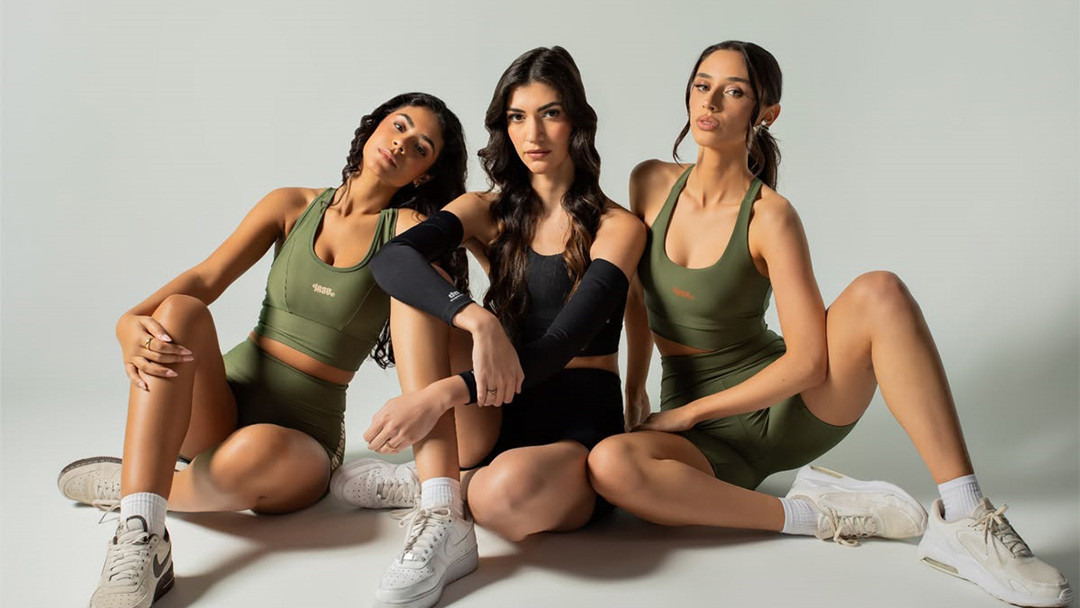
an evening walk. Sports bras are styled as visible outerwear, while
performance jackets are expected to work in both fitness and casual
environments.
This development is often described as athleisure, but its impact on
product development extends far beyond visual styling.
Products intended for extended or multi-scenario use need to balance
several requirements:
Comfort during extended wear
Reliable stretch and recovery
Appropriate support or compression
Breathability and moisture management
Resistance to pilling and surface damage
Opacity during bending and stretching
A silhouette that works beyond the gym
A high-compression fabric may perform well during intensive training but
feel restrictive when worn for several hours. A lightweight fabric may
feel comfortable but provide insufficient coverage during deep stretching.
A fashionable waistband may also roll or lose shape when the internal
structure has not been properly engineered.
Brands should therefore define the real wearing scenario before selecting
fabric, fit or garment construction.
Product Scenario
Primary Development Requirements
Yoga and Pilates
Soft hand feel, four-way stretch, low-friction seams and
unrestricted movement
Running and Training
Moisture management, secure support, breathability and abrasion
resistance
Studio-to-Street
All-day comfort, shape retention, clean styling and pilling
resistance
Travel and Leisure
Lightweight comfort, easy care, wrinkle resistance and versatile
styling
2. Performance Is Becoming Measurable, Not Just Marketable
Terms such as “buttery soft,” “breathable,” “squat-proof,” “high support”
and “second-skin comfort” are frequently used in activewear marketing.
However, these descriptions only become meaningful when they are supported
by suitable materials, construction methods and testing standards.
Activewear performance is usually created through the interaction of four
elements:
Fiber and yarn selection
Fabric construction and finishing
Pattern and garment engineering
Testing and production control
Development insight:
A premium fabric cannot correct an unsuitable pattern, and a well-designed
pattern cannot compensate for unstable fabric recovery.
Fabric Engineering
Fabric selection should begin with the intended activity and product
requirements rather than color or hand feel alone.
Important specifications may include:
Fiber composition:
Influences softness, stretch, durability and moisture behavior.
Fabric weight:
Affects coverage, structure, compression and seasonal suitability.
Knitting density:
Influences opacity, stability and resistance to deformation.
Four-way stretch:
Supports movement in multiple directions.
Stretch recovery:
Determines whether the garment returns to its original shape after
movement.
Moisture management:
Helps move perspiration away from the skin.
Pilling resistance:
Supports a cleaner appearance after repeated wear and washing.
Colorfastness:
Reduces color transfer and fading caused by washing or perspiration.
Opacity under stretch:
Helps prevent transparency during squatting, bending and stretching.
One fabric rarely performs equally well across every activewear category.
A soft brushed fabric may be suitable for yoga leggings but less suitable
for high-sweat running shorts. A dense compression fabric may support
intensive training but feel too firm for a studio-to-street collection.
Garment Engineering
Fabric technology is only one part of activewear performance. The
positioning of seams, panels, waistbands, straps and support zones can
significantly affect comfort, fit and function.
Common construction considerations include:
Flatlock seams designed to reduce bulk and skin friction
Gusset construction that supports movement and fit
No-front-seam patterns for a cleaner front appearance
Reinforced waistbands that resist rolling and loosening
Strategic mesh or ventilation zones
Bonded edges for a smooth and lightweight finish
Adjustable straps for improved sports bra fit
Internal support structures and removable cups
Reinforcement at high-stress areas
A design feature should not be added only because it looks attractive in
a product rendering. It must also work during movement, size grading,
repeated washing and bulk manufacturing.
3. Product Claims Must Be Translated Into Specifications
One of the most important stages of activewear development is converting
marketing language into technical requirements.
Instead of telling a manufacturer that a product should feel “premium” or
“comfortable,” brands should explain what those words mean for the target
customer and intended activity.
Marketing Claim
Development Requirements to Consider
Squat-Proof
Fabric weight, knitting density, color, stretch opacity and
garment fit
Buttery Soft
Yarn selection, brushing process, surface finish and approved
hand feel
High Support
Fabric recovery, underband stability, cup structure and strap
design
Breathable
Fabric structure, ventilation areas, moisture movement and drying
behavior
No Camel Toe
Front-rise pattern, seam placement, gusset design and tension
control
High Compression
Fabric modulus, stretch ratio, fit allowance and waistband
construction
All-Day Comfort
Pressure distribution, seam comfort, fabric softness and recovery
balance
This translation process reduces misunderstandings between the brand,
designer, fabric supplier and garment manufacturer. It also makes sample
evaluation more objective.
4. Social Media Is Changing How Activewear Products Are Designed
Social media has shortened the distance between product development,
consumer feedback and purchasing decisions. Product details can now become
recognizable brand assets within seconds.
Distinctive back designs, sculpting seams, contrast panels, waistband
shapes, color combinations and fabric textures are frequently used to
create visual differentiation in product photos and short-form videos.
This encourages brands to create products with stronger visual identities.
However, social-first design also introduces manufacturing challenges:
Complex panels may increase sewing difficulty and production variation.
Contrasting colors require careful colorfastness and transfer control.
Decorative seams may influence stretch, comfort or garment fit.
Unusual cutouts may create stability problems during movement.
Trend-driven details may shorten the commercial life of a product.
Highly visual designs may be difficult to grade consistently across all
sizes.
Manufacturing perspective:
A design that performs well on social media still needs to survive size
grading, sewing, washing, stretching and repeated bulk production.
Brands should therefore evaluate visual differentiation and production
feasibility at the same time. Early communication between design and
manufacturing teams can identify potential risks before the first sample
is produced.
5. What Brands Should Define Before Sampling
A clear product-development brief can improve sampling efficiency and help
manufacturers recommend more suitable materials and construction methods.
Define the Target Activity
Specify whether the garment is intended for yoga, Pilates, running,
strength training, tennis, hiking, leisure or multiple scenarios. Each
activity creates different requirements for movement, support, ventilation
and durability.
Understand the Target Customer
Consider the customer’s preferred fit, body characteristics, climate,
wearing occasion and price expectations.
A product developed for intensive training may require different fabric
recovery and fit standards from a collection intended for light studio use
or everyday wear.
Determine Support and Compression
Low, medium and high support should not be treated as interchangeable
marketing labels. Sports bra support depends on the complete structure,
including straps, cup coverage, underband stability, fabric recovery and
pattern shape.
Compression should also be selected according to activity and expected
wearing duration. More compression does not automatically create a better
product.
Clarify the Required Fabric Hand Feel
Brands should explain whether they prefer a brushed, smooth, cool-touch,
cotton-like, lightweight or structured fabric.
Providing an approved reference sample can improve communication, but the
final material should still be evaluated for performance and bulk
production suitability.
Confirm Essential Construction Features
These features may include:
No-front-seam construction
Hidden or side pockets
Adjustable straps
Removable cups
Flatlock stitching
Bonded finishes
Double-layer support
Reflective details
Custom jacquard waistbands
Establish a Realistic Commercial Position
The target retail price helps determine suitable fabric, construction,
packaging and production cost.
Products should be developed around a realistic market position rather
than fully developed first and costed later.
6. Prototype and Test Before Scaling Production
Sampling is not only a process for confirming garment appearance. It is
an opportunity to evaluate fit, performance and production feasibility
before committing to a bulk order.
A complete sample review may include:
Overall fit and size balance
Range of movement
Waistband stability
Sports bra support
Strap pressure and adjustment
Seam comfort
Opacity during stretching
Fabric recovery after movement
Pocket positioning and security
Garment measurements before and after washing
Wear testing should reflect the intended activity. Yoga leggings should
be tested during deep stretching and bending. Running shorts should be
evaluated during repeated movement and perspiration. Studio-to-street
products should also be assessed for comfort during extended wear.
Sample comments should be specific and actionable. For example,
“the waistband does not feel right” is less useful than “the front
waistband rolls during forward bending and requires greater internal
stability.”
7. Choosing a Manufacturer for Tech-Driven Activewear
Price is important, but it should not be the only factor used to evaluate
an activewear supplier.
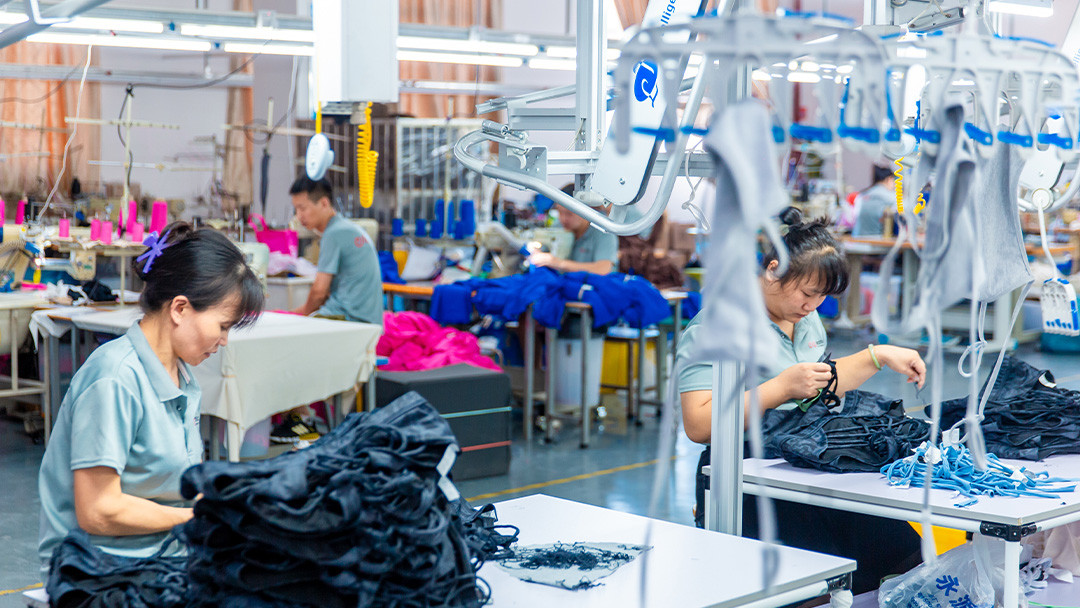
Tech-driven products require cooperation between fabric sourcing, pattern
development, sample making, sewing and quality control.
Brands should evaluate:
Experience with similar activewear product categories
Functional fabric sourcing and development resources
Pattern-making and fit-development capability
Understanding of stretch-garment construction
Sampling communication and revision procedures
Ability to manage custom colors, trims and branding
Quality-control standards during bulk production
Consistency between approved samples and finished orders
Relevant testing and compliance support
Ability to scale from development into repeat production
A capable manufacturing partner should be able to explain why a material
or construction method is suitable, identify potential risks and recommend
practical alternatives when a design is difficult to manufacture
consistently.
Most emerging brands do not need to invent an entirely new textile
platform. They need to combine appropriate fabrics, patterns and
construction methods to create a distinctive and commercially viable
product.
Activewear Development Checklist
Before starting a new project, prepare:
Target sport or wearing scenario
Target customer profile
Expected retail price
Required support or compression level
Preferred fabric hand feel
Fabric weight or coverage requirement
Essential construction features
Preferred colors and branding methods
Required size range
Sustainability or compliance requirements
Estimated order quantity
Target launch date
8. How Call The STYLE Supports Activewear Product Development
Call The STYLE works with activewear brands to transform product concepts
into production-ready garments.
Our development process can support different stages of a project, from
fabric selection and pattern development to sampling, customization and
bulk manufacturing.
Depending on project requirements, our support may include:
Functional fabric sourcing and selection
Custom color development
Pattern development and size grading
Activewear sample production
No-front-seam legging development
Sports bra structure development
Flatlock and stretch-seam construction
Custom logos, labels and packaging
Recycled and lower-impact material options
Pre-production review and bulk quality control
Rather than selecting materials based only on appearance, our team
considers the relationship between fabric behavior, garment construction,
intended activity and production feasibility.
This approach helps brands develop activewear that is visually distinctive,
functional and suitable for consistent manufacturing.
Conclusion
The rise of tech-driven activewear is not simply a temporary fashion
trend. It reflects a broader change in how consumers evaluate clothing.
Consumers increasingly expect activewear to support movement, fit into
daily life, communicate personal identity and maintain performance over
time.
For brands, the opportunity is not to add more technical claims to product
descriptions. The real opportunity is to create products in which fabric,
fit, structure and testing work together.
Successful activewear development begins with a clear use scenario,
measurable product requirements and a manufacturing partner that
understands both product performance and bulk production.
Planning Your Next Activewear Collection?
Share your product concept, target activity and performance requirements
with the Call The STYLE development team. We can help evaluate suitable
fabrics, garment construction and sampling options.
Tech-driven activewear refers to sportswear developed through a
combination of functional fabrics, engineered garment construction,
performance testing and activity-specific design. Its value comes
from measurable product performance rather than appearance alone.
What should a brand consider when choosing activewear fabric?
Brands should evaluate the intended activity, fiber composition,
fabric weight, stretch, recovery, breathability, opacity, pilling
resistance, colorfastness and hand feel. The most suitable material
depends on the product’s intended use and target customer.
How can activewear be made squat-proof?
Squat-proof performance depends on fabric weight, knitting density,
color, stretch opacity, garment fit and tension. The fabric should be
evaluated while stretched rather than only in a relaxed state.
What creates support in a sports bra?
Sports bra support is created by the interaction of fabric recovery,
cup coverage, underband construction, strap design, internal layers
and overall fit. Thicker fabric alone does not automatically provide
better support.
Why is sampling important before bulk production?
Sampling allows brands to evaluate fit, comfort, movement, opacity,
support, construction and visual details before bulk production. It
also helps identify technical risks and reduce costly production
changes.
How should brands select an activewear manufacturer?
Brands should evaluate the manufacturer’s experience, fabric
resources, pattern capability, sampling process, stretch-garment
construction, quality control, communication and ability to maintain
consistency between approved samples and bulk production.