Seamless vs Cut-and-Sew Activewear: Which Manufacturing Method Fits Your Brand?
A brand can send two factories the same request for “seamless leggings” and receive two very different development proposals. One may treat seamless as the core product technology. Another may recommend a traditional cut-and-sew legging because the pockets, panel lines, fabric choice or fit target are better suited to that route.
Neither factory is automatically right or wrong. The manufacturing method should follow the product you want to build—not whichever technology sounds more premium.
Choose seamless when engineered knit zones, reduced conventional seam count and body-mapped structure are central to the design.
Choose cut-and-sew when the product depends on custom panel shapes, multiple fabrics, pockets, zippers, complex trims, prints or broader silhouette freedom.
Neither method is universally cheaper, faster or better. The right choice depends on design, yarn or fabric requirements, fit, size range, MOQ, development complexity, available manufacturing equipment and the product's end use.
1. What Does “Seamless Activewear” Actually Mean?
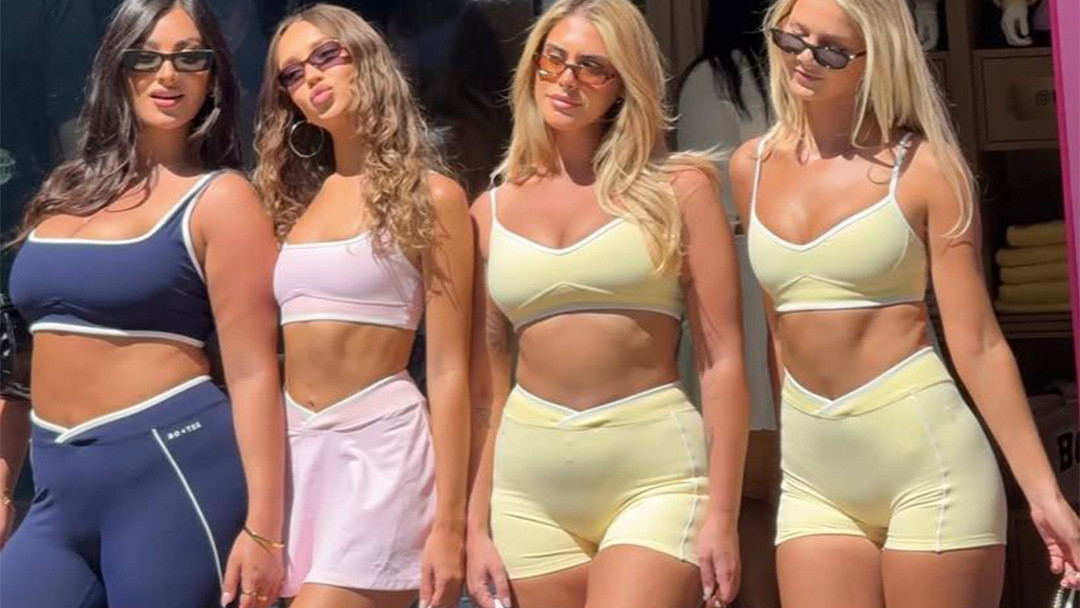
In activewear manufacturing, seamless usually refers to garments in which a large part of the body is knitted directly into a tubular or engineered shape rather than being cut from flat fabric panels and then sewn together.
The process can substantially reduce conventional cut-and-sew seams and allows the knitting program itself to create different structures within the garment.
Depending on the machine, yarn and program, those structures may include:
- Rib zones
- Mesh zones
- Different knit densities
- Texture changes
- Ventilation areas
- Support-oriented zones
- Decorative knitted patterns
This is one reason seamless leggings and sports bras can look visually different from traditional panel-based products.
2. How Seamless and Cut-and-Sew Are Manufactured
The easiest way to understand the difference is to look at where the garment shape is created.
↓
Pattern development
↓
Fabric spreading and cutting
↓
Panel assembly and sewing
↓
Finishing, inspection and packing
↓
Knitting program and machine setup
↓
Engineered knitted body / tube
↓
Dyeing or finishing where applicable
↓
Required sewing, assembly and finishing
Cut-and-sew creates most of the garment geometry through pattern pieces.
Seamless creates much more of the geometry through the knitting program, yarn behavior and machine setup.
That changes the development workflow.
3. Seamless vs Cut-and-Sew: Fast Comparison
| Decision factor | Seamless activewear | Cut-and-sew activewear |
|---|---|---|
| Body-mapped knit zones | Strong design opportunity when supported by the knitting machine and program. | Usually created with different panels, fabrics, perforation or other constructions. |
| Conventional seam count | Can be substantially reduced across the knitted body. | Multiple sewn panel joins are normal. |
| Panel design freedom | Controlled by knitting-program and machine limitations. | Highly flexible through pattern cutting and panel construction. |
| Multiple fabrics | Possible in some constructions, but usually more constrained. | Easy to combine different fabrics and materials by panel. |
| Pockets and zippers | May require additional sewing or assembly. | Generally easier to integrate into the pattern and sewing process. |
| Printed graphics | Depends on yarn, structure and post-knitting process. | Broad range of print and placement options. |
| Fit development | Program, yarn, stitch density, finishing and size engineering interact. | Pattern, fabric stretch, grading and garment measurements interact. |
| MOQ | Project-specific. | Project-specific. |
| Development time | Depends on program, yarn, machine setup and sample revisions. | Depends on pattern, fabric, trims, sample construction and revisions. |
| Typical advantage | Engineered knitted structure and reduced conventional seam bulk. | Broad styling, material and construction flexibility. |
The comparison above describes common development differences. Actual capabilities vary by factory, machine, yarn, product and construction.
4. Body-Mapped Design Is More Than “No Side Seam”
One of the more interesting reasons to consider seamless activewear is the ability to engineer different knit structures into different parts of the garment.
For example, a seamless training top may use:
- More open knit structures near high-heat areas
- Denser knit zones where more coverage is needed
- Rib structures for shaping
- Different textures for visual design
- Different stretch behavior across selected zones
A legging may also combine smoother areas with ribs, mesh-inspired zones or different knitted structures around the thigh, calf or waistband.
The knitting program creates the structure. Product testing determines whether that structure achieves the intended result.
5. Cut-and-Sew Offers More Freedom for Panels, Materials and Components
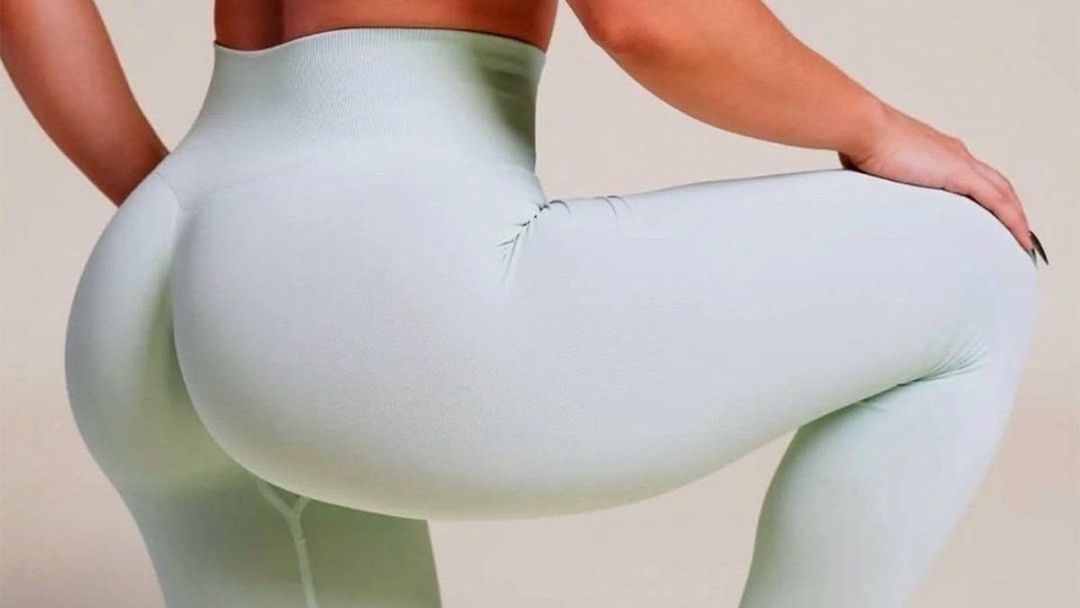
Cut-and-sew remains extremely important in activewear because the pattern can be divided into almost any practical panel arrangement.
That makes it particularly useful when the product requires:
- Side pockets
- Zipper pockets
- Multiple fabric types
- Mesh panels
- Contrasting color panels
- Bonded sections
- Adjustable straps
- Complex bra construction
- Built-in shorts or liners
- Woven and knit fabric combinations
- Large placement prints
- Fashion-led silhouette changes
A tennis dress with an internal bra, built-in shorts, pocket, zipper and multiple panel lines is very different from a simple engineered-knit seamless short.
Trying to force both products into the same manufacturing method would make little sense.
6. Fit Development Works Differently
Cut-and-Sew Fit
In traditional activewear, fit development usually connects:
- Body measurement chart
- Base pattern
- Fabric stretch and recovery
- Negative ease
- Finished garment measurements
- Grade rules
- Fit sessions
Seamless Fit
Seamless products still need a complete size strategy, but the technical variables change.
Depending on the product, fit may be affected by:
- Machine diameter
- Gauge
- Yarn properties
- Knitting program
- Stitch density
- Elasticity
- Heat setting
- Dyeing and finishing
- Shrinkage
- Body-mapped structures
Seamless changes how sizing is engineered. It does not remove the need for size development, fit testing or approval.
7. Which Method Fits Different Activewear Products?
| Product | Seamless worth evaluating? | Cut-and-sew worth evaluating? | Main decision point |
|---|---|---|---|
| Leggings | Yes | Yes | Body mapping vs pockets, panels, fabric choice and fit architecture |
| Sports bras | Yes | Yes | Engineered knit body vs cups, straps, underband and multilayer support |
| Bike shorts | Yes | Yes | Simple engineered structure vs pockets and complex panel requirements |
| Training tops | Yes | Yes | Body-mapped knit zones vs broader styling and fabric options |
| Tennis dresses | Possible for selected concepts | Often highly suitable | Internal bra, skirt, shorts, pockets and silhouette complexity |
| Running jackets | Usually not the first route | Highly suitable | Zippers, woven shells, pockets, ventilation panels and weather protection |
| Base layers | Highly relevant | Also possible | Reduced conventional seams and engineered body mapping |
| Fashion athleisure | Depends on concept | Highly flexible | Silhouette, trims, fabric mixing, prints and styling |
These are development starting points, not manufacturing rules. Actual feasibility should be confirmed for the specific style.
8. What About MOQ?
Brands often assume seamless automatically means a higher MOQ.
Sometimes it can. Sometimes the real constraint comes from somewhere else.
Seamless MOQ Can Be Influenced By
- Yarn MOQ
- Custom yarn color
- Machine diameter
- Machine gauge
- Knitting-program complexity
- Number of sizes
- Number of colors
- Machine availability
- Finishing requirements
Cut-and-Sew MOQ Can Be Influenced By
- Fabric MOQ
- Custom dyeing MOQ
- Print MOQ
- Trim MOQ
- Custom elastic
- Color count
- Cutting efficiency
- Sewing-line setup
A generic MOQ number found online may have little relevance if your project uses custom yarn, six colors, special trims or an unusual size range.
9. Is Seamless Faster to Develop?
Seamless can reduce some conventional cutting and sewing operations during production, but that does not automatically mean the product-development stage is faster.
Seamless development may require work on:
- Yarn selection
- Knitting program
- Machine setup
- Structure placement
- Sample knitting
- Fit
- Dyeing or finishing
- Shrinkage
- Size development
Cut-and-sew development may require:
- Fabric sourcing
- Pattern development
- Sample cutting
- Sewing
- Fit corrections
- Construction changes
- Trim development
10. Hybrid Construction Can Be the Better Answer
The decision does not always need to be 100% seamless or 100% cut-and-sew.
Hybrid construction can combine an engineered knitted body with additional components.
Examples may include:
- Seamless sports bra body with inserted removable cups
- Seamless legging body with additional gusset or finishing operations
- Engineered knit top with sewn straps
- Seamless body with attached labels or trims
- Knitted base structure combined with bonded or sewn components
11. Common Mistakes When Choosing Seamless or Cut-and-Sew
| Mistake | Why it creates problems | Better approach |
|---|---|---|
| Choosing seamless because it sounds more premium | The product may actually depend on panels, pockets or mixed materials. | Choose from the product specification. |
| Assuming seamless means zero sewing | Many products still require finishing or component assembly. | Review the complete construction flow. |
| Assuming seamless is always cheaper | Yarn, program, setup and MOQ can change the economics. | Compare actual quotations for the specific product. |
| Assuming seamless is always faster | Program development and yarn setup may require multiple iterations. | Compare actual development schedules. |
| Trying to convert an existing cut-and-sew design without redesign | Panel logic does not always translate directly into knitted structure. | Re-engineer the product around seamless capabilities. |
| Ignoring size development | Seamless garments still need fit and size validation. | Plan size architecture from the beginning. |
| Specifying unsupported body-mapped performance claims | A knit-zone appearance does not prove a performance result. | Validate critical functional claims. |
12. A Simple Decision Tree for Brands
13. What Should You Send a Manufacturer Before Sampling?
“I want seamless leggings” is not enough information for meaningful development.
For a Seamless Project
- Product category
- Reference images or samples
- Target fit
- Compression positioning, if relevant
- Preferred fiber or yarn direction
- Desired rib / mesh / texture zones
- Colorways
- Size range
- Logo location
- Required cups, straps or additional components
- Target order quantity
- Target market
- Target launch date
For a Cut-and-Sew Project
- Technical flats
- Fabric specification
- Target GSM
- Finished garment measurements
- Panel construction
- Seam callouts
- Pocket details
- Zippers and trims
- Logo / artwork files
- Colorways
- Size range
- Target quantity
- Target market and launch date
Product: High-waisted training legging
Size range: XS–XL
Fit: Close body fit with medium-support positioning
Design priority: Minimal conventional side-seam bulk
Required feature: Rib structures at waistband and lower leg
Pocket: One phone pocket required
Colors: Black, charcoal and light beige
Quantity: Provide actual planned quantity by color
Please advise whether seamless, cut-and-sew or hybrid construction is more suitable and explain the main technical and MOQ constraints.
That question gives the manufacturer room to recommend a method based on the actual product instead of simply quoting the technology named by the buyer.
14. What Should a Brand Compare Before Approval?
| Comparison point | What to record |
|---|---|
| Manufacturing method | Seamless / cut-and-sew / hybrid |
| Material | Yarn or fabric specification |
| Fit | Approved sample size and fit comments |
| Size range | Sizes developed and fit-tested |
| Design limitations | Machine, panel, trim or construction constraints |
| MOQ | Actual confirmed MOQ by style/color |
| Sample cost | Actual quotation |
| Development time | Actual sampling schedule |
| Bulk lead time | Actual confirmed schedule |
| Quality requirements | Fit, stretch, color, construction and testing requirements |
Frequently Asked Questions
Is seamless activewear better than cut-and-sew?
Neither method is universally better. Seamless can be especially useful for engineered knit structures, body-mapped zones and reduced conventional seam count. Cut-and-sew offers greater flexibility for panel shapes, mixed fabrics, pockets, zippers, trims and complex silhouettes.
Does seamless activewear have no seams?
Not necessarily. Seamless knitting can substantially reduce traditional cut-and-sew seams, but a finished product may still require sewing or assembly for gussets, straps, cups, labels, hems, trims or other components.
Is seamless activewear cheaper to manufacture?
Not automatically. Cost depends on yarn, knitting program, machine setup, color, quantity, finishing, size range and additional assembly. A real quotation for the exact style is more useful than a general rule.
Does seamless activewear have a higher MOQ?
Sometimes, but there is no universal seamless MOQ. Yarn minimums, custom colors, machine setup, program complexity and size range can affect seamless quantities, while fabric, dyeing, trims and printing can drive cut-and-sew minimums.
Are seamless leggings better for compression?
Seamless knitting can create engineered knit zones and different structures across a garment, but that does not automatically prove a particular compression level. Compression depends on yarn, structure, fit, size and the finished garment and should be validated where required.
Can seamless activewear have pockets?
Some seamless products can incorporate pocket-related structures, while others require additional sewing or assembly. Complex phone pockets, zippers or hardware may reduce the advantage of a predominantly seamless construction.
Can a cut-and-sew design be converted directly into seamless?
Not always. A panel-based cut-and-sew design may need substantial redevelopment because seamless knitting creates shape and structure differently. It is often better to design around the chosen manufacturing technology from an early development stage.
Which manufacturing method is better for a startup activewear brand?
The answer depends on the startup's product rather than company size alone. Compare the required design features, fit, material, MOQ, number of colors, development cost and launch schedule for the exact style before choosing the manufacturing route.
Final Recommendation
If the core idea of your product is an engineered knitted body with ribs, mesh-inspired structures, reduced conventional seam bulk or body-mapped design, seamless deserves serious consideration.
If the product depends on complex pockets, multiple fabrics, zippers, detailed panel shaping, trims, prints or frequent silhouette changes, cut-and-sew may give the development team more freedom.
And if the product needs characteristics from both systems, do not ignore a hybrid construction.
Before making the decision, compare the actual sample-development route, MOQ, fit process, size requirements, material constraints and commercial quotation.
That approach gives the brand a clearer product specification and gives the manufacturer a much better chance of developing the right garment the first time.
Not Sure Which Manufacturing Method Fits Your Activewear?
Send us your product reference, tech pack, target fit, materials, size range, quantity and key design features. Our development team can review the product requirements and discuss whether a seamless, cut-and-sew or hybrid route should be evaluated before sampling.
Discuss Your Activewear Project