Top 10 Criteria for Choosing a Reliable Tennis Skirt Manufacturer
The tennis skirt has crossed over from the court to everyday streetwear. While the design looks simple, the engineering behind it is strictly functional. Customers expect the skirt to look elegant while serving, sprinting, and stretching, without constant readjustment.
You need a manufacturing partner who understands active movement, not just a standard fashion factory. At Call The Style, we focus on the structural basics that make a skort perform. Ask your potential supplier these 10 practical questions to verify their experience.
1. The Inner Liner: Stopping the "Ride-Up"
The Common Problem: Constant Readjustment
The number one complaint about cheap tennis skirts is the built-in shorts riding up the thighs during a sprint, causing severe chafing and discomfort.
The Factory Solution: Silicone Grippers & Proper Inseam
We approach this functionally. First, we ensure the inseam pattern is long enough to anchor on the thigh. Second, we can apply a thin strip of Silicone Grip Tape on the inside hem of the shorts, or use a high-modulus elastic binding that gently grips the skin without digging in.
2. Ball Storage: The Upside-Down Pocket
The Common Problem: Dropping the Ball
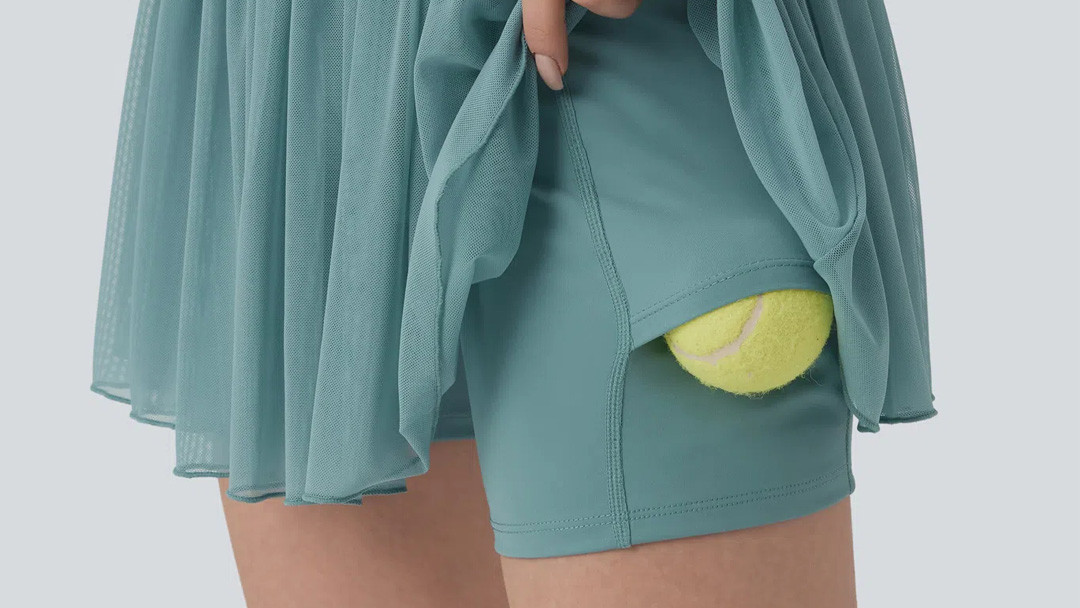
Standard side pockets don't work for tennis. If a player puts a tennis ball in a loose pocket, it bounces around or falls out during a serve. Furthermore, the weight of the ball drags the skirt down.
The Factory Solution: Inverted Compression Pockets
We construct Inverted (Upside-Down) Pockets directly onto the inner compression shorts. The player tucks the ball under the hem. The pocket must be made from high-recovery spandex to hold the ball securely against the leg without stretching out the fabric permanently.
3. Waistband Stability: Preventing the Roll-Over
The Common Problem: Folding at the Waist
During a tennis match, athletes constantly bend forward. If the factory just inserts a cheap, free-floating elastic band into the waist, it will twist and fold in half permanently inside the fabric casing.
The Factory Solution: Anchored Waistbands
We sew the elastic directly into the waistband seams using a multi-needle machine, or we construct a seamless, double-layered power-mesh waistband. This ensures the waist stays flat and provides gentle core support without rolling.
4. Pleat Retention: Surviving the Wash
The Common Problem: Flattened Skirts
If your design features a pleated outer skirt, the biggest risk is that the pleats disappear after the first trip through a washing machine, turning the skirt into a shapeless mess.
The Factory Solution: Heat-Setting Processes
Pleats require specific material science. We recommend polyester blends for pleated designs because polyester can be Heat-Set. Our factory presses the pleats at specific high temperatures, altering the fiber structure so the folds remain permanent, wash after wash.
5. Crotch Gusset Construction
The Common Problem: Mobility Restriction & Camel Toe
Standard four-way seam intersections in the crotch of the inner shorts restrict leg movement during wide lunges and often create an uncomfortable fit (camel toe).
The Factory Solution: Diamond Gussets
Just like premium leggings, we engineer a Diamond or Triangle Gusset into the inner shorts. This removes the central seam intersection, allowing for a full range of motion and an aesthetically smooth front panel.
6. The Fabric Weight Ratio (Outer vs. Inner)
The Common Problem: Sagging Skirts
A fatal mistake inexperienced factories make is using the exact same fabric for both layers, or making the outer skirt heavier than the inner shorts. If the outer skirt is heavy (e.g., 250 GSM) and the shorts are light, the skirt will literally drag the shorts down the wearer's hips during a match.
The Factory Solution: Strategic GSM Balancing
We audit your Tech Pack for physics. The inner short must act as the anchor, using a compressive, higher-modulus knit (e.g., 220 GSM Interlock). The outer skirt must be significantly lighter (e.g., 100-130 GSM stretch-woven or lightweight mesh) so it floats over the body without adding drag.
7. Slit Reinforcement: Stopping the "Apex Tear"
The Common Problem: Ripped Side Seams
Tennis skirts often feature side slits to allow for extreme lateral lunges. The top point of that slit (the apex) takes massive force. A standard straight stitch will rip the first time a player stretches for a wide shot.
The Factory Solution: Bartacking the Y-Seam
We apply a dense, horizontal Bar-Tack Stitch exactly at the top of the slit. For high-end designs, we even fuse a small, hidden triangle of reinforcement interfacing on the inside of the seam before sewing, ensuring it never tears under pressure.
8. Heat Trapping & Zoned Ventilation
The Common Problem: The "Oven" Effect
Because a skort has two layers of fabric over the hips and thighs, it traps significantly more body heat than regular shorts. If a factory uses cheap, non-breathable polyester for both layers, it feels like an oven on a summer court.
The Factory Solution: Hydrophilic Mesh Paneling
We solve this thermal issue by using zoned ventilation. We often replace the crotch gusset and inner thigh panels of the liner with a highly breathable, moisture-wicking micro-mesh. Furthermore, we ensure the fabrics are treated with hydrophilic (sweat-absorbing) finishes to pull moisture away from the skin immediately.
9. The "No-Dig" Top Edge (Seamless Waistbands)
The Common Problem: Slicing into the Stomach
Tennis requires constant torso rotation. If the top edge of the waistband is finished with a thick, bulky overlock seam, it will dig painfully into the wearer's stomach when they serve or bend over.
The Factory Solution: Fold-Over Construction
For a premium fit, we use a Seamless Top Edge construction. The waistband fabric is folded over so there is no exposed stitching at the very top. Alternatively, we use a V-crossover front pattern that naturally dips below the belly button to relieve pressure.
10. Wind Resistance & The "A-Line" Flare
The Common Problem: Blowing Up in the Wind
If a pattern maker cuts the outer skirt as a full "circle skirt" to make it look flowy, the slightest breeze on an outdoor court will blow the skirt completely up. If they cut it too straight, the player can't move.
The Factory Solution: Precision Godet Inserts
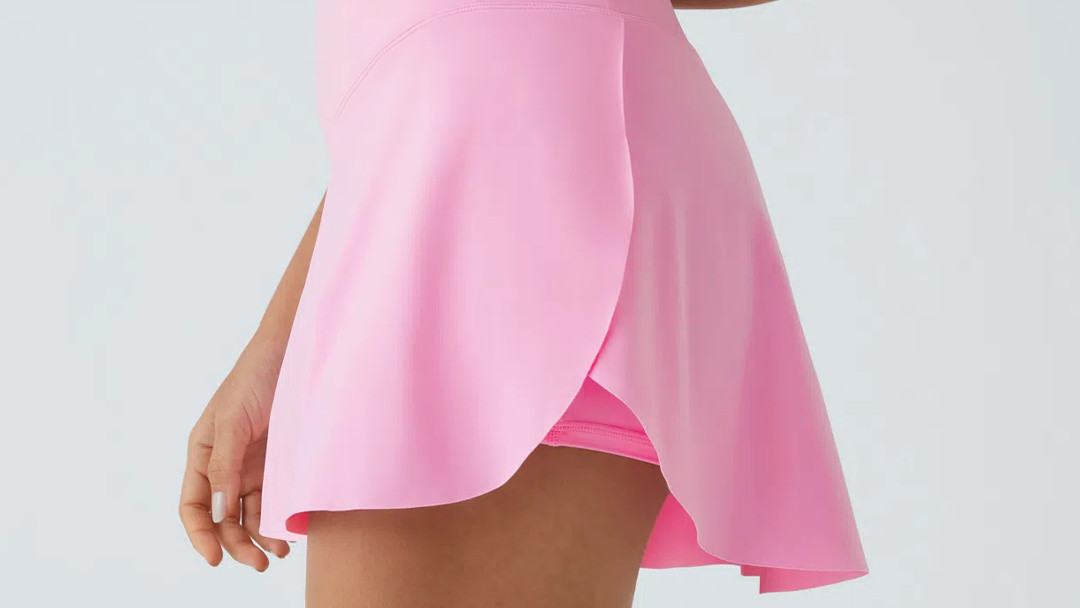
Our pattern engineers master the "A-Line" balance. To add flow without adding wind-catching volume, we insert Godets (triangular pieces of fabric) into the lower hem, or engineer a precise A-line grade. The skirt flares at the bottom for movement, but stays relatively flat across the hips to resist wind.
Manufacture Court-Ready Activewear
Stop worrying about inner shorts riding up, ripped slits, or poor pocket construction. Partner with Call The Style for functional, well-made tennis skirts engineered for real athletes.
START YOUR PROJECT TODAYFrequently Asked Questions (FAQ)
Q: How do you stop the built-in shorts on a tennis skirt from riding up?
A: We address this through pattern length and tension. We can also add a silicone grip tape along the inner leg opening, or use a specific elastic binding that holds the short in place without digging into the thigh.
Q: What is the best way to design a pocket for tennis balls?
A: Standard side pockets do not work. We construct an inverted (upside-down) pocket on the inner compression shorts. The high-spandex fabric securely traps the ball against the leg.
Q: Why do the side slits on skirts rip easily?
A: The top of the slit (the apex) takes massive force during lateral lunges. A good factory will reinforce this exact point with a horizontal bar-tack stitch and internal interfacing to prevent tearing.
Q: Can I order tennis skirts in small batches?
A: Yes! Call The Style supports independent activewear brands with flexible production. Our minimum order quantity (MOQ) starts at just 100 to 300 pieces per style.