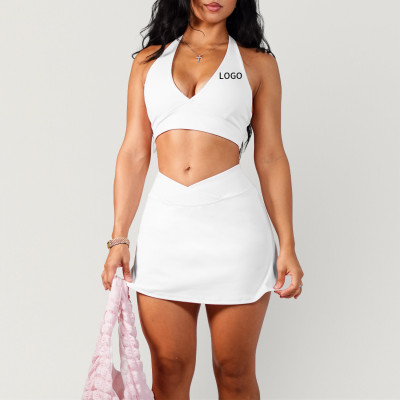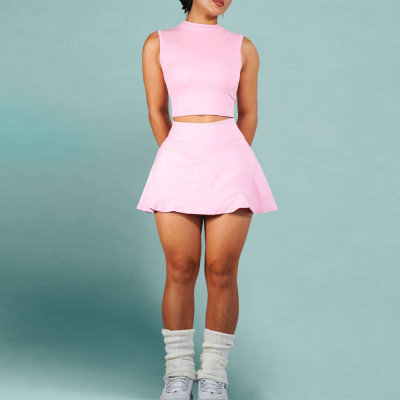
The Ultimate Guide to Custom Clothing Tech Packs: From Design to Production
Welcome to the definitive guide on creating a robust activewear tech pack, a critical document that transforms your innovative designs into tangible, high-performance garments. I'm here to show you how a well-crafted custom clothing tech pack is more than just a formality; it's the blueprint for success in the competitive activewear market. In the realm of sportswear, where fabrics stretch, bodies move, and performance is paramount, precision is non-negotiable. A tech pack is a comprehensive document—a true instruction manual—that details every aspect of your garment's design for a manufacturer. This guide will walk you through the essentials of a comprehensive tech pack, ensuring clear communication with your sportswear manufacturer and laying the groundwork for flawless production.
Key Takeaways
- A Tech Pack is a Non-Negotiable Blueprint: It serves as the single source of truth between a designer and manufacturer, containing all technical specifications, drawings, and materials needed for production. A detailed tech pack is essential for minimizing errors, reducing sampling costs, and ensuring consistent quality.
- Activewear Demands Precision: High-performance garments are engineered systems. The tech pack must account for the unique challenges of activewear, including the behavior of stretch fabrics and the need for functional seams, to ensure the final product meets performance expectations.
- Visuals are Critical for Clarity: Technical flat sketches, detailed seam callouts, and realistic fabric renderings are vital. These visual elements leave no room for interpretation, clearly communicating construction methods and aesthetic details to the factory.
- The Bill of Materials (BOM) is Your Master Inventory: The BOM is an exhaustive list of every single component, from the main fabric down to the thread and hangtags. An accurate BOM is crucial for precise costing, efficient sourcing, and preventing production delays.
- Sizing and Branding Define a Retail-Ready Product: The tech pack must specify the target market's sizing standards and account for fabric elasticity through proper grade rules. Likewise, precise logo placement and premium branding applications, along with quality packaging, elevate the product and create a strong brand identity.
Why Your Activewear Tech Pack is the Blueprint for Success in Sampling and Production
A tech pack, or technical package, is the master document that translates your design vision into an actionable blueprint for a manufacturer. It contains every detail, from sketches and measurements to materials and construction methods. In the world of apparel, especially high-performance activewear, a meticulously prepared tech pack is your insurance policy. It minimizes misunderstandings, reduces costly production errors, and dramatically speeds up your time to market. Think of it as a contract: it outlines the exact specifications the manufacturer is obligated to follow, providing security and a clear reference point for quality control.
The High Stakes of High-Performance Activewear
Designing activewear goes far beyond aesthetics. It's an engineering challenge where every component—fabric, stitch, and fit—must work in harmony to support the body under physical stress. The stakes are high; if one element is wrong, the entire garment can fail to perform.
Beyond Aesthetics: Function Under Pressure
High-performance clothing is designed for functionality, requiring a deep understanding of the target consumer's movements and needs. A running jacket isn't just a jacket; it's a system designed for moisture management, thermal regulation, and freedom of movement. Key performance attributes like moisture-wicking, breathability, compression, and durability are not just buzzwords; they are engineered properties that must be clearly specified. If a fabric is specified without considering its hydrophobic properties, for example, it might become uncomfortable as a runner perspires, leading to a failed product.
The Unpredictable Nature of Stretch Fabrics (Especially 4-Way Stretch)
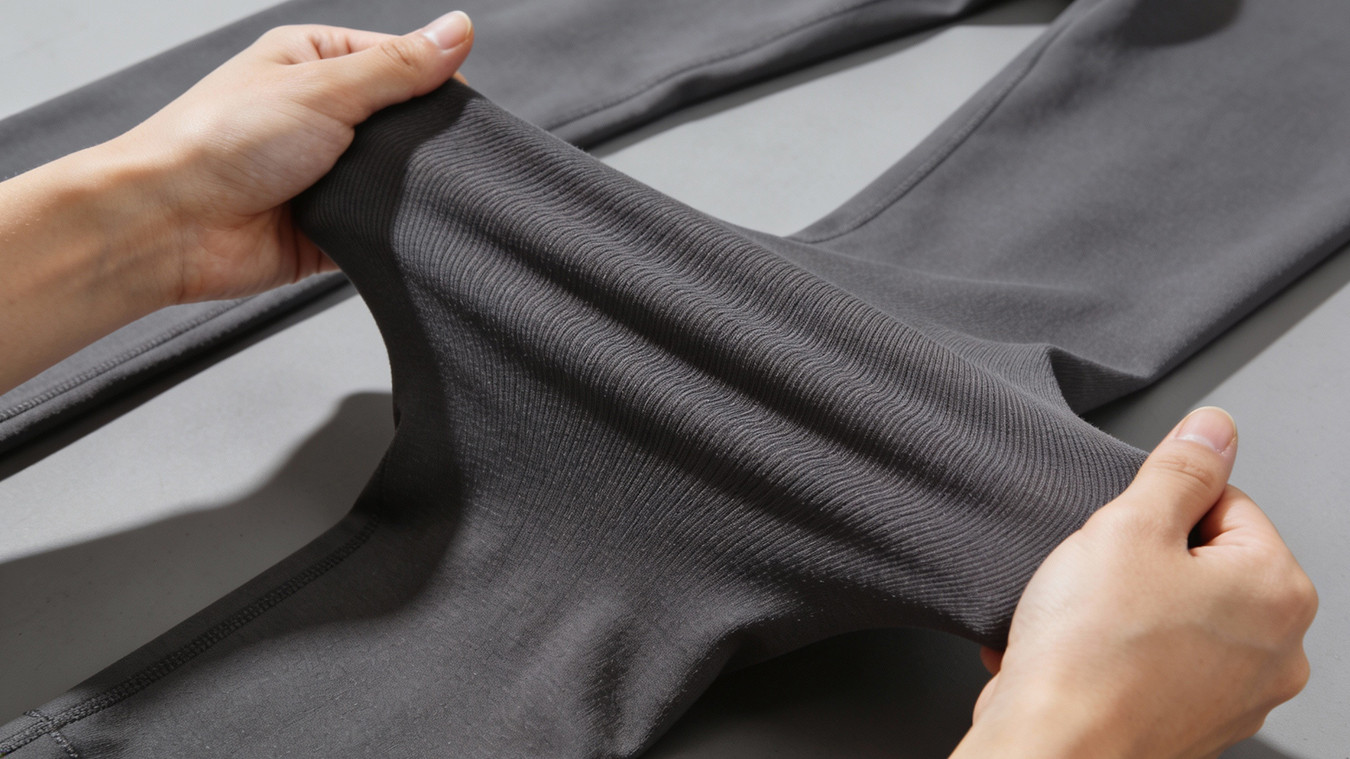
Fabrics with four-way stretch, which extend both lengthwise and crosswise, are essential for activewear because they provide an exceptional range of motion and comfort. These materials, typically blends of polyester or nylon with spandex, are designed to move with the body without restriction. However, their elasticity presents a significant manufacturing challenge. Without precise measurements and tension specifications in the tech pack, these fabrics can be easily distorted during sewing, leading to inconsistent sizing and a poor fit. A detailed tech pack ensures that the unique properties of these high-performance fabrics are controlled throughout production.
From Concept to Clarity: The Power of a Detailed Custom Clothing Tech Pack
A detailed tech pack bridges the gap between a creative idea and a physical, sellable product. It functions as a universal language between the designer and manufacturer, eliminating ambiguity that can arise from language barriers or cultural differences. By outlining every specification, from stitching type to logo placement, the tech pack provides a clear set of instructions that the factory can use to create accurate samples on the first try. This clarity saves an immense amount of time and money by minimizing the back-and-forth of sample revisions. Ultimately, a comprehensive tech pack is the foundation for a smooth and efficient production process, ensuring the final garment is precisely what you envisioned.
Essential Visuals for Your Sportswear Manufacturer Guide: Clarity Through Design
In a tech pack, visual elements are not just for show; they are a critical tool for communication. Clear, detailed drawings and renderings ensure that your manufacturer understands every element of the design, from the overall silhouette to the tiniest construction detail, minimizing the risk of misinterpretation.
Front and Back Style Drawings: Leaving No Room for Interpretation
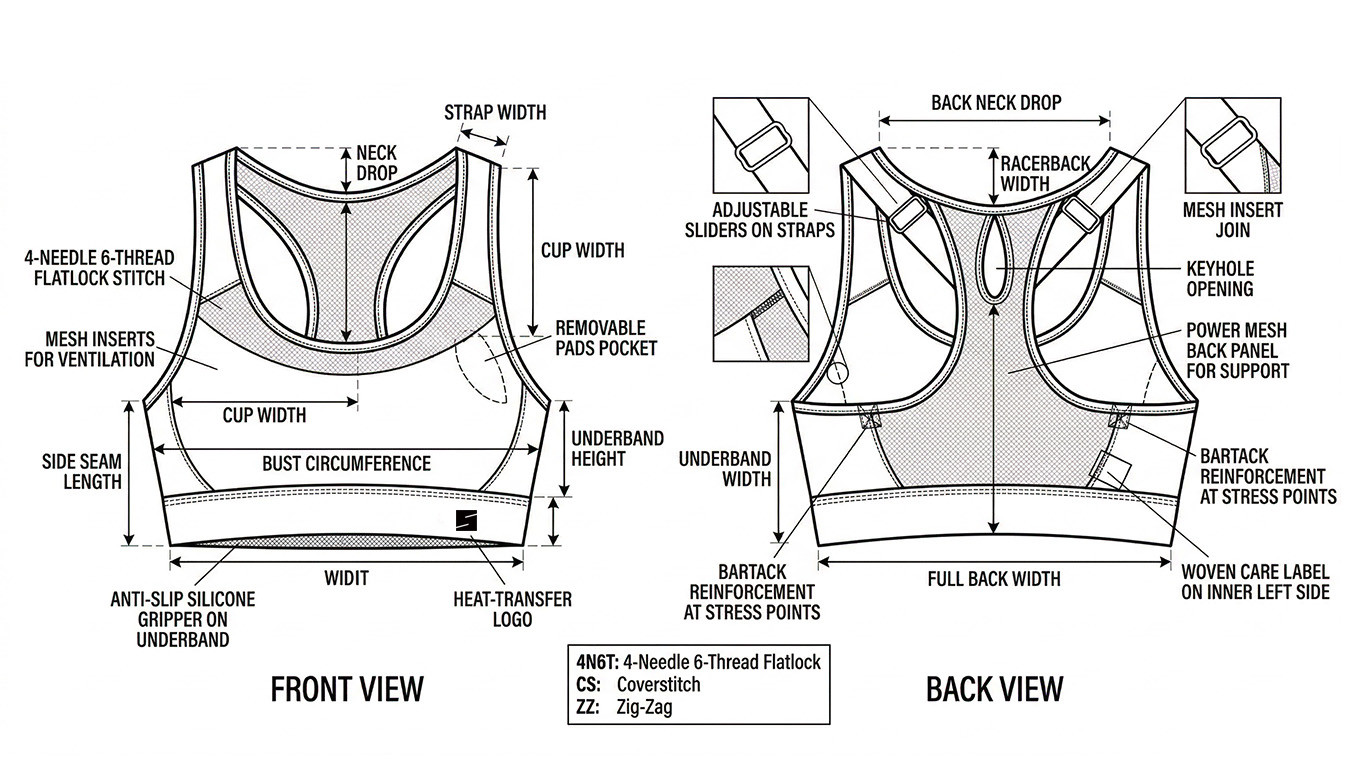
Technical flat sketches are two-dimensional, black-and-white drawings that show a garment as if it were laid flat. These are not fashion illustrations; they are blueprints that must be precise, to scale, and free of any artistic shading or stylistic lines. It's crucial to include front, back, and sometimes side views to show how seams and design lines transition around the body. Every seam, stitch line, pocket, and closure should be accurately depicted to provide the factory with a clear and complete picture of the final product's construction.
Stitching Details that Define Quality: Showcasing Call The Style's Expertise
The type of stitching used in a garment is fundamental to its durability, comfort, and overall aesthetic. For activewear, where seams are under constant stress and in close contact with the skin, specifying the correct stitching is paramount.
The Art of Seams: Flatlock (Four-Needle Six-Thread) vs. Plain Stitch
In activewear, the choice of seam can make or break the product. While a plain stitch (or overlock) is fast and cost-effective for mass production, it often leaves a raised seam on the inside of the garment that can cause chafing and irritation during intense movement.
Flatlock stitching, by contrast, joins fabric panels edge-to-edge, creating a seam that is completely flat. This makes it the superior choice for performance apparel worn close to the skin.
| Seam Type | Comfort & Feel | Best Use Cases |
|---|---|---|
| Flatlock Stitch | Lies flat against the skin, minimizing friction and chafing. Incredibly comfortable for high-motion activities. | Leggings, compression tops, base layers, cycling gear, yoga wear. |
| Plain/Overlock Stitch | Creates a slight ridge on the inside. Can cause irritation in close-fitting or high-friction garments. | T-shirts, hoodies, and less technical casualwear. |
The flatlock seam not only enhances comfort but also acts as a durable, flexible bond that moves with stretch fabrics. Additionally, it can be used as a design element, with contrasting thread colors to create a sporty, technical look.
The Browzwear Advantage: Digital Visualization of Seam Interaction with Tension Points
Advanced 3D fashion design software like Browzwear is revolutionizing how garments are developed. Instead of relying solely on physical prototypes, designers can create a "virtual twin" of the garment and simulate how it will fit and behave on a 3D avatar. This technology is particularly valuable for activewear, as it allows for the visualization of tension and pressure points. By analyzing digital pressure maps, designers can see exactly where a seam might pull or a fabric might stretch too tightly during movement, allowing them to make critical pattern adjustments before any fabric is ever cut. This virtual fit validation process dramatically reduces the number of sample iterations, saving time and money while achieving a more accurate fit.
Symmetry and Precision: Crafting Complex Activewear Garments
In garment production, symmetry refers to a design where the left and right sides of the garment are mirror images of each other. Symmetrically balanced designs are typically more straightforward and cost-effective to produce, as they allow for more efficient pattern making and cutting. More importantly, symmetry creates a sense of visual harmony and is crucial for achieving a balanced fit that flatters the body. While asymmetrical designs can be visually interesting, they require a much higher level of precision and skill to execute correctly, as any small error can throw off the entire balance and fit of the garment.
Fabric Realism in Your Activewear Tech Pack: What You See is What You Get
Accurately communicating the properties of your chosen fabric is essential. 3D design tools like Style3D and Browzwear can simulate fabric with stunning realism, showing how different materials will drape, stretch, and fold on the body. This allows technical designers to validate fabric choices digitally, ensuring the selected material will behave as expected. Whether through high-fidelity 3D renders or by including physical swatches with the tech pack, providing a realistic representation of the fabric's texture, weight, and color ensures that the final product matches the design vision.
The Bill of Materials (BOM): Your Comprehensive Inventory for an Effective Custom Clothing Tech Pack
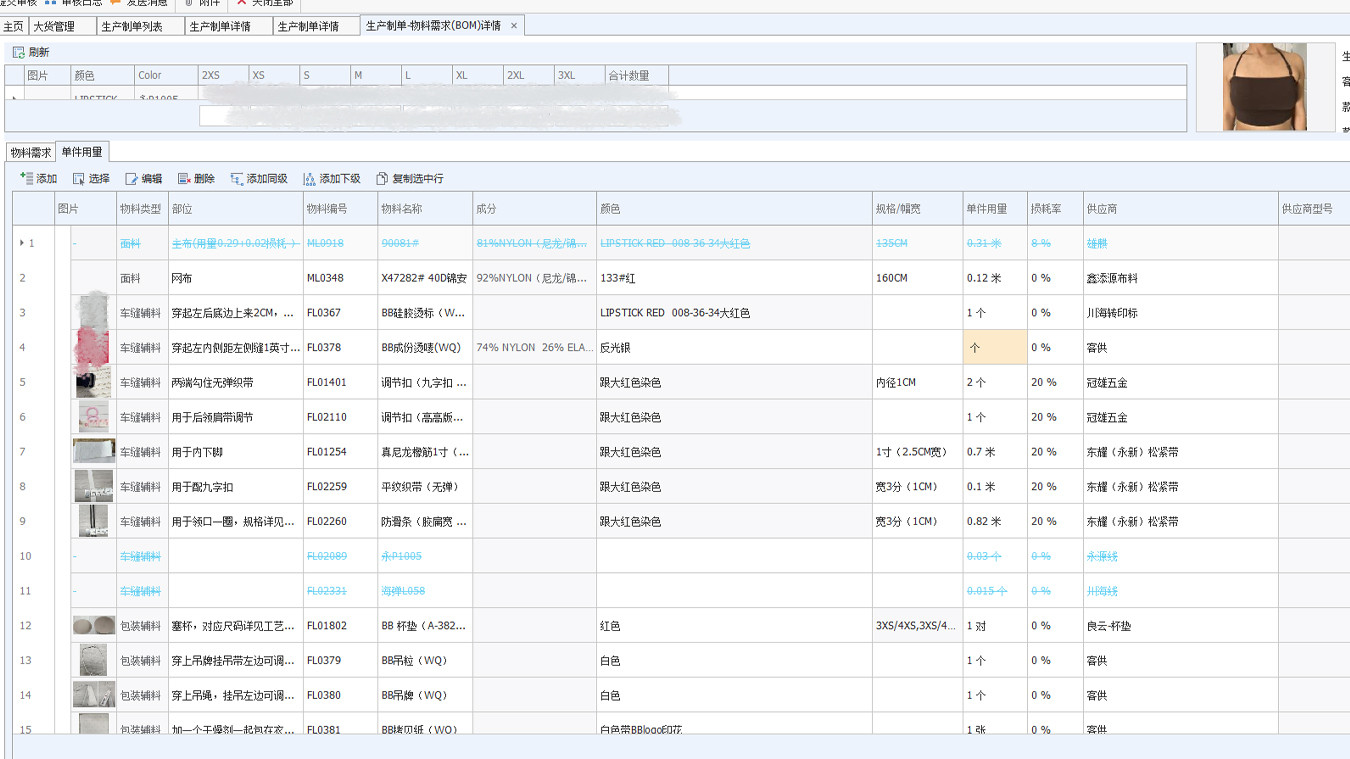
The Bill of Materials (BOM) is one of the most critical components of a tech pack. It is a detailed inventory list—essentially a recipe—that outlines every single physical item needed to create one unit of your garment. An accurate and comprehensive BOM is the backbone of efficient production, precise costing, and effective supply chain management. Without it, you risk costly errors, material shortages, and significant production delays.
Listing Every Component: Fabrics, Zippers, and Threads
A professional BOM leaves no room for ambiguity. It must catalog every component, no matter how small. This list goes beyond the main fabric to include everything from zippers and buttons to sewing thread, care labels, and even packaging materials.
A thorough BOM should be organized as a table and at a minimum, include the following for each item:
- Item Description: A clear name for the component (e.g., "Main Shell Fabric," "YKK #5 Coil Zipper").
- Supplier Details: The name or code of the approved supplier.
- Material Specifications: Full details such as fiber content, weight (GSM), and finish.
- Color Code: The precise color reference, ideally a Pantone (TCX) number, to ensure consistency.
- Quantity per Garment: The exact amount needed to produce one item (e.g., 1.5 yards of fabric, 8 buttons).
- Placement: A brief note on where the component is used (e.g., "Collar and Cuffs," "Center Front Opening").
Beyond the Basics: Call The Style’s Extensive Fabric Library to Elevate Your Designs
Choosing the right fabric is one of the most impactful decisions in activewear design, affecting performance, feel, and brand perception. Having access to a curated library of high-quality, pre-vetted materials can give your brand a significant competitive advantage.
Sustainable Choices: GRS Certified Fabrics
As consumers increasingly demand transparency and sustainability, using certified eco-friendly materials is more important than ever. The Global Recycled Standard (GRS) is an international certification that verifies the recycled content of products and ensures that they have been produced in a socially and environmentally responsible manner. Choosing GRS-certified fabrics, such as those made from recycled polyester (rPET) from post-consumer plastic bottles, provides a credible and verifiable sustainability story for your brand. These fabrics offer performance identical to their virgin counterparts while helping to reduce landfill waste and reliance on new resources.
Performance Powerhouses: Premium Four-Way Stretch and Naked-Feel Fabrics
The feel of a fabric against the skin can be a major differentiator in the crowded activewear market. Premium fabrics not only perform better but also provide a more luxurious and comfortable experience for the wearer.
- Premium Four-Way Stretch: These fabrics are the cornerstone of high-performance activewear, offering exceptional elasticity and shape retention for unrestricted movement. Often made from high-quality polyester/spandex or nylon/spandex blends, they provide the flexibility needed for everything from yoga to high-intensity training.
- "Naked-Feel" Fabrics: This category of fabric, celebrated for its buttery-soft and lightweight "second-skin" sensation, is a top choice for yoga and studio wear. Typically crafted from a specialized blend of nylon and spandex, it offers gentle compression and a smooth, cool touch that makes it feel as though you're wearing nothing at all.
Precision in Sizing and Branding: A Sportswear Manufacturer Guide to Retail-Ready Products
Getting a product ready for retail involves more than just a great design. It requires meticulous attention to sizing, which ensures a consistent and reliable fit for your customers, and strategic branding that communicates your identity. These final details, specified in the tech pack, are what transform a garment into a professional, market-ready product.
Sizing Standards: Meeting European and American Market Expectations
Sizing is not universal. European (EU) and American (US) sizing systems differ significantly, and a simple conversion chart is often not enough. US sizes are typically abstract numbers (e.g., 2, 4, 6) and can be affected by "vanity sizing," where brands label garments smaller than their actual measurements. EU sizes, conversely, are generally based on body measurements in centimeters and can vary by country (e.g., Italian vs. German sizing). For a global brand, it's crucial to define your target customer and specify the exact measurement standards in the tech pack to avoid confusion and ensure a consistent fit across different markets.
The Elasticity Challenge: Why Exact Measurements are Crucial for Activewear
Sizing for activewear is notoriously challenging due to the high degree of stretch in performance fabrics. A garment's fit is directly influenced by the fabric's elasticity and recovery. This is where pattern grading—the process of scaling a base pattern into smaller and larger sizes—becomes critical. A common mistake is using generic grade rules for all fabrics. Highly elastic fabrics require smaller grading increments between sizes, as the material can stretch to fit a wider range of bodies. Conversely, fabrics with less stretch need larger jumps in measurements to accommodate different body sizes properly. Ignoring this can lead to common fit problems like leggings that are see-through when squatting or waistbands that slide down during a run.
Leveraging Digital Tools for Accurate Grading and Fit Testing Across Sizes
Modern technology offers powerful solutions to the sizing challenge. Digital pattern grading, using software like Adobe Illustrator or dedicated CAD programs, allows for faster and more precise creation of size ranges than manual methods. These tools automate the scaling process, reducing the potential for human error.
Furthermore, 3D virtual fit testing allows brands to simulate their graded patterns on digital avatars of varying shapes and sizes. This process helps visualize how the garment will fit across the entire size range, identifying potential issues like pulling, bagginess, or excessive tension before a single physical sample is made. This proactive approach ensures better fit consistency and significantly reduces development costs and timelines.
Logo Placement and Dimensions: Branding with Impact
Your logo is the most recognizable element of your brand, and its placement on a garment is not a detail to be left to chance. A tech pack must include a dedicated section for branding that specifies the exact placement, dimensions, and application method for every logo and graphic. Vague instructions like "place on left chest" are a recipe for inconsistency. Instead, use precise measurements from fixed points on the garment, such as, "Logo to be placed 3 inches below the high point of shoulder and 2.5 inches from the center front line." Including a digital mockup or callout sheet with these specifications provides a clear visual guide for the factory and ensures your branding is executed flawlessly every time.
Elevating Your Brand: Call The Style's Premium Retail Solutions
The final touches on a product can elevate it from basic to premium. Investing in high-quality branding applications and packaging enhances the perceived value of your activewear and creates a memorable customer experience.
3D Silicone Logos and High-Density Heat Transfers
Move beyond standard screen printing with advanced branding techniques that add texture and dimension.
- 3D Silicone Logos: These are soft, flexible, rubber-like emblems that create a raised, high-end look. They are extremely durable, resistant to washing, and can be molded into intricate shapes, making them perfect for premium sportswear.
- High-Density Heat Transfers: This method uses a plastisol-based ink to create a "puffed" or 3D effect that literally lifts the graphic off the fabric. It's an excellent way to add a tactile, dimensional quality to logos and graphics, especially for tone-on-tone designs.
Custom Frosted Packaging: The Ultimate Unboxing Experience
Packaging is the first physical interaction a customer has with your product, and it should reflect the quality within. Custom frosted zipper bags provide a sleek, modern, and professional presentation for apparel. These semi-transparent, reusable bags not only protect the garment during shipping but also elevate the unboxing experience, making your brand feel more premium and thoughtful.
Frequently Asked Questions (FAQ)
1. What is the most important part of a custom clothing tech pack? While every section is crucial, the technical flat sketches and the Bill of Materials (BOM) are arguably the most fundamental. The flat sketches provide the visual blueprint for construction, while the BOM details every single material required. An error in either of these can lead to major production issues.
2. Can I create a tech pack myself? Yes, it is possible to create your own tech pack using software like Adobe Illustrator and Excel. However, it requires a strong understanding of garment construction, pattern making, and manufacturing processes. For those new to the industry, collaborating with a technical designer or a full-service manufacturer is highly recommended to avoid common and costly mistakes.
3. Why are there so many rounds of samples if I have a tech pack? A good tech pack should minimize sample revisions, often down to one or two rounds. If you are experiencing many rounds of samples, it's likely a sign that your tech pack is incomplete or unclear. Common issues include ambiguous measurements, unspecified stitch types, or missing details in the BOM.
4. How does fabric stretch affect the tech pack? Fabric stretch is a critical factor, especially for the graded spec sheet. The measurements for a garment made from a high-stretch fabric will be graded differently than one from a low-stretch fabric to achieve the same fit. The tech pack must specify not just the fabric type but also account for its behavior in the measurement and tolerance charts.
5. How much does a professional tech pack cost? The cost of a tech pack varies widely based on the complexity of the design and the level of detail required. It can range from a few hundred to over a thousand dollars per style. While it may seem like a significant upfront investment, a professional tech pack saves money in the long run by preventing expensive errors and reducing the number of costly sample iterations.
Ultimately, a meticulously prepared activewear tech pack is your most powerful tool for efficient communication and flawless execution. By investing time upfront in a detailed custom clothing tech pack, you save weeks of back-and-forth, drastically reduce sampling errors, and accelerate your time to market.
Let Call The Style be your partner in precision. With our expertise in crafting detailed sportswear manufacturer guides and our commitment to advanced manufacturing techniques, we ensure your vision is realized with unparalleled accuracy and retail-ready quality.